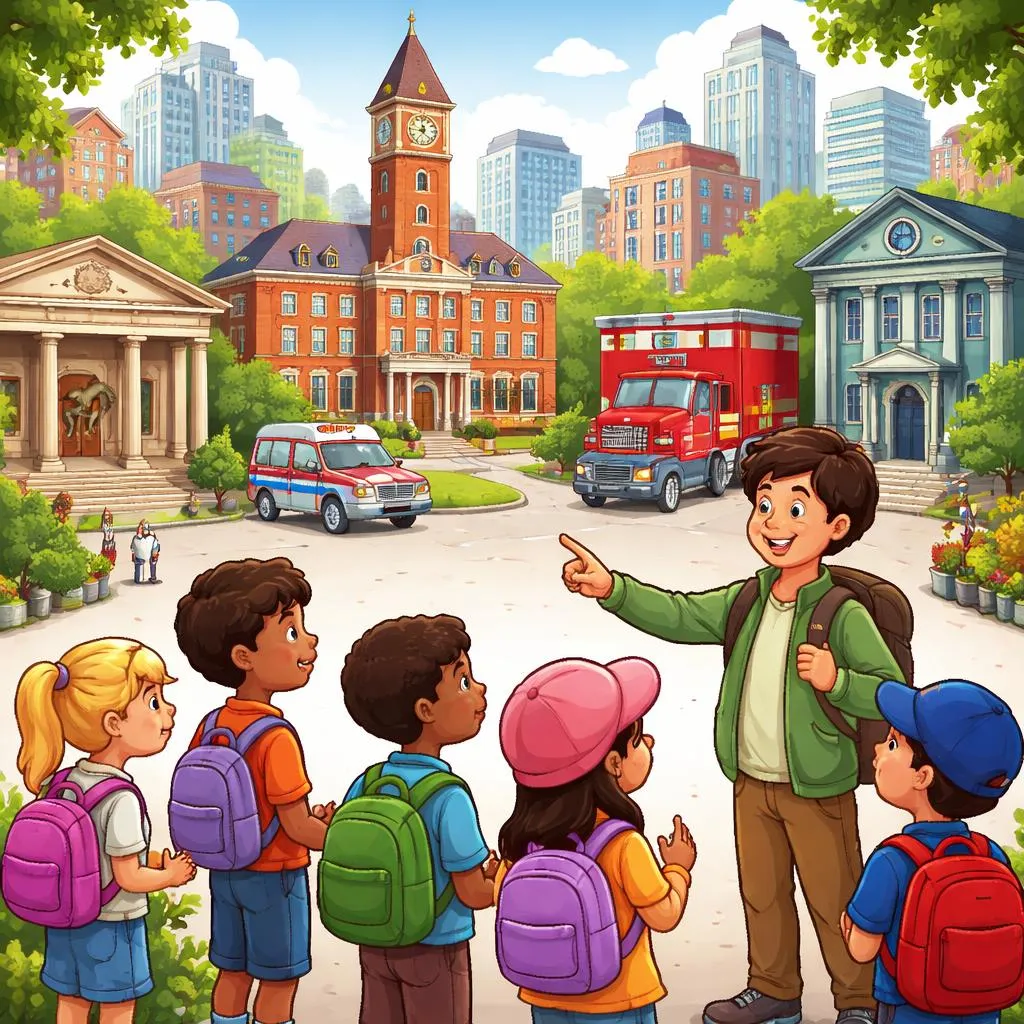

Teaching children about the world around them starts with their immediate environment. For many children, the downtown area is a fascinating place full of tall buildings and busy streets. Today, we are going to explore how to introduce buildings in downtown to young learners. We will look at the different types of buildings, what happens inside them, and how they work together to make a city function.
What Are Buildings in Downtown? Let us start with the basic concept. Downtown is the central part of a city. It is usually where the busiest streets are. It has many buildings close together. People work there, shop there, and visit there.
The buildings in downtown are special because they serve many people. Unlike a house that serves one family, downtown buildings serve the whole community. They are often taller than buildings in other parts of the city because space is limited. People need to fit many activities into a small area.
When we teach about downtown buildings, we are teaching children about community. We are showing them how a city works. We are building vocabulary they will use when they talk about their own town or places they visit.
Meaning and Explanation of Downtown Buildings How do we explain these buildings to a child? We can think of downtown as the "busy center" of a city. It is where many people go to do things they cannot do in their own neighborhood.
Some buildings are for working. Offices fill these buildings with desks, computers, and people doing jobs. Some buildings are for shopping. Stores sell things people need and want. Some buildings are for services. Banks keep money safe. Post offices send packages and letters.
Some buildings are for fun. Movie theaters show films. Restaurants serve food. Museums show art and history. Some buildings are for getting around. Train stations and bus stations help people travel.
Each building has a job, just like each person in a community has a job. Together, they make the downtown work.
Categories or Lists of Downtown Buildings To make learning organized, we can group downtown buildings by their purpose. This helps children understand why different buildings exist.
Work Buildings: These are places where people go to do their jobs. Office buildings are tall buildings with many companies inside. Banks are where people keep money and borrow money. Government buildings include city hall, courts, and libraries.
Shop Buildings: These are places where people buy things. Department stores sell many different items. Boutiques are small shops that sell specific things like shoes or books. Grocery stores sell food. Malls are big buildings with many stores inside.
Service Buildings: These help people with daily needs. Hospitals have doctors and nurses who help sick people. Fire stations have firefighters who put out fires. Police stations have officers who keep people safe. Post offices help send mail.
Entertainment Buildings: These are for fun and learning. Movie theaters show films on big screens. Restaurants serve meals people eat there. Museums have exhibits about art, science, or history. Theaters have plays and performances.
Transportation Buildings: These help people move around. Train stations have platforms where trains arrive and leave. Bus stations have places where buses pick up passengers. Parking garages are buildings where people leave their cars.
Daily Life Examples of Downtown Buildings The best way to learn about downtown buildings is to connect them to children's experiences. Many children have visited some of these places already.
We can ask about trips to the doctor. "When you went to the doctor, what building did you visit? That was a medical building." We can ask about shopping. "When you bought new shoes, where did you go? That was a store."
We can talk about errands families do. "Sometimes families go to the bank to put money in savings. Sometimes they go to the post office to mail a package to grandma." These connections make the buildings real and meaningful.
We can also talk about special trips. "Has anyone been to a movie theater? What did you see? Has anyone been to a museum? What did you learn?" These experiences create personal connections to downtown buildings.
Printable Flashcards for Downtown Buildings Flashcards are excellent for building vocabulary about downtown buildings. Each card should show a clear picture of a building type and the word for that building.
For office buildings, we show a tall building with many windows. For a bank, we show a building with a bank sign. For a fire station, we show the red trucks and the big doors. For a hospital, we show the emergency sign and perhaps an ambulance.
For a movie theater, we show the marquee with movie titles. For a restaurant, we show tables and food. For a museum, we show a grand entrance. For a train station, we show trains and platforms.
These visual cues help children recognize buildings when they see them in real life. The pictures also create conversations about what happens inside each building.
Learning Activities or Games for Downtown Buildings Games make learning about downtown buildings interactive and fun. Here are some activities that work well in the classroom.
Building Bingo: Create bingo cards with pictures of different downtown buildings. Call out the building names or describe their function. "This is where you go to see a movie." Children cover the matching picture. The first to cover a row wins. This builds listening and matching skills.
What Happens Here? Game: Show a picture of a downtown building. Ask children to tell what people do there. For a restaurant, they might say "eat food" or "have dinner." For a fire station, they might say "firefighters sleep" or "trucks go out." This builds understanding of building functions.
Build a Downtown: Use blocks or boxes to create a model downtown. Children decide which buildings to include. They can label each building. They can create roads between them. This builds understanding of how buildings relate to each other in a city.
Downtown Scavenger Hunt: Take a walk in a real downtown area if possible. Give children a list of buildings to find. Check off each one as you see it. If a real walk is not possible, use pictures or a virtual tour online. This builds observation skills.
Community Helper Match: Match workers to the buildings where they work. The doctor goes with the hospital. The firefighter goes with the fire station. The mail carrier goes with the post office. The banker goes with the bank. This builds connections between people and places.
The Purpose of Different Buildings Understanding why different buildings exist helps children make sense of their community. Each building serves a specific need.
Work buildings help people earn money to support their families. They also provide services that help the community run. Without office buildings, many jobs would not have a place to happen.
Shop buildings help people get the things they need and want. Food, clothes, books, and toys all come from stores. Without shops, people would have to travel far for everyday items.
Service buildings keep the community safe and healthy. Hospitals heal people who are sick. Fire stations protect from fires. Police stations keep order. Without these, the community would be dangerous.
Entertainment buildings give people places to have fun and learn. They bring joy and culture to the city. Without them, downtown would be only work and no play.
Transportation buildings help people move around the city and between cities. They connect the downtown to other places. Without them, getting downtown would be very difficult.
Talking About Size and Height Downtown buildings are often tall. This is a good opportunity to talk about size and height vocabulary. We can introduce words like tall, taller, tallest, short, shorter, shortest.
We can compare buildings to things children know. "This building is as tall as twenty giraffes standing on each other's heads." Silly comparisons make the concept memorable.
We can talk about why buildings are tall in downtown. Land is expensive there. When you cannot build out, you build up. Tall buildings fit many people and activities in a small space.
We can also talk about different parts of buildings. The ground floor, the top floor, the roof, the windows, the doors, the stairs, and the elevators. These words help children describe what they see.
Stories About Downtown Buildings Stories are a wonderful way to bring downtown buildings to life. Many children's books are set in cities and feature different types of buildings.
We can read books about a trip to the city. We can read about a child visiting a parent at work in an office building. We can read about a family going to a restaurant for a special dinner.
After reading, we talk about the buildings in the story. "Where did the family go first? What building was that? What did they do there?" This builds comprehension and connects stories to real-world knowledge.
We can also create our own class stories about a downtown adventure. Children decide where to go and what happens in each building. This builds creativity and language skills together.
Building a Downtown in the Classroom Creating a model downtown in the classroom is a wonderful long-term project. It can grow throughout a unit of study.
Start with a large piece of paper or cardboard for the ground. Draw roads and sidewalks. Then add buildings. Use boxes of different sizes. Cover them with paper so children can decorate them.
Children can draw windows and doors. They can add signs that say "Bank" or "Restaurant." They can add trees and streetlights. They can add cars and buses on the roads.
As the downtown grows, children play with it. They move toy people between buildings. They tell stories about what is happening. This play reinforces the vocabulary and concepts they are learning.
As we explore buildings in downtown with young learners, we help them understand the world beyond their home and school. We build vocabulary for places they will visit throughout their lives. We show them how a community works together. We create connections between buildings and the people who use them. These early lessons in community awareness lay the foundation for social studies learning for years to come.