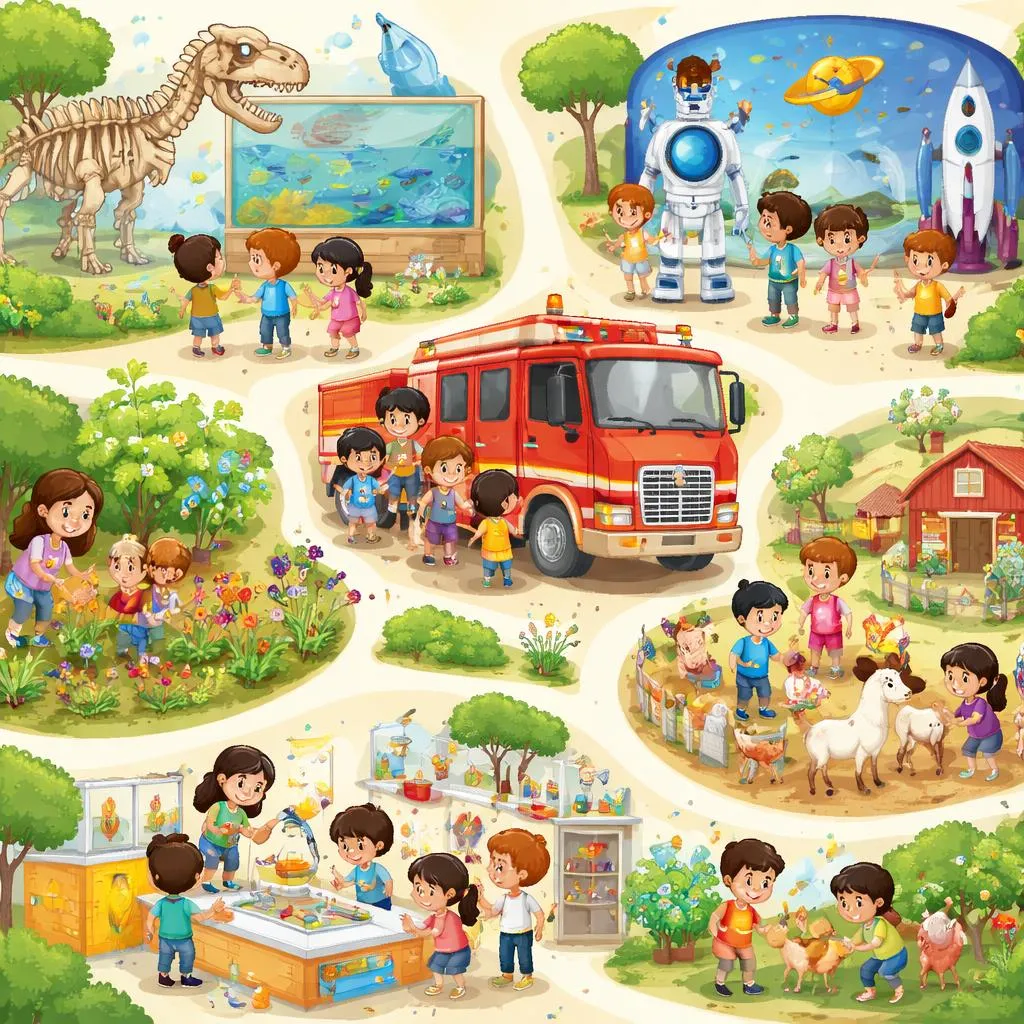

Teaching children about the world around them starts with their immediate environment. The city is full of fascinating places where people live, work, shop, and play. Today, we are going to explore different places in the city and discover how teaching about these locations builds vocabulary, community awareness, and understanding of how a city works.
What Are Places in the City? Places in the city are the different locations that make up a community. They include buildings, parks, and spaces where people gather for various purposes. Each place has a special function and serves the people who live in the city.
Some places are for living. Houses and apartments are where people make their homes. Some places are for working. Offices and shops are where people have jobs. Some places are for learning. Schools and libraries are where people gain knowledge. Some places are for health. Hospitals and clinics are where people get medical care. Some places are for fun. Parks and playgrounds are where people play and relax.
Learning about city places helps children understand their community. They learn where to go for different needs. They learn about the people who work in these places. This builds a sense of belonging and civic awareness.
Meaning and Explanation of City Places How do we explain city places to young children? We start with the places they already know. Their own home, their school, the park where they play. Then we expand to places they visit with their families.
Each place has a purpose. The grocery store is where we buy food. The fire station is where firefighters wait to help. The library is where we borrow books. The hospital is where doctors help sick people.
We can explain that cities have many different places because people have many different needs. We need food, so we have grocery stores. We need to stay healthy, so we have hospitals. We need to learn, so we have schools. We need to have fun, so we have parks.
All these places work together to make a city a good place to live.
Categories or Lists of Places in the City To make learning organized, we can group city places into categories by their purpose.
Homes: House, apartment building, townhouse. These are where people live.
Learning Places: School, library, museum, aquarium, zoo. These are where people learn new things.
Health Places: Hospital, doctor's office, dentist's office, pharmacy. These are where people go to stay healthy or get better.
Food Places: Grocery store, supermarket, restaurant, bakery, farmer's market. These are where people get food.
Shopping Places: Clothing store, toy store, bookstore, mall, department store. These are where people buy things they need and want.
Community Helpers: Fire station, police station, post office, bank. These are where people who help the community work.
Fun Places: Park, playground, movie theater, swimming pool, ice cream shop. These are where people go to have fun.
Transportation Places: Bus stop, train station, airport, parking garage. These are where people catch rides or park vehicles.
Worship Places: Church, temple, mosque, synagogue. These are where people gather to practice their faith.
Daily Life Examples of City Places The best way to learn about city places is to connect them to children's daily experiences. Every trip outside the home offers opportunities to name and discuss city places.
On the way to school, we might pass a fire station. "Look, there is the fire station. That's where firefighters work. They have big red trucks."
On a trip to the grocery store, we talk about what we do there. "We are at the grocery store. We need to buy apples, bread, and milk. What else should we get?"
On a visit to the library, we talk about what happens there. "At the library, we can borrow books to take home. Then we bring them back when we are done."
On a trip to the park, we talk about fun places. "This is the park. We can play on the swings and slide. We can have a picnic here."
These everyday experiences make city places real and meaningful.
Printable Flashcards for Places in the City Flashcards help children learn the names of city places and recognize what they look like. Each card should show a clear picture of the place and its name.
Create cards for each category:
Homes: house, apartment building
Learning: school, library, museum
Health: hospital, pharmacy
Food: grocery store, restaurant, bakery
Shopping: toy store, bookstore, mall
Community helpers: fire station, police station, post office
Fun: park, playground, movie theater
Transportation: bus stop, train station
On the back of each card, include a simple sentence about what happens there. "At the fire station, firefighters wait to help." "At the library, we can read and borrow books."
Learning Activities or Games for City Places Games make learning about city places active and engaging. Here are activities that work well in the classroom.
Where Do I Go? Game: Describe a need. "I am hungry. Where should I go?" Children choose the restaurant or grocery store. "I need to mail a letter." Children choose the post office. "I want to read a book." Children choose the library.
City Building: Use blocks, boxes, and other materials to build a model city. Include different places. Label each building. Children can move toy people between places and describe where they are going.
Place Bingo: Create bingo cards with pictures of different city places. Call out descriptions. "This is where firefighters work." Children cover the fire station. This builds listening and vocabulary.
Place Sort: Provide pictures of different city places. Children sort them into categories. Places for food, places for fun, places for learning, places for health. This builds classification skills.
Community Helper Match: Match community helpers to the places where they work. Firefighter to fire station. Doctor to hospital. Librarian to library. Teacher to school. Mail carrier to post office.
City Scavenger Hunt: Take a walk in the neighborhood (real or virtual). Look for different city places. Check off each place as you find it. This builds observation skills.
What's Missing? Game: Place several city place cards on a tray. Children look at them. Remove one card while they close their eyes. They guess which place is missing.
Building a City in the Classroom A wonderful project is creating a classroom city. This can grow throughout a unit of study.
Start with a large piece of paper or cardboard for the ground. Draw roads and sidewalks. Add buildings using boxes of different sizes. Children decorate each building and add signs.
Add details like trees, streetlights, and cars. Add people figures going about their day. Children can move the people between places and tell stories about what they are doing.
The classroom city becomes a playscape where children practice using city vocabulary. "I am going to the grocery store to buy food. Then I will go to the park."
Places in Stories Many children's books feature city places. These stories reinforce vocabulary in meaningful contexts.
"Curious George" books often feature city adventures. George visits the fire station, the library, the museum, and many other places.
"Richard Scarry's Busy, Busy Town" is perfect for city vocabulary. It shows all the different places in a town and the characters who work there.
"The Little House" by Virginia Lee Burton tells the story of a house in the country that gets surrounded by a growing city. It shows how cities change over time.
While reading, we point out the places. "Look, the family is going to the grocery store. What do they buy there?" This builds comprehension and vocabulary.
Songs About City Places Music helps children remember city place names. Here are some simple songs to sing.
The Places in Our City (to the tune of "Wheels on the Bus"):
The fire station in our city has a truck, truck, truck... The grocery store in our city has food, food, food... The library in our city has books, books, books... The park in our city has swings, swings, swings...
I'm Going to the City (original chant):
I'm going to the city, what will I see? A grocery store for buying food for me. A library for reading books so new, A fire station with trucks so true.
Visiting City Places If possible, real visits to city places are wonderful learning experiences. Each visit builds vocabulary and understanding.
Before the visit, talk about what you will see. What happens there? Who works there? What rules should we follow?
During the visit, point out key features. Name the place and its parts. Notice the people working there.
After the visit, talk about what you saw. Draw pictures. Add new words to your vocabulary wall.
For places you cannot visit, use virtual tours or videos. Many places have online resources showing what happens inside.
City Workers Each city place has people who work there. Learning about these workers builds appreciation for community helpers.
The fire station has firefighters. The hospital has doctors and nurses. The school has teachers. The grocery store has cashiers and stock clerks. The library has librarians. The post office has mail carriers.
We can talk about what each worker does. How do they help the community? What tools do they use? Why is their job important?
This connects places to the people who make them work.
My City Book Create a class book about the city. Each child chooses one place to illustrate and write about.
Page one: "This is the fire station. Firefighters work here." Page two: "This is the library. I can borrow books here." Page three: "This is the park. I play on the swings here." Page four: "This is the grocery store. My family buys food here."
Children draw each place and dictate or write the sentence. The book becomes a class resource that children read again and again.
Comparing City and Country For older children, we can compare city places with places in the country. How are they different? How are they the same?
In the city, buildings are close together. There are many stores and restaurants. There are buses and trains.
In the country, buildings are farther apart. There might be farms instead of stores. People travel by car.
Both places have homes, schools, and places to buy food. But they look different.
This builds comparative thinking and appreciation for different ways of living.
As we explore different places in the city with young children, we help them understand the world beyond their front door. They learn that cities have many different places for different purposes. They learn about the people who work in these places. They gain vocabulary for describing their community. Through games, stories, and hands-on activities, city places become familiar and meaningful. This foundation will serve them as they grow and navigate their community with confidence and understanding.