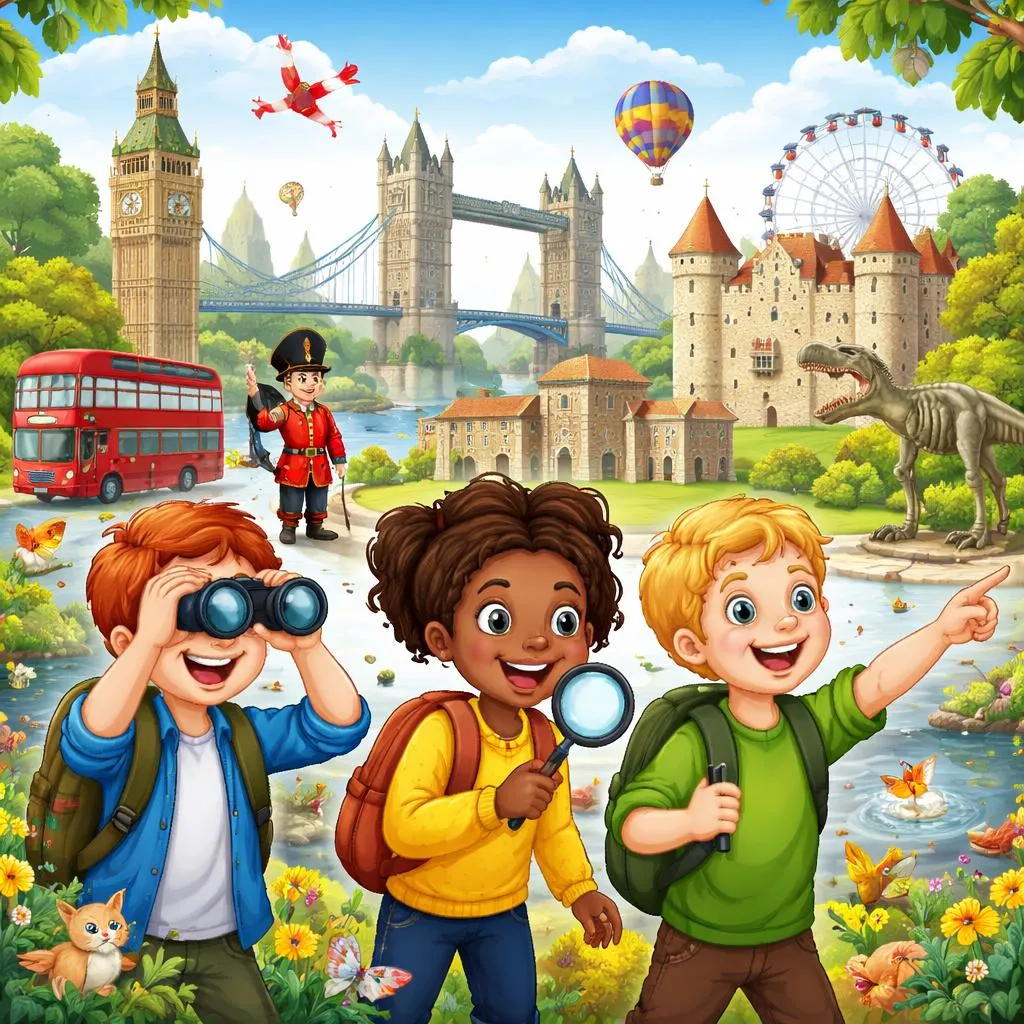

England is a country rich in history, culture, and fascinating places. From ancient castles to modern cities, there is so much to explore. Today, we are going to discover different English places that capture the imagination of young learners and teach them about geography, history, and culture.
What Are English Places? English places are locations in England that have special meaning or interest. They include cities, landmarks, natural wonders, and historical sites. Each place has its own story and character.
Some English places are famous around the world. London, the capital city, is known for its red buses and big clock. Stonehenge is an ancient circle of giant stones that has stood for thousands of years. The white cliffs of Dover rise dramatically from the sea.
Learning about English places helps children understand that the world is big and diverse. They discover that people live differently in other countries. They build vocabulary for talking about geography and travel.
Meaning and Explanation of English Places How do we explain English places to young children? We start with what makes each place special. We use pictures and stories to bring them to life.
London is the capital city of England. It is very big and busy. Many famous landmarks are there. The Queen lives in Buckingham Palace. Big Ben is a huge clock tower. Double-decker buses are red and have two floors.
Stonehenge is a very old place. Giant stones stand in a circle. Nobody knows exactly why ancient people built it. Some think it was for ceremonies. Others think it was a calendar.
The countryside of England has green hills and small villages. Cottages with thatched roofs look like they are from storybooks. Sheep graze in green fields.
Castles are everywhere in England. They were built long ago to protect people. Some castles have towers, moats, and dungeons. Children love to imagine knights and princesses living there.
Categories or Lists of English Places To make learning organized, we can group English places into categories.
Cities: London, Manchester, Liverpool, Birmingham, Oxford, Cambridge, Bath, York. Each city has its own character and famous sites.
Landmarks: Big Ben, London Eye, Tower Bridge, Buckingham Palace, Stonehenge, Roman Baths, Windsor Castle. These are the famous sights people visit.
Castles: Tower of London, Warwick Castle, Leeds Castle, Dover Castle, Edinburgh Castle (in Scotland). Castles tell stories of kings, queens, and battles.
Natural Wonders: White Cliffs of Dover, Lake District, Peak District, Cornwall coast, Giant's Causeway (in Northern Ireland). These beautiful places show England's natural side.
Historical Places: Hadrian's Wall (built by Romans), York Minster (ancient cathedral), Bath's Roman baths, Oxford's ancient university. These places connect to history.
Storybook Places: Haworth (where the Brontë sisters wrote), Stratford-upon-Avon (Shakespeare's birthplace), London's Platform 9 ¾ (from Harry Potter). These places connect to famous stories.
Daily Life Examples of English Places English places can connect to children's daily experiences in many ways.
In stories, we might read about London. "Paddington Bear comes from Peru and goes to London. He lives with the Brown family at 32 Windsor Gardens."
In movies, we see English places. Harry Potter films show London and the Scottish Highlands. Peppa Pig lives in a house that looks like an English cottage.
In books, we learn about English history. "The Queen's Hat" by Steve Antony follows the Queen's hat blowing through London landmarks.
These connections make English places feel real and relevant.
Printable Flashcards for English Places Flashcards help children learn the names of English places and recognize what they look like. Each card should show a clear picture of the place and its name.
Create cards for:
London landmarks: Big Ben, London Eye, Tower Bridge, Buckingham Palace
Castles: Tower of London, Warwick Castle
Ancient sites: Stonehenge, Roman Baths
Natural wonders: White Cliffs of Dover, Lake District
Cultural places: Shakespeare's birthplace, Beatles' Liverpool
On the back of each card, include a simple fact. "Big Ben is the name of the bell inside the clock tower." "Stonehenge is over 4000 years old."
Learning Activities or Games for English Places Games make learning about English places active and engaging. Here are activities that work well in the classroom.
Place Match Game: Create cards with pictures of English places and separate cards with their names. Children match each place to its name.
Where Am I? Game: Describe a place without naming it. "I am a very tall clock tower in London. People often call me Big Ben, but that's really the name of my bell. Where am I?" Children guess the place.
English Places Bingo: Create bingo cards with pictures of English places. Call out facts about each place. Children cover the matching picture.
Build a Landmark: Use blocks or other materials to build models of English landmarks. Build a tower like Big Ben. Create a circle of stones like Stonehenge.
Postcard Project: Children create postcards from English places. They draw the place on one side and write a short message on the other. "Greetings from London! Today I saw the London Eye."
London Landmarks London has many famous landmarks that children love to learn about.
Big Ben is actually the name of the big bell inside the clock tower. The tower is called Elizabeth Tower. It is very tall and chimes every hour.
The London Eye is a giant Ferris wheel on the River Thames. People ride in glass capsules and see all of London from above.
Tower Bridge opens in the middle to let boats through. It is often confused with London Bridge, which is a different bridge.
Buckingham Palace is where the King or Queen lives. When the royal flag is flying, the monarch is at home. The Changing of the Guard ceremony is very popular.
The Tower of London is a very old castle. It has been a palace, a prison, and a zoo. Today, the Crown Jewels are kept there. Ravens live there too. Legend says if the ravens leave, the kingdom will fall.
Castles and Kings England has many castles that tell stories of long ago.
Warwick Castle is a medieval castle with towers, dungeons, and knights. Visitors can see archery shows and birds of prey flying.
Windsor Castle is the oldest and largest occupied castle in the world. The royal family often stays there on weekends.
Leeds Castle is called the "loveliest castle in the world." It sits on islands in a lake and has beautiful gardens.
Children can learn about castle parts. The moat is water around the castle for protection. The drawbridge goes up and down. The tower is the highest part. The dungeon is where prisoners were kept.
Stonehenge Mystery Stonehenge is one of the most mysterious places in the world. Giant stones stand in a circle on a grassy plain. Some stones weigh as much as 25 tons.
Nobody knows exactly why Stonehenge was built. Some think it was a temple. Others think it was a calendar to track the sun and moon. On the longest day of the year, the sun rises in a special way through the stones.
The stones came from far away. Some traveled over 150 miles. How ancient people moved them is another mystery.
Children love mysteries. Stonehenge sparks curiosity and imagination. What do you think Stonehenge was for?
The English Countryside Beyond the cities, England has beautiful countryside. Green hills roll for miles. Small villages have stone cottages and old churches. Sheep graze in green fields.
The Lake District is a national park with beautiful lakes and mountains. Writers and poets have loved it for hundreds of years.
The Cornwall coast has dramatic cliffs and sandy beaches. Seaside towns have fish and chips shops and ice cream stands.
The Yorkshire Dales have green valleys, stone walls, and sheep. It feels like a place from a storybook.
Children can compare the countryside to where they live. How is it different? How is it the same?
English Places in Stories Many English places appear in children's stories. This makes them even more magical.
London is home to Peter Pan, Paddington Bear, and Harry Potter. Platform 9 ¾ at King's Cross station is where Harry catches the train to Hogwarts.
The Lake District inspired Beatrix Potter's stories about Peter Rabbit and his friends. Her farmhouse is now a museum.
Oxford has the oldest university in England. Parts of Harry Potter movies were filmed there. Alice in Wonderland was written there.
Haworth in Yorkshire is where the Brontë sisters wrote Jane Eyre and Wuthering Heights. Their house is on the wild moors.
Reading these stories connects children to the real places where they are set.
English Food Places England has special food places too. Tea shops serve afternoon tea with little sandwiches and cakes. Fish and chips shops sell fried fish with potatoes. Pubs serve Sunday roasts with meat and vegetables.
In London, there are markets with food from all over the world. Borough Market is famous for its delicious things to eat.
Children can learn about English food. Have they ever tried scones with jam and cream? Or Yorkshire pudding?
English Songs About Places Some songs mention English places. "London Bridge is Falling Down" is a nursery rhyme children know. "The Grand Old Duke of York" is about a place in London.
"Oh, I Do Like to Be Beside the Seaside" celebrates English seaside towns. "Maybe It's Because I'm a Londoner" is a cheerful song about loving London.
Singing these songs connects music to geography.
Creating a Class England Travel Brochure A wonderful project is creating a class travel brochure about England. Each child chooses one place to feature.
Page one: "Visit London! See Big Ben and the London Eye." Page two: "Explore Stonehenge! Can you solve the mystery?" Page three: "Relax in the Lake District! Beautiful lakes and hills." Page four: "Tour a castle! See where knights and kings lived."
Children draw pictures and write descriptions. The brochure becomes a class resource that children read again and again.
As we explore different English places with young children, we open a window to another country. They learn that the world is big and full of interesting places. They discover castles, cities, and countryside far from their own. They build vocabulary for geography and travel. Through pictures, stories, and games, England becomes a real place in their imagination. This foundation will serve them as they grow and learn more about the wider world.