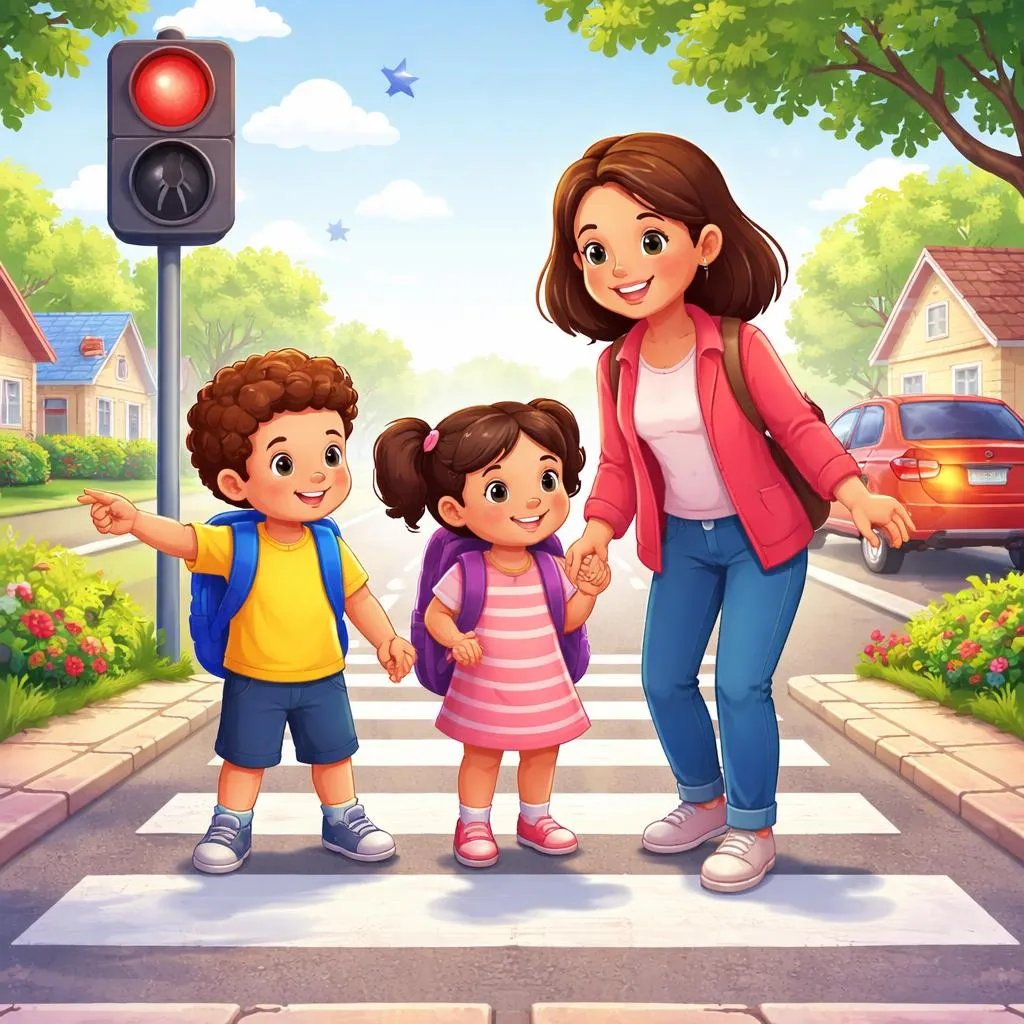

Hello, everyone! Today we are learning a song that does two very important jobs. It teaches a vital life skill and some great English words. We are looking at the "stop and wait look both ways lyrics". This song helps us remember how to cross the street safely. At the same time, it teaches us clear action verbs. Let's learn how to be safe and sound with our English!
What is the rhyme?
This rhyme is a modern safety song or chant. It is not a traditional nursery rhyme but a simple, memorable set of instructions set to music. The song outlines the exact steps a child should follow before crossing a street. The lyrics are direct and imperative, giving clear commands. The melody is often repetitive and catchy, making the safety rules easy to recall. It transforms an important safety lesson into an engaging and singable routine, perfect for young learners.
The lyrics of nursery rhymes
The lyrics are straightforward and focused on action. A common version goes like this:
Before you cross the street,
Use your eyes, use your ears.
Stop and wait,
Look both ways,
Listen for the traffic sound.
Stop and wait,
Look both ways,
Before you cross the street.
Some versions may include lines like "Look left, look right, make sure it's clear" or "Hold a grown-up's hand." The core message in the "stop and wait look both ways lyrics" is always clear: stop, wait, look, and listen.
Vocabulary learning
This song is excellent for learning strong, clear action verbs and safety nouns.
The key verbs are stop, wait, look, listen, and cross. These are some of the most useful verbs in English.
It introduces the important phrase look both ways. This means to look to the left and to the right.
We also learn nouns related to the street: street, traffic, sound, and ears. The preposition before is crucial for understanding sequence.
The phrase use your... is a very practical grammar pattern for talking about our body parts and senses.
Phonics points
The rhyme offers good practice with short vowel sounds and consonant clusters.
The short /ɒ/ sound in "stop" and the long /eɪ/ sound in "wait" provide a nice vowel contrast.
The /l/ sound is prominent in "look," "listen," "left," "right," and "clear." This repetition helps with articulation.
Consonant blends like /st/ in "stop" and /str/ in "street" are great for practicing. The song's clear, deliberate pacing allows children to hear each sound in the imperative words, which is key for pronunciation.
Grammar patterns
This song is a masterclass in using the imperative mood for giving instructions.
Almost every line is a command: Stop and wait. Look both ways. Listen for the traffic sound. Use your eyes. This is the grammar of instructions, rules, and safety steps.
It uses the conjunction "before" to establish a critical sequence of events. Before you cross the street... This teaches that one action must happen prior to another.
The phrase "make sure it's clear" introduces the concept of checking or verifying something, a useful language pattern.
Learning activities
We can extend this song's lessons with engaging, practical activities.
-
"Safety Street" Role-Play: Create a pretend street in the classroom with tape. Have a child pretend to be a pedestrian and another a toy car. Act out the song. The pedestrian must sing the steps and perform them before "crossing." This connects the lyrics to physical action.
-
Sequencing Cards: Create four picture cards: 1) A child stopping. 2) A child looking left and right. 3) A child listening. 4) A child crossing safely. Mix up the cards and have learners put them in the correct order as sung in the song.
-
"What's the Sound?" Game: Record different traffic sounds (a car horn, a bicycle bell, a quiet engine, a loud truck). Play them and ask, "Is this a safe time to cross? Why or why not?" This reinforces the "listen" part of the lyrics.
-
Opposites in Action: Use the verbs from the song to teach opposites. Stop and go. Wait and hurry. Look and close your eyes. Act them out. This builds vocabulary in a fun, memorable way.
Printable materials
Printable resources can reinforce this song's dual lessons in safety and language.
Create a "My Safety Promise" poster. It has the key lyrics written in large, traceable letters: "Stop. Wait. Look Both Ways. Listen." Children can color it and sign their name at the bottom.
Design action verb flashcards with icons: a stop hand, an eye, an ear, walking feet. On the back, have the verb and a sentence from the song. "STOP. Stop and wait."
A "Before and After" sequencing worksheet is helpful. It shows a picture of a child at a curb ("Before") and a picture of a child safely on the other side ("After"). In the middle, children draw or paste the three steps: stopping, looking, listening.
Provide a road safety scene coloring page with a crosswalk, traffic lights, and a child waiting. Key words from the song are labeled on the picture (street, eyes, ears, traffic).
Educational games
Structured games can make practicing these safety instructions fun.
-
"Red Light, Green Light" Variation: Play the classic game, but integrate the song's commands. When the caller says "STOP," everyone freezes and chants "Stop and wait!" When the caller says "LOOK," everyone mimes looking left and right. Then "GO" means move forward. This mixes the game with the safety chant.
-
The "Safe Cross Code" Simon Says: Play Simon Says using only the safety commands from the song. "Simon says, stop and wait!" "Simon says, look both ways!" "Listen for cars!" (If Simon didn't say it, they shouldn't do it!). This hones listening for specific safety instructions.
-
Sound-Safe Board Game: Create a simple board game path leading to a "Safe Home." Draw cards that have pictures: a clear road (move ahead 2), a car coming (go back 1 and sing "stop and wait"), headphones on (miss a turn - you weren't listening!). This gamifies the consequences of not following the rules.
The "stop and wait look both ways lyrics" are a perfect example of how English learning integrates with real-life skills. This song gives children the language tools to understand and verbalize a critical safety procedure. By singing it, they internalize both the grammar of commands and the habit of safe crossing. Keep practicing these words and actions. You are learning more than a song; you are learning to use English to stay safe and smart every day.