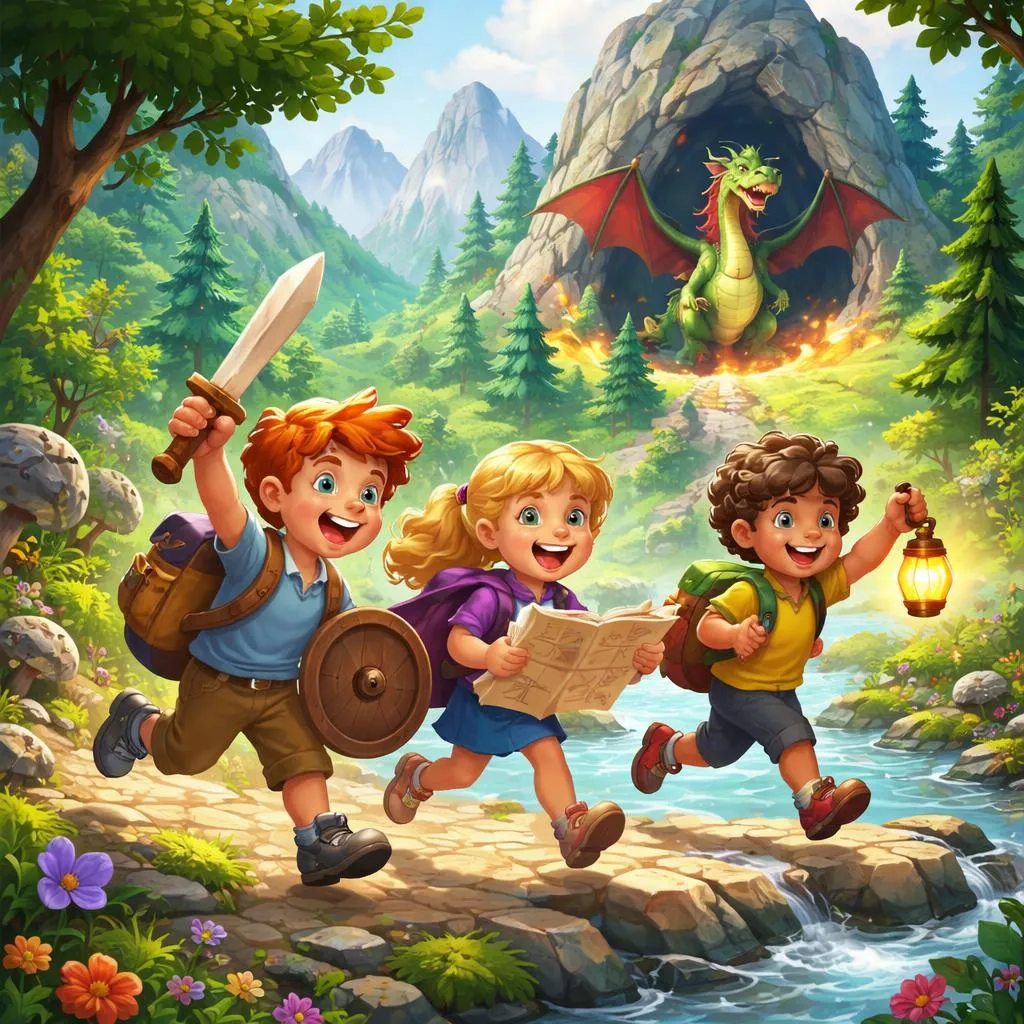

"We're Going on a Bear Hunt" is a beloved classic that children adore. A wonderful variation on this theme is "Going on a Dragon Hunt." This imaginative version takes children on a magical adventure to find a mythical creature. Today, we are going to explore the going on a dragon hunt lyrics and discover how this playful song builds language, imagination, and movement skills.
What Is the Going on a Dragon Hunt Song? "Going on a Dragon Hunt" is a creative variation of the classic "We're Going on a Bear Hunt" story and chant. Instead of searching for a bear, brave adventurers set out to find a dragon. The journey takes them through magical landscapes and past fantastic obstacles.
Like the original, this version uses repetitive language and sound effects. Children chant along and act out the movements. The structure builds anticipation and invites participation.
This variation is perfect for sparking imagination. Dragons are mythical creatures that capture children's interest. The magical setting opens doors to creativity and fantasy play.
The Words of Going on a Dragon Hunt Let us look at some common going on a dragon hunt lyrics. Here is a popular version:
We're going on a dragon hunt. We're going to catch a big one. What a beautiful day! We're not scared.
Uh-oh! A cave! A dark, spooky cave. We can't go over it. We can't go under it. We've got to go through it. Tiptoe, tiptoe, tiptoe...
We're going on a dragon hunt. We're going to catch a big one. What a beautiful day! We're not scared.
Uh-oh! A river! A wide, flowing river. We can't go over it. We can't go under it. We've got to swim through it. Splash, splash, splash...
The pattern continues with other magical obstacles:
A dark forest (stumble, stumble)
A muddy swamp (squelch, squelch)
A snowy mountain (slip, slide)
A fiery volcano (hot, hot)
Finally, they reach the dragon's cave: A dark, gloomy cave. Tiptoe, tiptoe... What's that? One big green eye! Two big green eyes! Three! Four! Five! It's a DRAGON!
Then the rush back through all the obstacles to safety, ending with: We're never going on a dragon hunt again!
Vocabulary Learning from the Song The going on a dragon hunt lyrics introduce rich vocabulary through an exciting fantasy context.
Fantasy Words: Dragon, cave, magic, mythical. Children learn about imaginary creatures and settings.
Action Words: Going, catch, go over, go under, go through, run, rush, tiptoe, swim, stumble, squelch, slip. These verbs describe movement and adventure.
Descriptive Words: Dark, spooky, wide, flowing, fiery, gloomy, big, green. These adjectives paint vivid pictures.
Nature Words: Cave, river, forest, swamp, mountain, volcano. Children learn about different environments.
Sound Words: Tiptoe, splash, stumble, squelch, slip, slide. These onomatopoeic words are fun to say and remember.
Phonics Points in the Song The story is rich with opportunities for phonics practice.
The /d/ sound appears in "dragon" and "dark." This voiced sound requires the tongue behind the teeth.
The /k/ sound appears in "cave" and "catch." This voiceless sound appears throughout.
The /g/ sound appears in "going" and "green." Children practice the difference between /g/ and /k/.
The /s/ sound appears in "spooky" and "swamp." This sibilant sound requires the tongue near the teeth.
The /sh/ sound appears in "splash" and "rush." This digraph appears in the sound effects.
The /t/ sound appears in "tiptoe" and "stumble." This quick sound requires the tongue behind the teeth.
Grammar Patterns in the Story The story contains several important grammar patterns that children absorb naturally.
Present Continuous Tense: "We're going" uses the present continuous form. Children learn to talk about actions happening now.
Future Intention: "We're going to catch" expresses future intention. Children learn this pattern for talking about plans.
Negative Contractions: "We're not scared" and "can't" teach negative contractions naturally.
Repetitive Structure: "We can't go over it. We can't go under it. We've got to go through it." This pattern teaches prepositions and modal verbs.
Exclamations: "IT'S A DRAGON!" teaches excitement in language. Children learn that punctuation and volume change meaning.
Learning Activities with the Story The story can be the center of many engaging activities. Here are some ways to extend the learning.
Obstacle Course: Create a dragon hunt obstacle course in the classroom or playground. Use a tent or table for the cave, blue fabric for the river, green mats for the swamp, pillows for the mountain, red paper for the volcano. Children move through each obstacle, making the sounds as they go.
Sound Effect Orchestra: Assign different sound effects to different groups. One group does "tiptoe." Another does "splash." Another does "squelch." As the story is told, each group makes their sound at the right time.
Story Mapping: Create a map showing the adventurers' journey. Draw the starting point, the cave, the river, the forest, the swamp, the mountain, the volcano, and the dragon's cave. Children trace the path with their fingers as the story progresses.
Dragon Art: Children draw their own dragons. What color is their dragon? How many eyes does it have? Does it breathe fire? They can add speech bubbles with the dragon's words.
Movement Exploration: Explore different ways to move through each obstacle. How do we move through a swamp? Slowly, with heavy steps. How do we swim through a river? Swimming motions. How do we climb a mountain? Reaching and stepping up.
Printable Materials for the Story Printable resources can enhance the dragon hunt experience. Here are some materials to create.
Story Sequence Cards: Create cards showing each part of the journey in order. The starting point, the cave, the river, the forest, the swamp, the mountain, the volcano, the dragon's cave, the rush home. Children arrange them in order and retell the story.
Sound Effect Cards: Create cards with each sound effect written out. Tiptoe, splash, stumble, squelch, slip, slide. Children hold up the right card when that sound occurs.
Obstacle Description Cards: Create cards with the descriptive phrases. "Dark, spooky cave." "Wide, flowing river." "Thick, muddy swamp." Children match the description to the picture.
Dragon Hunt Mini-Book: Create a simple foldable book with the key phrases from the story. Children can "read" their book at home.
Dragon Mask: Create a simple dragon mask. After the story, children can wear the mask and be the dragon that the adventurers find.
Educational Games with the Story Games make the story even more engaging. Here are some games to try.
Dragon Hunt Charades: One child acts out an obstacle without speaking. Others guess which obstacle it is. Are they swimming? Tiptoeing? Climbing? This builds observation and inference.
Dragon Hunt Freeze: Tell the story while children act out the movements. When you say "Stop!" they freeze in place. When you continue, they resume moving. This builds listening and self-control.
Obstacle Memory: Place picture cards of the obstacles face down. Children take turns flipping two cards to find matches. When they find a match, they make the sound effect for that obstacle.
Dragon Hunt Bingo: Create bingo cards with pictures of the obstacles. Call out descriptions. "This is dark and spooky. We go tiptoe through it." Children cover the matching picture.
What Comes Next? Game: Tell the story but pause before naming the next obstacle. Children guess what comes next. "We went through the cave. Then we came to a..." Children shout "river!" This builds prediction and memory.
Dragons in Stories and Culture Dragons appear in stories from many cultures around the world. Some are fierce and breathe fire. Others are wise and helpful.
In European stories, dragons often guard treasure and need to be defeated by knights. In Chinese stories, dragons are lucky and bring good fortune. They are celebrated during festivals.
Children can learn about different kinds of dragons from different cultures. This builds cultural awareness and appreciation for diversity.
Creating New Verses Children love creating new obstacles for the dragon hunt. This builds creativity and language skills.
What other places might the adventurers go? A castle, a bridge, a garden, a tower. Children suggest new obstacles and the sounds for going through them.
What other creatures might they find? Instead of a dragon, maybe a unicorn, a griffin, or a phoenix. Children create new endings for the story.
Writing new verses together builds confidence. Children see that they can create with language.
Movement and Music The story cries out for movement and music. Children learn best when they are physically engaged.
Create simple movements for each obstacle. Tiptoe through the cave. Swim through the river. Stumble through the forest. Squelch through the swamp. Slip and slide through the snow. Feel the heat of the volcano.
Add sound effects with instruments. Shakers for tiptoe. Drums for stomping. Bells for magic moments.
The rhythm of the words naturally invites movement. Children feel the beat in their bodies.
Building Confidence Through Repetition The repetitive nature of the story builds confidence. After hearing it a few times, children know what comes next. They can chime in with the familiar phrases.
This success builds confidence in language. Children feel like storytellers themselves. They learn that stories have patterns they can predict.
We can use this confidence to introduce early literacy concepts. Point to the words as we tell the story. Show that the same words appear each time.
Creating Class Versions After becoming familiar with the original, classes can create their own versions. Where will we go on a hunt? What will we find?
Maybe we go on a unicorn hunt through magical forests and over rainbows. Maybe we go on a monster hunt through a spooky house and under beds.
Creating new versions builds creativity and language skills. Children use the familiar pattern to create something new.
As we explore going on a dragon hunt with young children, we discover a story rich with learning potential. It builds vocabulary through vivid descriptions. It teaches grammar through repetitive patterns. It develops phonemic awareness through playful sound effects. Most importantly, it creates joy through shared storytelling and imaginative play. Children chant along, move their bodies, and become part of the magical adventure. This creative variation on a classic theme will delight and educate for years to come.