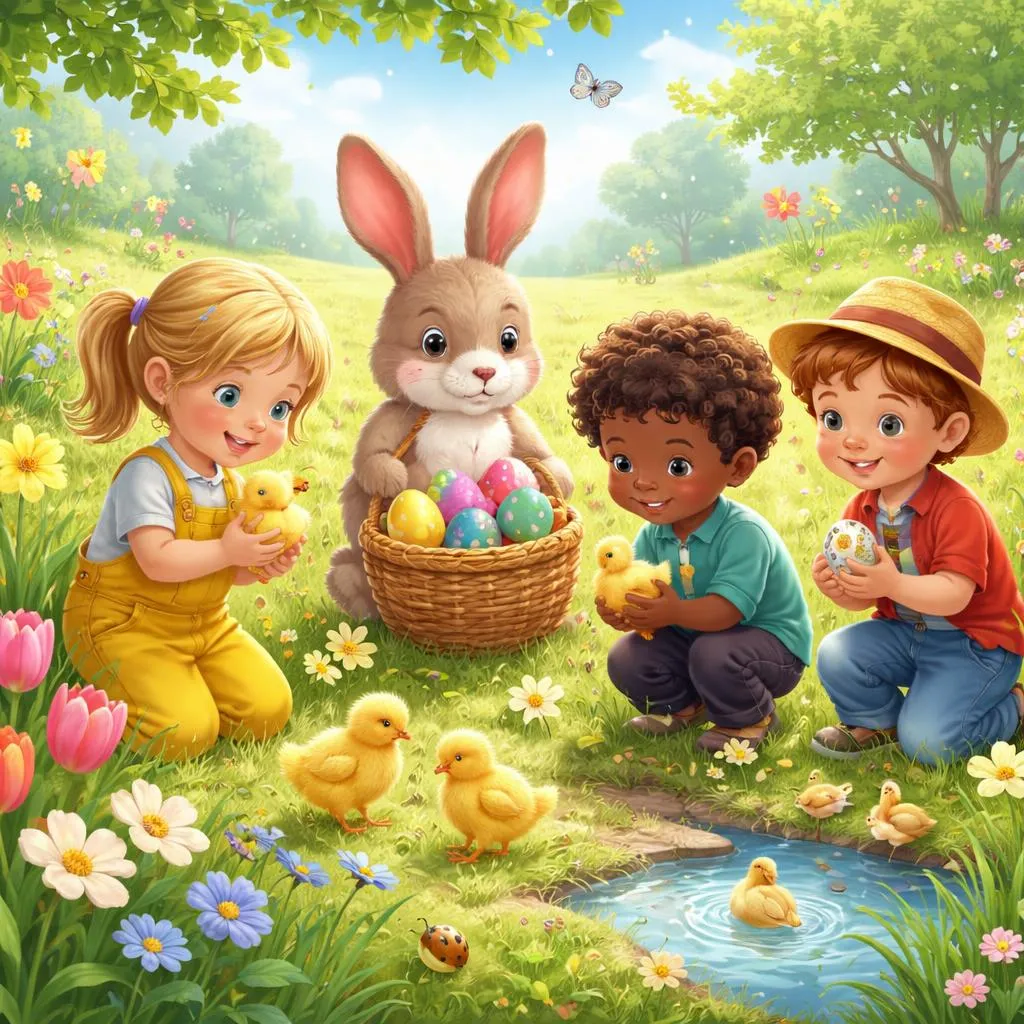

Easter arrives with spring each year. The world wakes up from winter. Flowers bloom. Baby animals appear. The days grow longer and warmer. A children's story about Easter captures all of this magic. It weaves together holiday traditions with the natural wonders of the season. Bunnies hop through pages. Eggs hide in colorful grass. Families gather to celebrate. These stories carry themes of hope, renewal, and joy that resonate with young hearts. This article explores how teachers can use Easter stories to build language skills while celebrating the season's beauty.
What Is a Children's Story About Easter? A children's story about Easter is a narrative centered on the Easter holiday and its traditions. Some stories focus on the secular aspects. The Easter Bunny delivers eggs. Children hunt for hidden treasures. Families enjoy special meals together. Other stories include religious elements, telling of Jesus and the first Easter in simple terms. Many blend both, showing how springtime renewal connects to deeper meanings. The characters are often animals preparing for Easter. Bunnies painting eggs. Chicks hatching just in time. Lambs playing in green fields. The stories are usually cheerful and bright, matching the season's mood. They end with joy, whether from finding eggs, celebrating with family, or understanding the hope Easter represents.
Meaning and Explanation Behind Easter Stories Easter stories carry rich meaning beneath their cheerful surfaces. At the simplest level, they celebrate spring. After winter's gray and cold, the world comes alive again. This renewal resonates with children. They feel the change in the air. They see flowers pushing through soil. They notice baby animals. Easter stories give this seasonal change a name and a celebration.
The Easter eggs in stories represent new life. A decorated egg looks beautiful on the outside. Inside, it once held the potential for a chick. This symbolism works for young children. They understand that eggs mean babies for birds and other creatures. The eggs in stories become symbols of all the new life spring brings.
The Easter Bunny represents generosity and surprise. This friendly figure brings gifts and hides them for children to find. The hiding and finding becomes an adventure. Children learn that good things are worth seeking. They also learn that surprises can bring joy.
For families who include religious elements, Easter stories tell of hope overcoming despair. The simplest versions focus on love being stronger than anything else. These themes, even presented gently, offer comfort and meaning.
Categories or Lists of Easter Stories Children's stories about Easter come in several types.
Easter Bunny Stories: Tales centered on the famous rabbit.
The Easter Bunny's busy night before Easter.
A young bunny learning to help with deliveries.
The Easter Bunny losing all the eggs and finding help.
Where the Easter Bunny lives and works.
Egg Hunt Stories: Adventures focused on finding eggs.
The great neighborhood egg hunt.
A special golden egg hidden somewhere tricky.
Friends working together to find eggs.
An egg hunt with a surprise at the end.
Spring Baby Animal Stories: New life in the animal world at Easter.
Chicks hatching just in time for Easter.
Bunnies born in the spring meadow.
Lambs taking their first wobbly steps.
Ducklings learning to swim.
Religious Easter Stories: Gentle retellings for young children.
The very first Easter long ago.
A donkey's role in the Easter story.
The garden where something wonderful happened.
Celebrating with family at church.
Family Tradition Stories: How different families celebrate.
Dyeing eggs together the night before.
Making special Easter bread or treats.
Getting new clothes for Easter morning.
Gathering with grandparents and cousins.
Combination Stories: Tales that weave multiple elements together.
A family celebrates while also noticing spring.
Religious and secular traditions side by side.
Animal characters experiencing Easter like people.
Daily Life Examples from Easter Stories A children's story about Easter connects directly to children's experiences. Many children have dyed eggs at home. They have hunted for eggs in yards or parks. They have received baskets from the Easter Bunny. The stories validate these experiences and give them language.
Teachers can draw these connections. "Remember when the characters in our story dyed eggs? Has anyone done that at home? What colors did you use?" "The story showed an egg hunt in the park. Has anyone been to an egg hunt?"
The stories also prepare children for upcoming celebrations. Reading Easter stories in the weeks before helps children understand what will happen. It builds anticipation and reduces anxiety about unknown traditions.
For children who do not celebrate Easter, these stories provide cultural knowledge. They learn what classmates might be doing. They gain understanding of a holiday celebrated by many. Teachers can present these stories as one of many spring celebrations, alongside others from different cultures.
Vocabulary Learning from Easter Stories Easter stories introduce rich seasonal vocabulary.
Easter Specific Words: Easter, bunny, rabbit, egg, basket, hunt, hide, find, chocolate, jellybean, candy, treat.
Spring Words: Spring, bloom, flower, grass, green, grow, warm, sunshine, rain, rainbow, puddle.
Baby Animal Words: Chick, duckling, lamb, calf, foal, kit, cub, hatch, born, nest.
Egg Words: Egg, shell, yolk, white, dye, color, paint, decorate, pattern, stripe, dot.
Family Words: Family, gather, celebrate, together, dinner, special, tradition, memory.
Teachers can introduce these words before reading. Point them out in the story. Use them during Easter activities. Create an Easter word wall with pictures.
Phonics Points in Easter Stories Easter words offer excellent phonics practice.
Beginning Sounds: Easter starts with E. Bunny starts with B. Egg starts with E (short sound). Chick starts with CH. Practice these beginning sounds.
Vowel Sounds: Egg has short E. Bunny has short U. Spring has short I. These words demonstrate different vowel patterns.
Syllable Practice: Easter words help with syllable counting. Egg has one. Bunny has two. Chocolate has two or three. Jellybean has three. Practice clapping.
Rhyming Easter Words: Egg and leg. Bunny and funny. Spring and bring. Chick and quick. These rhymes build phonemic awareness.
Teachers can notice these patterns during reading. The Easter theme makes phonics practice festive.
Grammar Patterns in Easter Stories Easter stories provide natural grammar instruction.
Prepositions of Place: Egg hunts use many location words. In the basket. Under the bush. Behind the tree. Inside the house. These prepositions become concrete.
Past Tense for Events: Easter stories use past tense. The bunny hid the eggs. The children found them. Everyone celebrated together. This models narrative past tense.
Future Tense for Anticipation: Leading up to Easter, stories use future. Tomorrow we will hunt eggs. The bunny will come tonight. This builds anticipation grammar.
Questions About Hunting: Egg hunt stories include questions. Where are the eggs? Who found the most? What is inside this one? These model question forms.
Teachers can point out these patterns during reading. The grammar learning happens within the holiday fun.
Learning Activities for Easter Stories Activities bring Easter stories to life.
Activity 1: Classroom Egg Hunt Hide plastic eggs around the room. Inside each, place a word from the story or a simple question. Children hunt and then share what they found.
Activity 2: Egg Decorating Provide paper egg shapes and art supplies. Children decorate eggs like those in the story. Display them around the room.
Activity 3: Bunny Ears Craft Create simple bunny ears headbands. Children wear them during story retelling or while acting out Easter stories.
Activity 4: Easter Story Sequencing Create picture cards showing events from an Easter story. Children arrange them in correct order.
Activity 5: Easter Basket Making Use paper plates or small boxes to create simple baskets. Children fill them with story-related drawings or words.
Activity 6: Spring Nature Walk Go outside and look for signs of spring mentioned in Easter stories. New leaves. Flowers. Birds building nests. Baby animals if available.
Printable Materials for Easter Stories Printable resources extend Easter story learning.
Easter Coloring Pages: Eggs, bunnies, chicks, and spring scenes for coloring.
Easter Word Search: Holiday vocabulary hidden in a letter grid.
Easter Story Sequencing Cards: Picture cards for arranging story events.
My Easter Story Writing Paper: Pages with Easter border for writing original stories.
Easter Flashcards: Pictures of Easter-related items with words.
Easter Mini-Book: Folded book with simple Easter story and pictures to color.
Educational Games for Easter Stories Games make Easter learning playful.
Game: Easter Bingo Create bingo cards with Easter images and words. Call out items. Children cover matches.
Game: Pin the Tail on the Bunny Like Pin the Tail on the Donkey, but with a bunny. Blindfolded children try to place the cotton tail correctly.
Game: Egg and Spoon Race Children balance an egg on a spoon while walking or running. Connects to egg themes while building motor skills.
Game: Easter Egg Memory Match Create pairs of decorated egg pictures. Play memory match to find pairs.
Game: Bunny Hop Relay Children hop like bunnies in a relay race. Connects movement to Easter characters.
Connecting Easter Stories to Other Subjects Easter stories connect across the curriculum.
Science Connection: Learn about eggs. Which animals lay eggs? How do chicks develop inside? What happens during hatching? Explore spring plant growth.
Math Connection: Count eggs. Sort by color or size. Create graphs of favorite Easter candies. Measure how many jellybeans fill a jar.
Art Connection: Explore egg decorating traditions from different cultures. Ukrainian pysanky. Polish pisanki. Create classroom egg art.
Social Studies Connection: Learn how Easter is celebrated around the world. Different foods. Different traditions. Different symbols.
Music Connection: Learn Easter songs and springtime music. Create egg shakers by filling plastic eggs with rice.
The Hope of Spring A children's story about Easter carries something special. It arrives at a time of year when the world itself is changing. The darkness of winter recedes. Light returns. Green returns. Life returns. This seasonal magic reinforces the story's message.
For children, this connection matters. They feel the hope in the air. They see the changes around them. The story names these feelings. It gives them words. It weaves them into a celebration.
The best Easter stories leave children with a sense of joy and anticipation. Not just for candy and eggs, though those are fun. But for the season itself. For longer days and warmer weather. For flowers and baby animals. For time with family.
These are gifts that last beyond any single holiday. They are the gifts of noticing and celebrating the world's renewal. And they begin with a simple story, read together in the spring sunshine, while the world wakes up outside the window.