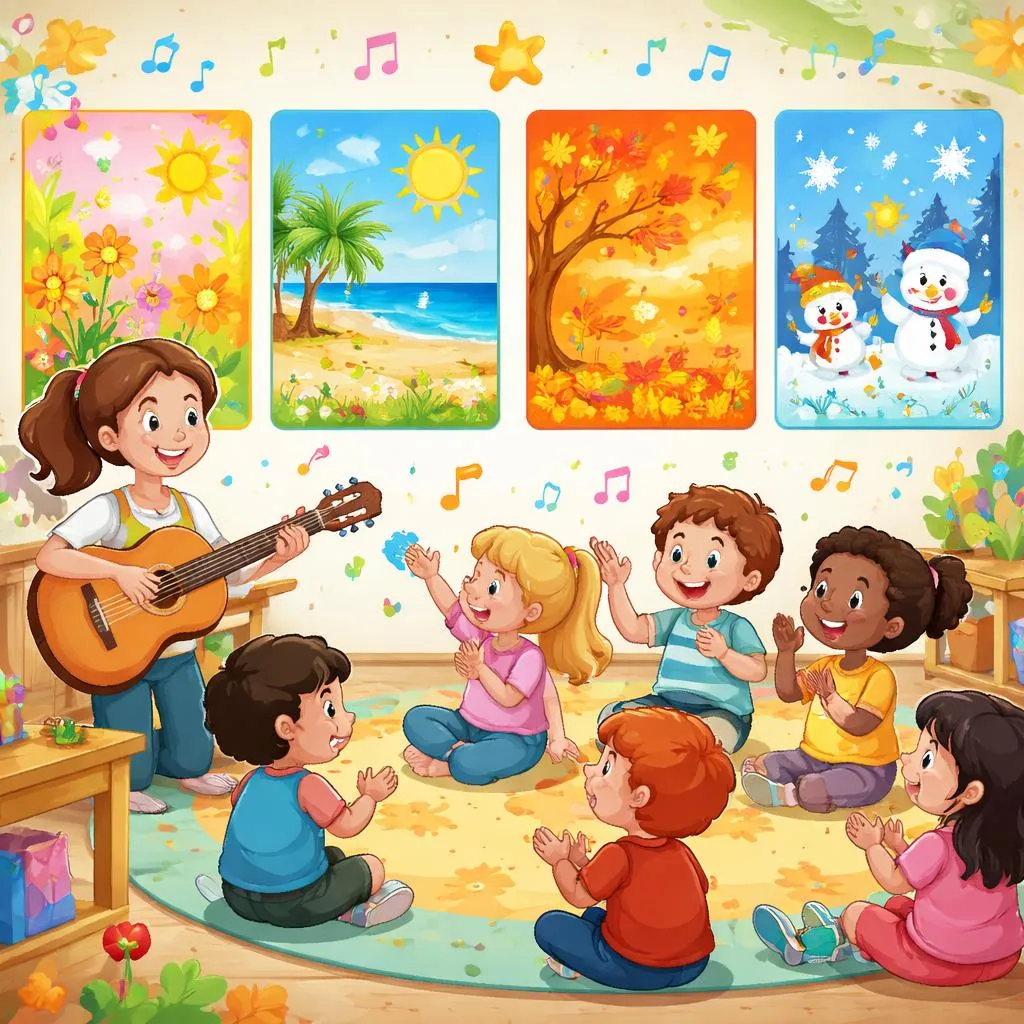

The changing seasons offer a wonderful backdrop for language learning. Each season brings new weather, new activities, and new words to discover. A seasons song helps children understand these changes in a joyful way. Music makes the vocabulary stick. The rhythm and repetition support memory. When we combine the four seasons with a catchy tune, learning happens naturally. Children sing about spring flowers, summer sun, autumn leaves, and winter snow. The song becomes a bridge between language and the world outside the window. Let us explore how to use this powerful teaching tool in the young learners' classroom.
What Is the Seasons Song? A seasons song is a simple musical piece that introduces the four seasons. It typically has four verses, one for each season. The lyrics describe the weather, the clothing, and the activities associated with that time of year. The melody is usually easy and repetitive. This makes it perfect for young children who are learning English.
The song helps children understand the cycle of the year. They learn that seasons come in a order. Spring arrives after winter. Summer follows spring. Autumn comes after summer. Then winter returns again. This cyclical pattern is comforting to young minds. They begin to anticipate what comes next.
Many versions of seasons songs exist. Some focus on weather words like sunny, rainy, windy, and snowy. Others highlight activities like planting flowers, swimming, picking apples, and making snowmen. Teachers can choose the version that best matches their vocabulary goals.
The Lyrics of a Simple Seasons Song Let us look at a sample seasons song that works well in the classroom. These simple lyrics cover the basic characteristics of each season.
Spring, spring, what do you see? Flowers growing, buzz buzz bee. Raindrops falling from the sky. Kites flying way up high.
Summer, summer, what do you see? Sun so hot, down by the sea. Ice cream melting, what a treat! Sandy toes and happy feet.
Autumn, autumn, what do you see? Leaves are falling from the tree. Colors yellow, red, and brown. Acorns dropping on the ground.
Winter, winter, what do you see? Snowflakes falling quietly. Coats and hats and mittens too. Warm inside with nothing to do.
This simple structure allows for many variations. Teachers can add new verses. Children can suggest their own ideas about each season.
Vocabulary Learning from the Song The seasons song introduces rich vocabulary across multiple categories. Children learn weather words, nature words, clothing words, and activity words all in one engaging context.
Spring vocabulary: Flowers, buzz bee, raindrops, kite. These words connect to the idea of new life and fresh beginnings. Spring represents growth and change.
Summer vocabulary: Sun, sea, ice cream, sandy toes. These words evoke warmth and outdoor fun. Summer feels like freedom and play.
Autumn vocabulary: Leaves, colors, acorns. These words describe the changes in nature. Trees prepare for winter. The world becomes colorful before resting.
Winter vocabulary: Snowflakes, coats, hats, mittens. These words connect to cold weather and staying warm. Winter means bundling up and enjoying indoor comforts.
Weather words: Raindrops, sun, snowflakes. Children learn to describe what they see outside.
Action words: Growing, falling, melting, flying. These verbs bring the seasons to life.
Using these words in context helps children remember them. They can point to real things when they go outside. The song gives them language for their experiences.
Phonics Points in the Song The seasons song offers many opportunities for phonics practice. The rhyming patterns highlight specific sounds.
Spring verse rhymes: See and bee share the long "e" sound. Sky and high share the long "i" sound.
Summer verse rhymes: Sea and treat share the long "e" sound, though spelled differently. This introduces the idea that same sounds can have different spellings.
Autumn verse rhymes: Tree and see share the long "e" sound again. Brown and ground share the "ow" sound.
Winter verse rhymes: Quietly and too do not rhyme perfectly. This shows that songs sometimes use near rhymes. Children can notice when words sound similar but not exact.
We can clap the rhythm of each line. This helps children hear syllables. "Flow-ers grow-ing" has four claps. "Buzz buzz bee" has three. This builds phonemic awareness naturally.
Grammar Patterns in the Lyrics The song follows a simple question and answer pattern. This structure teaches important grammar.
Question form: "Spring, spring, what do you see?" This repeats for each season. Children learn the pattern for asking about observations.
Answer form: The answer describes what the season shows. "Flowers growing, buzz buzz bee." This uses present tense to describe ongoing action.
Present continuous: Words like "growing," "falling," and "melting" use the -ing form. Children see this pattern repeatedly. They begin to understand that -ing describes actions happening now.
Simple present: "Bees buzz" and "snow falls" use simple present for general truths. These things happen every year during that season.
Listing with commas: The lyrics list items without using "and" repeatedly. "Coats and hats and mittens too" shows how we list multiple items. The word "and" connects the final items.
Children absorb these patterns through repetition. They do not need formal grammar lessons. The song provides natural exposure to correct English structures.
Learning Activities with the Song Songs become powerful teaching tools when we add engaging activities. Here are some ideas for using the seasons song in the classroom.
Season Sorting: Prepare picture cards showing different seasonal items. Include swimsuits, snowmen, umbrellas, and leaves. Play the song once through. Then children sort the cards into four groups by season. Discuss why each item belongs to that season.
Weather Watch: Start each day by looking outside. What season is it? What weather do we see? Sing the appropriate verse of the song. Connect the lyrics to real observations. This makes the learning relevant and immediate.
Season Art: After learning the song, create four seasonal art projects. Paint spring flowers. Make summer sun catchers. Collage autumn leaves with real leaves. Create winter snow scenes with cotton balls. Display them together to show the cycle.
Dress the Part: Bring clothing items for each season. A sun hat for summer. Rain boots for spring. A scarf for winter. Children choose the correct clothing for each season verse. This connects vocabulary to real objects.
Season Movement: Create movements for each verse. For spring, children pretend to be flowers growing. For summer, they fan themselves and pretend to swim. For autumn, they float like falling leaves. For winter, they shiver and hug themselves. This kinesthetic approach engages the whole body.
Printable Materials for Classroom Use Having printable resources ready makes lesson planning easier. Here are some materials to prepare for the seasons song.
Season Posters: Create four large posters, one for each season. Include images of weather, clothing, and activities. Display them around the room. Refer to them during singing.
Vocabulary Cards: Make flashcards for all the seasonal words. Use clear pictures on one side and words on the other. Practice them before and after singing.
Season Wheel: Create a printable wheel with four sections. Each section shows a season. Attach an arrow with a brad fastener. Children turn the arrow to the current season. This visual reminder connects the song to the real world.
Mini Books: Create simple foldable books for each season. Each page has one line from the song and a picture to color. Children can take these home to share with families.
Matching Worksheets: Design simple worksheets matching seasons to activities. Draw a line from summer to swimming. Draw a line from winter to snowman. This reinforces comprehension.
Educational Games for Deeper Learning Games make learning joyful and memorable. Here are some games centered around the seasons song.
Season Bingo: Create bingo cards with seasonal pictures. Call out words from the song. Children cover the matching pictures. The first to cover a row wins. This builds listening comprehension.
What Season Am I?: Describe a season without naming it. "In this season, leaves fall from trees. The weather gets cool. We pick apples." Children guess the season. This builds inferencing skills.
Season Swap: Sing the song but make intentional mistakes. "In summer, snowflakes falling." Children catch the mistake and correct it. This keeps them listening carefully.
Musical Seasons: Place four hula hoops on the floor, each labeled with a season. Play the song. When the music stops, call out a season. Children jump into that hoop. This combines music, movement, and quick thinking.
Season Memory: Create matching pairs of seasonal pictures. Place them face down. Children take turns flipping two cards. If they match, they keep the pair. This builds vocabulary and memory together.
Connecting the Song to Calendar Time The seasons song fits perfectly into daily calendar routines. Each day, we can note the current season. We can talk about how the season is changing.
In early autumn, leaves might just be starting to change. Later, they fall completely. The song stays the same, but the world outside changes. Children notice these connections. They see that the song describes real things.
Use a classroom calendar that shows the seasons. Mark the first day of each season. Sing the new verse when a season begins. This builds anticipation and understanding of time.
Ask children to share their own seasonal experiences. Who went swimming in summer? Who saw snow in winter? Personal stories make the song more meaningful.
Using the Song Across the Curriculum The seasons song supports learning in many subject areas beyond English.
Science: Talk about why seasons change. Discuss how plants and animals adapt. Learn about animal migration and hibernation. The song introduces these concepts in a simple way.
Math: Count the items in each verse. How many flowers? How many snowflakes? Graph favorite seasons in the class. Compare which season has the most votes.
Social Studies: Discuss how seasons affect where people live. Some places have very cold winters. Others stay warm all year. Compare seasonal traditions in different cultures.
Art: Create seasonal color palettes. Spring uses pastels. Summer uses bright colors. Autumn uses warm earth tones. Winter uses cool blues and whites. Mix paints to match each season.
Music: Change the tempo for each season. Sing spring quickly like busy bees. Sing winter slowly like falling snow. Discuss how music can create different feelings.
The simple seasons song becomes a springboard for rich learning across the entire curriculum.
Creating Class Books from the Song After learning the song, children can create their own class books about the seasons.
Give each child a page with a sentence starter. "In spring, I see..." or "In summer, I like to..." Children complete the sentence and draw a picture. Bind the pages together to make a class book.
Read the book together during story time. Children love seeing their own words and pictures. This builds pride in their work and connects writing to the song.
Create different books for different years. Compare how answers change as children grow. This shows progress and builds a classroom library of student work.
The seasons change every year, but the song remains a constant. It marks time in the classroom. It connects children to the natural world. It gives them language to describe their experiences. Through this simple song, children learn that English helps them talk about everything around them. And that is a powerful lesson indeed.