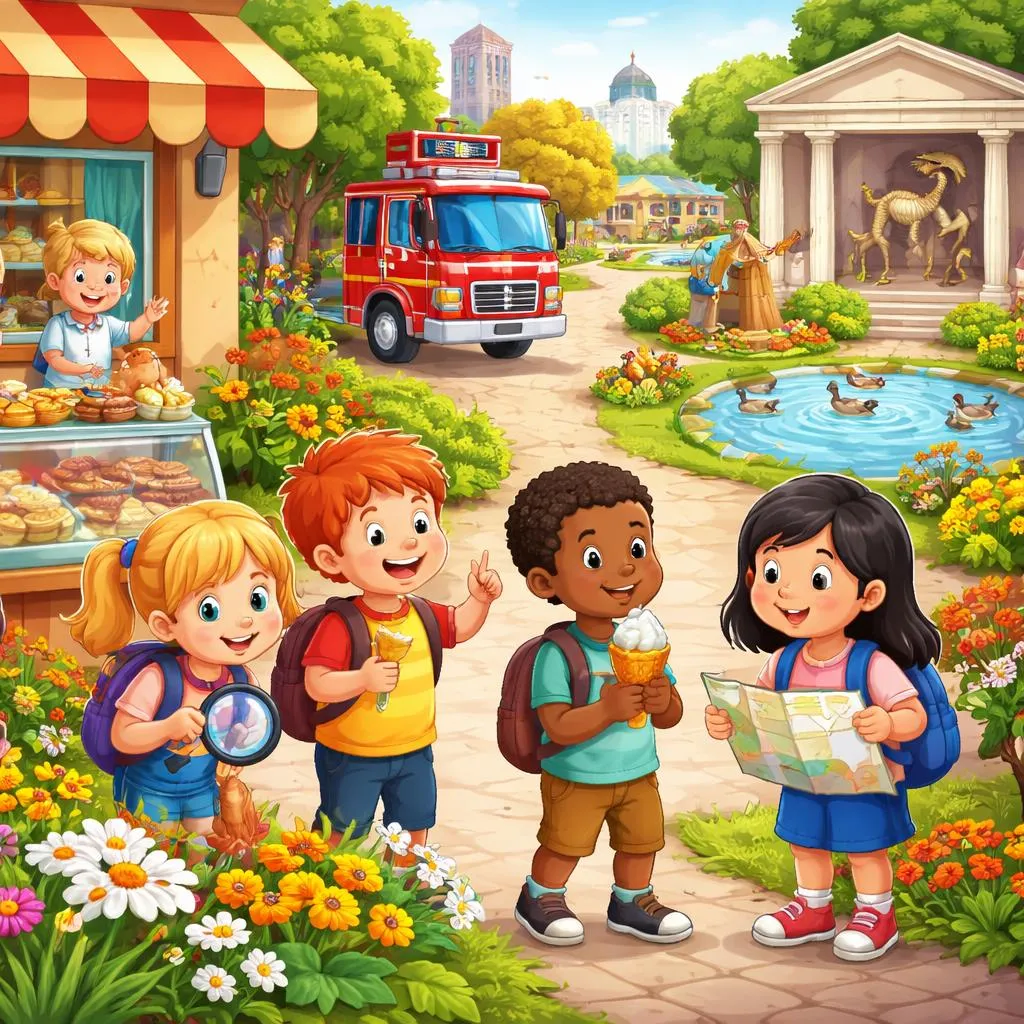

Hello, wonderful young explorers! Today brings an exciting opportunity to discover the world around us. Every town contains many interesting locations. Each place serves a special purpose. Learning the names of these locations helps children understand their community. The "places in towns" vocabulary opens doors to real-world English use. By knowing these words, children can describe where they go and what they do. Let us begin our journey through the wonderful places that make up a town.
What Are Places in Towns? Places in towns are the buildings and locations people visit every day. They include the places where we live, learn, shop, and play. Each place has a specific function. A school helps children learn. A hospital helps sick people feel better. A park provides space for fun and exercise.
These places together create a community. People work in some places. People shop in others. Some places offer entertainment. Others provide essential services. Understanding these different locations helps children make sense of their world.
When children learn the names of places in towns, they gain important vocabulary. They can talk about where they went after school. They can describe where their parents work. They can ask to visit their favorite locations. This vocabulary makes English useful in daily life.
The words for town places appear frequently in conversations. Adults discuss going to the supermarket. Children talk about visiting the playground. Families plan trips to the library or cinema. Mastering this vocabulary prepares children for real communication.
Meaning and Explanation of Town Places Each place in a town has a clear meaning and purpose. Understanding what happens at each location helps children remember the names. The meaning connects directly to the activities people do there.
A school is a place for learning. Teachers and students gather here. Classrooms fill with books and desks. Children spend many hours at school each day. The word "school" represents education and growth.
A hospital provides medical care. Doctors and nurses work here. Sick people come to feel better. The building often looks large and busy. Understanding hospitals helps children feel less afraid when they need medical attention.
A supermarket sells food and household items. Families visit to buy groceries for the week. Shelves hold everything from milk to cereal. The word "supermarket" combines "super" meaning big and "market" meaning place to buy things.
A library loans books and materials. People can read quietly or borrow items to take home. Story times and activities often happen here. Libraries represent free access to knowledge and entertainment.
A park offers green space for recreation. Children play on swings and slides. Families have picnics on the grass. People walk their dogs along paths. Parks provide breathing room in busy towns.
Categories of Places in Towns Grouping places in towns into categories helps children organize their learning. Each category includes locations with similar purposes. This makes the vocabulary easier to remember.
Shopping places include supermarkets, shops, and markets. People visit these locations to buy things they need or want. A bakery sells bread and cakes. A toy store sells games and playthings. A clothes shop sells shirts, pants, and dresses. Each shopping place specializes in certain items.
Learning places include schools, libraries, and museums. These locations help people gain knowledge. A school provides daily education. A library offers books for borrowing. A museum displays interesting objects from history or science. Children expand their minds at these places.
Health places include hospitals, clinics, and pharmacies. These locations care for people's bodies. A hospital treats serious illnesses. A clinic handles routine checkups. A pharmacy sells medicines. Staying healthy involves visiting these places.
Fun places include parks, playgrounds, cinemas, and restaurants. These locations provide entertainment and enjoyment. A park offers outdoor play. A cinema shows movies on a big screen. A restaurant serves meals that someone else cooks. Families create happy memories at these places.
Community places include police stations, fire stations, and post offices. These locations provide essential services. Police officers keep people safe. Firefighters put out dangerous fires. Postal workers deliver mail and packages. These places help the whole town function smoothly.
Daily Life Examples of Town Places Connecting places in towns to daily routines makes learning meaningful. Children visit many locations regularly without even thinking about it. Pointing out these connections builds vocabulary naturally.
A typical morning might start at home. Then children walk or ride to school. The route passes various places. Perhaps they see a bakery with fresh bread smell. Maybe they pass the fire station with its big red trucks. The journey to school offers many vocabulary opportunities.
After school, families often run errands. A parent might stop at the supermarket to buy dinner ingredients. Children can help find items on shelves. They learn words like "bakery section" or "dairy aisle" inside the larger supermarket. This builds specific vocabulary within the general place.
Weekends bring visits to fun locations. A family might go to the park for a picnic. They might visit the cinema to see a new movie. A restaurant meal celebrates a special occasion. These enjoyable experiences create strong memory connections to the place names.
Special needs bring visits to other places. A sick child visits the doctor's office or clinic. Someone needs to mail a package at the post office. A library book needs returning before the due date. These necessary visits reinforce vocabulary through real purpose.
Printable Flashcards for Town Places Flashcards provide excellent support for learning places in towns. Clear images with matching words help children build recognition. Printable versions offer flexibility for teachers and parents.
Basic place flashcards show each location clearly. A picture of a school appears on one card. The word "school" appears on another. Children match the image to the word. This builds connection between visual and written forms.
Category flashcards group related places together. A shopping category card might show small images of a supermarket, bakery, and toy store. Children learn that these places share the purpose of buying things. This builds conceptual understanding along with vocabulary.
Question cards prompt discussion about each place. "Where do you buy bread?" The answer card shows a bakery. "Where do you borrow books?" The library card provides the answer. This builds functional knowledge about what happens at each location.
Location cards show places without labels. Children name each place from memory. This tests recognition and recall. Parents can hold up cards during car rides. Children practice while traveling through town, seeing real examples of each place.
Activity cards combine with place cards for matching games. Cards show a book, a bandage, bread, and a swing. Children match each item to the correct place. Books go to the library. Bandages connect to the hospital. This builds deeper understanding of place functions.
Learning Activities and Games for Town Places Games turn vocabulary practice into joyful play. These activities work well for learning places in towns. Children stay engaged while building essential knowledge.
Town Building with blocks creates a hands-on learning experience. Provide building blocks and pictures of different town places. Children construct their own town. They decide where to place the school, hospital, and supermarket. As they build, they name each location. This combines creativity with vocabulary practice.
I Spy on the Town sharpens observation skills. During walks or car rides, play this game. "I spy a place where firefighters work." Children look for the fire station. "I spy a place with many books." Children search for the library. This game works anywhere and builds real-world connections.
Place Charades brings movement to learning. One child acts out what happens at a specific place. They might pretend to read for library. They might push a shopping cart for supermarket. Others guess the place. This builds understanding of place functions through physical expression.
Map Making extends learning to spatial relationships. Provide a large paper and drawing materials. Children draw their own town map. They include all the important places they know. They label each location. This builds literacy along with geography concepts.
Sorting Game organizes places by category. Provide a collection of place pictures. Create category cards labeled "Shopping," "Learning," "Health," "Fun," and "Community." Children sort each picture into the correct category. This builds conceptual understanding of place functions.
Visit Sequencing helps children understand routines. Discuss a typical week. Which places does the family visit each day? Monday might bring school and supermarket. Saturday might include park and cinema. Children arrange place cards in weekly order. This builds time concepts along with place vocabulary.
The "places in towns" vocabulary opens up the world for young learners. Each new word represents a real location they can visit. Each place name connects to activities they experience. Through learning these words, children gain the ability to describe their community. They can talk about where they go and what they do. They can understand conversations about errands and outings. This vocabulary makes English practical and immediately useful. Every trip through town becomes a learning opportunity. Every building they pass reinforces the words they know. The town itself becomes a classroom without walls.