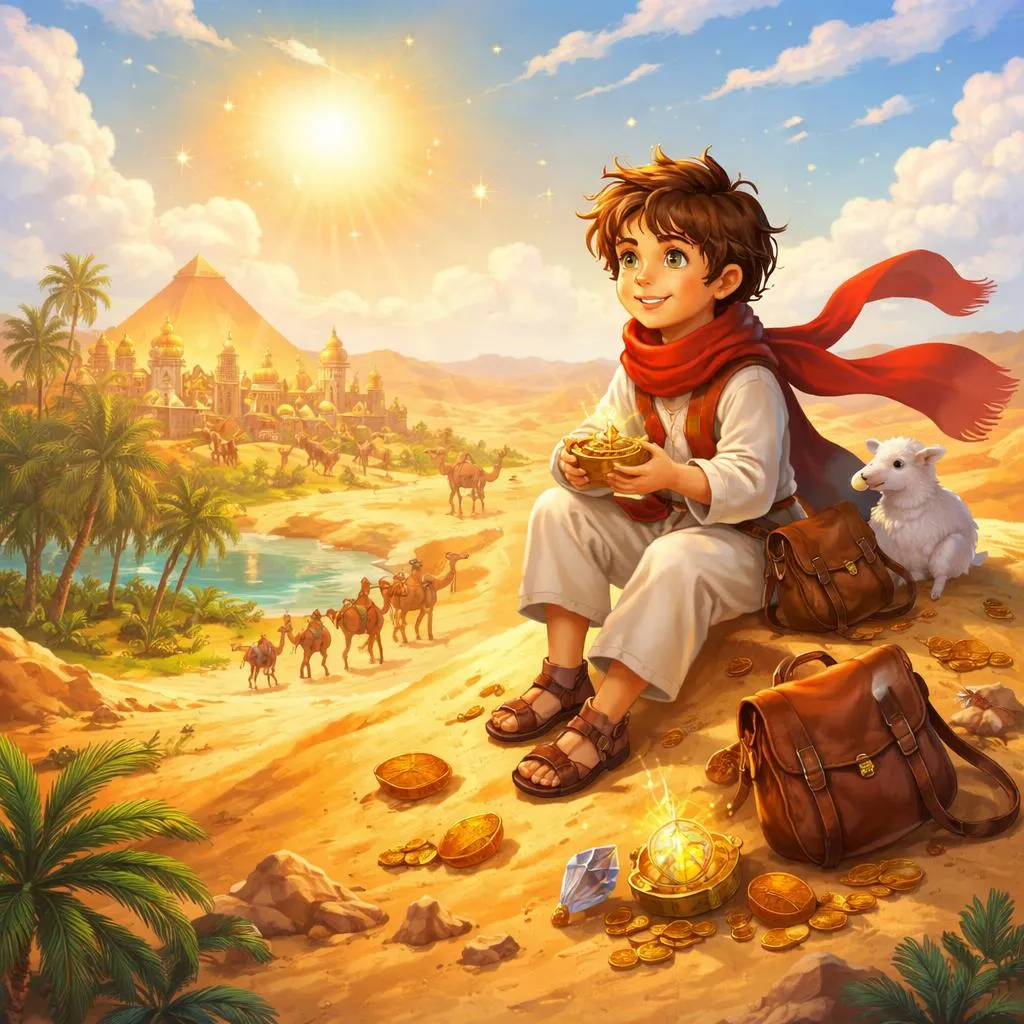

Classic literature often contains themes too complex for young readers. Adaptations solve this problem. They keep the soul of the original while using simpler language. The alchemist children's story version transforms Paulo Coelho's philosophical novel into an accessible adventure. Young readers follow a shepherd on a treasure hunt. They encounter lessons about listening to hearts and noticing signs. The journey becomes both physical and emotional. This adaptation maintains the magic while removing adult complexity. Let us explore how this story serves language development and character education simultaneously.
What Is The Alchemist Children's Story Version?
This is a simplified retelling of the original novel for young audiences. It follows Santiago, a young shepherd from Spain. He dreams repeatedly about a treasure near the Egyptian pyramids. A mysterious king tells him to follow his dreams. Santiago sells his sheep and travels across oceans and deserts. Along the way, he meets helpful people. A crystal merchant teaches him about work. An Englishman introduces him to alchemy. A desert woman shows him about love. An alchemist guides him toward his destiny. Santiago learns that the journey matters as much as the destination. The treasure waits where he least expects it.
Vocabulary Learning from the Alchemist Story
This rich narrative introduces tiered vocabulary across multiple domains. Words connect to travel, emotions, nature, and wisdom.
Travel Words: shepherd, flock, oasis, caravan, desert, pyramids, journey, horizon, market, merchant. Nature Words: wind, sun, sand, stars, hawk, horse, spring, gold, crystal, metal. Emotion Words: dream, fear, courage, love, heart, soul, destiny, hope, patience, wonder. Wisdom Words: omens, signs, legend, soul, personal, treasure, lesson, teacher, learner, seeker. Action Words: follow, listen, travel, work, learn, teach, transform, discover, return, understand.
Each word appears naturally within the adventure context. The desert crossing teaches "caravan" and "oasis" together. The crystal shop introduces "merchant" and "crystal" as connected concepts.
Phonics Points in the Alchemist Story
Specific sound patterns emerge through character names and key vocabulary. Identifying these supports decoding skills.
The /sh/ sound: shepherd, ship, shop, shine. Santiago begins as a shepherd. The sound appears frequently in early chapters.
The /s/ sound: sand, sun, stars, soul, silver. The desert setting emphasizes this sibilant sound. Practice saying desert words together.
The /tr/ sound: treasure, travel, trust, true. The treasure theme repeats this blend throughout. Santiago must trust his journey.
The /j/ sound: journey, jewel, joy. The journey brings both difficulty and joy. These words connect thematically.
Vowel patterns: dream, seek, sheep. The long /e/ sound appears in goal-related words. Santiago dreams and seeks. He starts with sheep.
Grammar Patterns in the Story
The alchemist children's story models various grammatical structures within its narrative.
Past Tense Narrative: The story primarily uses simple past tense. "Santiago traveled across the desert." "He met an Englishman." "They crossed the sands together." This provides extensive past tense modeling.
Dialogue Patterns: Characters speak frequently. Questions and answers appear naturally. "Where are you going?" "I follow my dream." This models conversational exchange.
Modal Verbs for Possibility: Characters discuss what might happen. "You can find your treasure." "The wind may guide you." "We must cross tonight." These modals appear in meaningful contexts.
Conditional Thinking: Santiago considers possibilities. "If I find the treasure, I will be happy." "If the wind blows, we will follow." This introduces conditional structures naturally.
Sequence Adverbs: The journey unfolds in order. First, he leaves Spain. Then, he works in Tangier. Later, he joins the caravan. Finally, he reaches the pyramids. These words organize the narrative.
Learning Activities for the Alchemist Story
Active engagement helps children internalize the story's themes and language.
Dream Journal: Santiago follows his dream. Students create dream journals. They draw or write about their own dreams. What would they seek if they could travel anywhere? This builds personal connection.
Treasure Map Creation: Students draw maps showing Santiago's journey. Label locations in English. Spain, Tangier, the desert, the oasis, the pyramids. Add vocabulary words along the route.
Character Traits Web: Create webs for main characters. Santiago is brave, curious, patient. The crystal merchant is kind, worried, helpful. The alchemist is wise, mysterious, calm. Compare the webs.
Omen Observation: In the story, Santiago notices signs. Students become omen observers for a day. What signs do they notice? A rainbow. A bird. A friendly person. Record and share observations.
Wisdom Quotes Collection: The story contains many wise sayings. Students collect their favorites on quote cards. "When you want something, the whole universe helps you." Display these around the classroom.
Learning Activities for Group Settings
Collaborative activities deepen understanding through discussion and shared creation.
Journey Mapping: Create a large classroom map showing Santiago's journey. Add pictures and words at each stop. Students add new discoveries as they read further chapters. This builds collective understanding.
Character Interviews: Students take turns playing characters. Classmates interview them about their experiences. "Why did you leave your sheep?" Santiago explains. This builds perspective-taking and spontaneous speech.
Story Retelling Chain: Retell the story as a group. One student starts. Another continues. Keep going until the story completes. This builds narrative skills and listening attention.
Cultural Exploration: Santiago travels through different lands. Small groups research one location. Spain, Morocco, Egypt. What does the place look like? What language do people speak? Share findings with the class.
Educational Games from the Alchemist Story
Games transform themes into playful learning experiences.
Treasure Hunt: Create a classroom treasure hunt. Hide a small treasure. Leave clues with vocabulary words from the story. Students follow the trail, reading each clue to find the next location.
Dream Memory: Place dream-related picture cards face down. Cards show sheep, pyramids, desert, stars, crystal, gold. Students flip two cards looking for matches. When finding a match, they say the word.
Omen Bingo: Create bingo cards with story-related words. Call out definitions or sentences. Students cover matching words. "Something you find at the end of a journey." Students cover "treasure."
Character Charades: Students act out characters without speaking. Others guess who they are and what scene they perform. This requires deep understanding of character actions and motivations.
Printable Materials for the Alchemist Story
Ready-to-use printables support independent learning and review.
Vocabulary Flashcards: Create cards with key words on one side and simple definitions or pictures on the other. Words: shepherd, caravan, oasis, pyramid, alchemist, treasure, dream, omen.
Comprehension Questions: Prepare questions for each section of the story. "Why did Santiago sell his sheep?" "Who did he meet at the oasis?" "Where was the treasure actually buried?" Answer in complete sentences.
Story Map Worksheet: Create a worksheet with sections for characters, setting, problem, journey events, and solution. Students complete after reading.
Journey Timeline: Provide a blank timeline. Students illustrate and label key events in order. Leaving Spain. Working at the crystal shop. Crossing the desert. Meeting the alchemist. Reaching the pyramids. Finding the treasure.
Character Comparison Chart: Create a chart comparing Santiago at the beginning and end. How does he change? What does he learn? Students fill with evidence from the story.
Daily Life Connections to the Alchemist Story
Linking story themes to daily experiences makes learning relevant and personal.
Following Dreams Discussion: Santiago followed his dream. What dreams do students have? Becoming a doctor. Visiting another country. Learning an instrument. Share dreams respectfully. Use future tense naturally.
Noticing Signs: Santiago noticed omens. What signs help us daily? A clock shows when to leave. A smile shows someone is friendly. A bell signals class change. This builds observation skills.
Helping Others: Characters helped Santiago along his journey. Who helps students daily? Parents, teachers, friends, bus drivers. Create a class gratitude chart. Name helpers and how they help.
Transformations: Alchemy means transforming things. What transformations do students experience? Caterpillar to butterfly. Seed to flower. Ice to water. Baby to big kid. This builds understanding of change.
Printable Flashcards from the Alchemist Story
Well-designed flashcards become versatile teaching tools. Consider these options for different learning goals.
Picture-Word Cards: Front shows simple drawing or printed image. Back shows word in English and native language if needed. Store in story-specific envelopes for easy access.
Word-Definition Cards: One card shows "shepherd." Matching card shows "person who takes care of sheep." Students match words to definitions. This builds reading comprehension.
Sequence Cards: Create cards showing main events. Students arrange in story order. This builds narrative understanding and sequence vocabulary.
Emotion Cards: Characters feel many emotions. Create cards showing "brave," "scared," "hopeful," "tired." Students match emotions to story moments. "Santiago felt scared when..." This builds emotional vocabulary.
Grammar Patterns Practice
Use story sentences to practice specific grammar patterns naturally.
Past Tense Practice: Write sentences with missing verbs. "Santiago ___ his sheep." Students choose from "sell" or "sold." Discuss why "sold" works in the story context.
Question Formation: Practice forming questions about the story. "Where did Santiago travel?" "Why did he leave Spain?" "Who helped him in the desert?" Students ask and answer with partners.
Adjective Placement: Describe characters using adjectives from the story. "The brave shepherd." "The crystal merchant is kind." "The wise alchemist." Practice adjective-noun order.
Preposition Practice: Use story locations to practice prepositions. Santiago walked across the desert. He worked in the shop. He traveled to Egypt. He found treasure under the tree.
The Lasting Lessons of the Alchemist
The alchemist children's story version carries profound lessons in accessible language. Young readers learn that dreams matter. They discover that journeys teach as much as destinations. They see that helpers appear along the way. They understand that treasures sometimes hide in familiar places. For language learners, the story provides rich vocabulary in meaningful contexts. The desert setting introduces nature words. The travels introduce geography terms. The emotions introduce feeling vocabulary. The wisdom introduces abstract concepts gently. One story yields vocabulary, grammar, phonics, and life lessons simultaneously. That is the power of choosing the right narrative for language instruction. The journey of learning a language mirrors Santiago's journey. Both require courage, patience, and trust in the process.