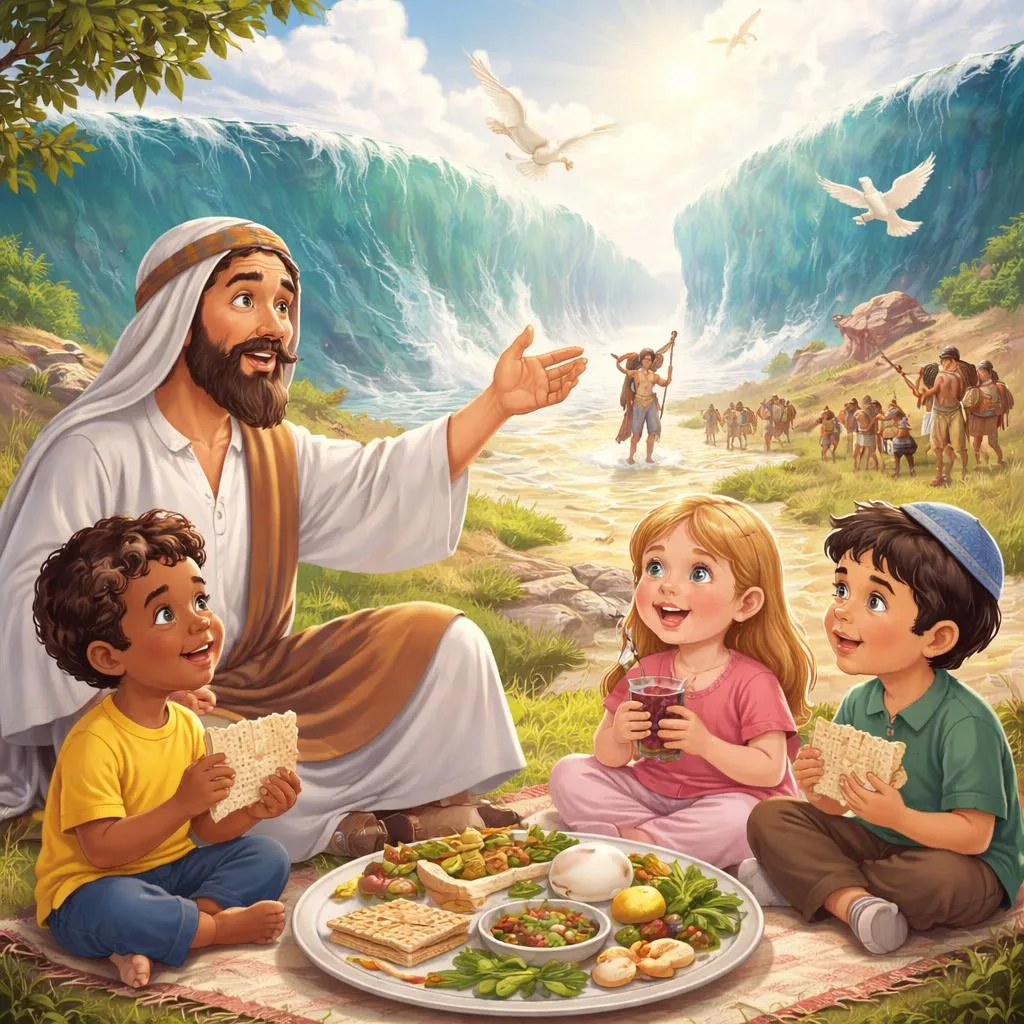

Stories of liberation resonate across cultures and generations. They speak of hope in difficult times. They celebrate freedom won through faith and courage. The children's passover story carries all these elements. It tells of ancient slavery and miraculous escape. It introduces themes of justice and divine help. It explains traditions still observed today. For young children, the story requires careful telling. The events are dramatic. The emotions are strong. A good children's version focuses on the journey from sadness to joy. It emphasizes hope and God's care. Let us explore how this story supports language development and cultural understanding in early childhood.
What Is the Children's Passover Story?
This is a simplified retelling of the Exodus narrative from the Bible. It begins with the Israelites living as slaves in Egypt. They work hard for the Pharaoh. They have no freedom. God hears their cries and chooses Moses to lead them. Moses asks Pharaoh to let the people go. Pharaoh refuses. God sends ten plagues to convince Pharaoh. Water turns to blood. Frogs cover the land. Darkness falls. Finally, the tenth plague passes over the homes of the Israelites. They are saved. Pharaoh tells them to leave. They hurry away with no time to let bread rise. They bake flat bread called matzah. The story teaches that God hears those who suffer and acts to set them free.
Vocabulary Learning from the Passover Story
This narrative introduces vocabulary across multiple domains. Words connect to slavery, freedom, plagues, and traditions.
Story Words: Egypt, Pharaoh, Moses, Israelites, slaves, freedom, plagues, Passover, Exodus, Red Sea, desert, promised land. Slavery Words: slaves, work, hard, harsh, bricks, straw, taskmasters, suffer, cry, rescue, free. Plague Words: plague, blood, frogs, lice, flies, cattle, boils, hail, locusts, darkness, death, angel. Passover Words: lamb, mark, doorpost, pass over, save, matzah, unleavened, bitter herbs, Seder, Haggadah. Freedom Words: freedom, leave, hurry, escape, journey, wander, arrive, celebrate, remember, thank.
Each story element introduces connected vocabulary. The slavery teaches work words. The plagues introduce nature and judgment words. The escape teaches movement and celebration words.
Phonics Points in the Passover Story
Specific sound patterns emerge through key vocabulary. Identifying these helps build decoding skills.
The /p/ sound: Passover, plague, Pharaoh, people, plagues. The holiday starts with this sound. Practice saying Passover words together.
The /m/ sound: Moses, matzah, mark, midnight, Miriam. Moses is the leader. Matzah is the bread. Marks save the children.
The /f/ sound: freedom, frogs, flies, family, follow. Freedom is the goal. Frogs are a plague. Family travels together.
The /l/ sound: lamb, lice, locusts, leave, land. Lambs provide blood. Lice infest. Locusts destroy. They leave Egypt.
Rhyming words: free/see, night/light, bread/spread, land/sand. Simple rhymes help children remember key elements.
Grammar Patterns in the Passover Story
The children's passover story models various grammatical structures within its dramatic narrative.
Past Tense Narrative: The story uses simple past tense throughout. "Moses asked Pharaoh to free the people." "Pharaoh refused again and again." "The angel passed over the marked homes." "The Israelites hurried away from Egypt." This provides extensive past tense modeling.
Dialogue Patterns: Characters speak dramatically. "Let my people go!" Moses demanded. "No!" Pharaoh refused. "What is this?" the people asked at the sea. Dialogue models strong conversational language.
Repetitive Patterns: The plagues follow a pattern. Moses asks. Pharaoh refuses. Plague comes. Pharaoh promises. Plague ends. Pharaoh hardens his heart. Repetition supports prediction and language recall.
Questions and Answers: The Passover Seder includes questions. "Why is this night different?" Children ask. Adults answer with the story. Questions and answers model conversational exchange.
Because Sentences: Causal language explains events. "Pharaoh refused because his heart was hard." "The angel passed over because the doors were marked." "The Israelites left quickly because they were free." This builds causal understanding.
Learning Activities for the Passover Story
Active engagement helps children internalize vocabulary and themes through hands-on learning.
Matzah Making: Make simple matzah crackers from flour and water. Mix quickly. Bake briefly. Discuss why matzah is flat and has holes. Use baking vocabulary. Mix, roll, poke, bake. Connect to the hurry of leaving Egypt.
Doorpost Marking: Create pretend doorposts with red paper. "Paint" with red paint or markers. Discuss why the Israelites marked their doors. Use protection vocabulary. Safe, save, pass over, protect.
Plague Pictures: Draw or color pictures of the ten plagues. Frogs, darkness, hail, etc. Use plague vocabulary. Sequence them in order. Discuss which might be scariest or strangest.
Staff Craft: Moses used a staff. Create simple staffs from paper towel tubes or sticks. Decorate. Pretend to be Moses asking Pharaoh to free the people. Use dialogue. "Let my people go!"
Red Sea Craft: Create a Red Sea craft. Blue paper cut to show water parted. Israelites walking through on dry ground. Use crossing vocabulary. Parted, walked through, safe, dry.
Learning Activities for Group Settings
Collaborative learning builds language through interaction and shared experiences.
Story Sequencing with Pictures: Create picture cards showing main events. Moses before Pharaoh. Plagues coming. Marking doors. Passover at night. Leaving Egypt. Crossing the Red Sea. Celebrating freedom. Groups arrange in order and retell the story.
Character Interviews: Students take turns playing Moses, Pharaoh, or an Israelite. Classmates interview them. "Moses, were you scared to talk to Pharaoh?" "Pharaoh, why wouldn't you let them go?" "Israelite, how did you feel when you left?" This builds question formation and perspective.
Seder Plate Exploration: Create a model Seder plate with paper or play food items. Discuss each item. Matzah, bitter herbs, lamb bone, egg, vegetable, salt water. Explain what each represents using simple language.
Ten Plagues Relay: Create a relay where teams act out each plague. Hop like frogs. Cover eyes for darkness. Make buzzing for flies. This builds kinesthetic learning and plague vocabulary.
Educational Games for the Passover Story
Games make learning playful and memorable.
Afikoman Hunt: Hide a piece of matzah (or paper matzah) in the classroom. Students hunt for it like the afikoman at a Seder. Use hiding and finding vocabulary. Search, find, hidden, discover, prize.
Plague Bingo: Create bingo cards with plague pictures. Blood, frogs, lice, flies, cattle, boils, hail, locusts, darkness, death of firstborn. Call out plague names. Students cover matching pictures.
Memory Match with Passover Cards: Create pairs of cards with Passover pictures. Moses/Moses. Pharaoh/Pharaoh. Matzah/matzah. Lamb/lamb. Sea/sea. Place face down. Students flip two looking for matches. Name pictures when flipping.
Who Said It? Game: Read quotes from the story. Students guess who spoke. "Let my people go!" (Moses) "No, I will not let them go!" (Pharaoh) "Why is this night different?" (Child at Seder) This builds listening and character knowledge.
Printable Materials for the Passover Story
Ready-to-use printables extend learning beyond story time.
Passover Vocabulary Flashcards: Create cards with Passover pictures on one side and words on the other. Moses, Pharaoh, Egypt, slave, plague, lamb, door, matzah, sea, freedom, Seder, afikoman. Use for matching games or quick review.
Story Sequencing Cards: Create cards showing main events in order. Students arrange and retell using complete sentences. This builds narrative skills.
Plague Coloring Pages: Print outline drawings of each plague. Students color while discussing with partners. Sequence them on a wall display.
Seder Plate Worksheet: Create a worksheet with a blank Seder plate. Students draw and label each item. Matzah, bitter herbs, lamb bone, egg, vegetable, salt water. This builds tradition vocabulary.
Passover Mini-Book: Fold paper to create a small book. Each page shows one part of the story with simple text. "The Israelites were slaves." "Moses asked Pharaoh." "God sent plagues." "The angel passed over." "They left Egypt." "They crossed the sea." "They were free!" Students illustrate each page.
Daily Life Connections to the Passover Story
Linking story themes to daily experiences makes learning relevant and personal.
Freedom Discussion: What does freedom mean? When do children feel free? When do they have to do things they don't want to? Use freedom vocabulary. Free, choice, decide, obey, rules. Connect to the story's themes.
Trying Times: The Israelites had hard times. When have students had hard times? A long car ride. Waiting for something. Being sick. How did they get through it? Use perseverance vocabulary. Wait, hope, help, finally.
Celebrating Traditions: Families celebrate Passover differently. Students share their family's traditions if applicable. Use tradition vocabulary. "In my family, we..." This builds cultural awareness and oral language.
Asking Questions: The Seder encourages children to ask questions. Practice asking questions about anything. Use question words. Who, what, where, when, why, how. Celebrate curiosity.
Printable Flashcards from the Passover Story
Effective flashcards support multiple learning styles.
Picture-Word Cards: Front shows simple Passover drawing or printed image. Back shows word in English. Moses, Pharaoh, Egypt, slave, plague, lamb, door, matzah, sea, freedom, Seder, afikoman.
Character Cards: Create cards for each character with simple descriptions. "Moses: leader of the Israelites." "Pharaoh: king of Egypt." "Israelites: God's people, slaves in Egypt." Students match characters to descriptions.
Plague Cards: Create cards for each plague with name and simple picture. Sequence them. Practice saying the names in order.
Seder Plate Cards: Create cards for each Seder plate item with name and simple explanation. "Matzah: bread that didn't rise." "Maror: bitter herbs, taste of slavery." "Z'roa: lamb bone, Passover sacrifice."
Phonics Practice from Passover Words
Use Passover vocabulary for targeted phonics instruction.
Initial Sound Sort: Provide Passover picture cards. Moses, Pharaoh, plague, lamb, matzah, sea, Seder. Students sort by beginning sound. M words. P words. L words. S words. This builds phonemic awareness.
Syllable Clapping: Clap syllables in Passover vocabulary. Pass-o-ver (3). E-gypt (2). Phar-aoh (3). Is-ra-el-ites (4). Plague (1). Mat-zah (2). Se-der (2). A-fi-ko-man (4). This builds phonological awareness.
Rhyming Word Hunt: Find words that rhyme with Passover words. Free/see/be. Night/light/bright. Bread/spread/instead. Sea/me/be. Create rhyming pairs and use in sentences.
Vowel Sound Sort: Sort Passover words by vowel sounds. Moses has long /o/. Pharaoh has long /a/ in first syllable, long /o/ in second. Plague has long /a/. Sea has long /e/. This builds vowel discrimination.
Grammar Patterns Practice
Use Passover story sentences to practice specific grammar structures.
Past Tense Practice: Write sentences with missing verbs. "Moses ___ to Pharaoh." Students choose from "talk" or "talked." "The plagues ___ Egypt." Choose from "strike" or "struck." "The people ___ Egypt." Choose from "leave" or "left." Discuss correct choices, including irregulars.
Question Formation: Practice asking questions about the story. "Who led the Israelites?" "What were the plagues?" "Where did they go?" "When did they leave?" "Why did they mark their doors?" "How did they cross the sea?" Students ask and answer with partners.
Because Sentences: Practice causal sentences using "because." "Pharaoh refused because his heart was hard." "The angel passed over because the doors were marked." "The Israelites left quickly because they were free." Students create because sentences.
Sequence Practice: Practice using sequence words to retell the story. "First, the Israelites were slaves. Then, Moses asked Pharaoh to free them. Next, God sent plagues. After that, they marked their doors. Finally, they left Egypt and were free." Students retell using sequence language.
The Freedom to Learn
The children's passover story offers unique value in language classrooms, particularly when teaching about freedom, faith, and cultural traditions. Its dramatic plot engages children immediately. Its clear characters support comprehension. Its themes of hope and liberation inspire discussion. Children learn that freedom is precious. They learn that courage can overcome oppression. They learn that faith sustains in difficult times. For language educators, this story provides rich material across multiple domains. Vocabulary builds through meaningful narrative. Grammar models appear in dramatic dialogue. Phonics practice emerges from distinctive names. Discussions explore deep themes in age-appropriate ways. The story connects classroom learning to family traditions and spring celebrations. That combination creates memorable, meaningful learning.