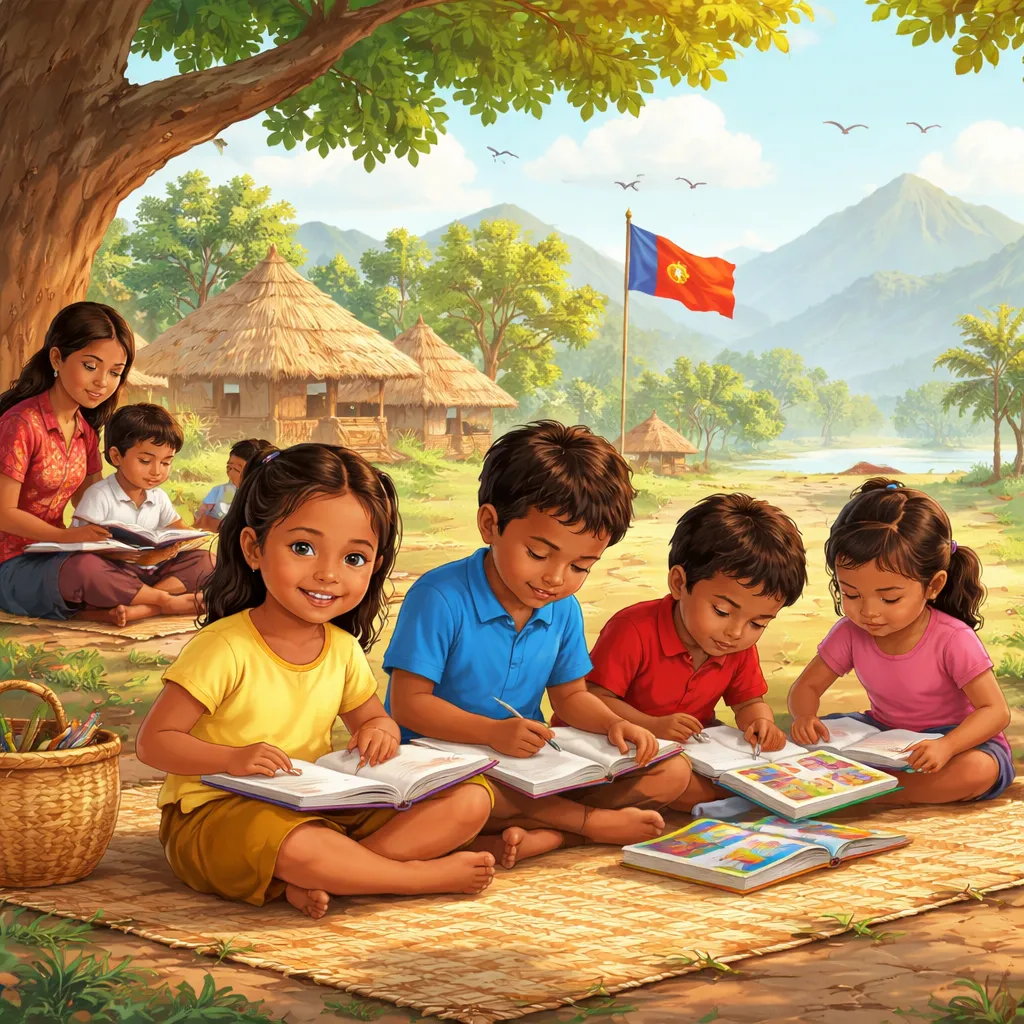

A Friendly Hello and First Impressions
Bondia! (bohn-DEE-ah). This is a warm "Good day" in Tetum. Obrigadu! (oh-bree-GAH-doo) 每 men say this. Obrigada! (oh-bree-GAH-dah) 每 women say this. Both mean "Thank you". Learning reading about East Timor (Timor-Leste) starts with these words of gratitude and respect.
East Timor is a small country. It is in Southeast Asia. It occupies the eastern half of the island of Timor. Its shape looks like a crocodile. The crocodile is swimming towards Australia. The country is north of Australia. The Timor Sea is to the south. Indonesia is its only neighbor, to the west. The land is rugged, green, and beautiful. It is a very new nation.
People call it the "Youngest Nation in Asia". It gained full independence in 2002. Another nickname is the "Land of the Sleeping Crocodile". A legend says the island was formed by a crocodile. The crocodile turned into the land. Are you ready to hear this story of courage?
Deep Dive into Culture and Stories
Echoes of History
A modern hero is Xanana Gusm?o. He was a resistance leader. He fought for independence from Indonesia. He was a poet and a guerrilla. He was captured and put in prison. He never gave up hope. After independence, he became the first president. His story is a key part of learning reading about East Timor (Timor-Leste). It is a story of unwavering hope.
The country's recent history is very difficult. Indonesia invaded in 1975. A long and brutal occupation followed. Many people suffered. The people voted for independence in 1999. This led to more violence. Finally, peace came. The country is now rebuilding. This history of resilience is central to the nation's spirit.
A Gift of Courage
East Timor gives the world a lesson in courage. The people showed incredible bravery. They voted for independence despite fear. They rebuilt their nation from ashes. This spirit is a gift to the world. It shows the power of hope and determination. This story is a key part of learning reading about East Timor (Timor-Leste).
A Land of Mountains and Sea
East Timor is very mountainous. The central range is called the Ramelau. Mount Ramelau is the highest peak. The north coast is rocky. The south coast is flatter. The land drops sharply to the sea. There are coral reefs along the coast. The landscape is wild and undeveloped.
The climate is tropical. It has a dry season and a rainy season. The mountains are cool. The coast is hot. The environment is tough. Most people are farmers. They grow coffee, rice, and maize. They also grow vanilla and cloves. Traditional houses are called "uma lulik". They are sacred family houses. They are built on stilts with thatched roofs. The design is ancient.
A special animal is the saltwater crocodile. It is a national symbol. The legend says the island is a crocodile. The crocodile is a grandfather to the people. The national bird is the crow. It is called "laverca". The national flower is the hibiscus. It is red and beautiful. The sandalwood tree was once famous. It was traded for centuries.
Landmarks of Faith and Memory
Visit the Cristo Rei of Dili. It is a giant statue of Jesus. It stands on a hill east of the capital. The statue is 27 meters tall. It was a gift from Indonesia. You must climb 500 steps to reach it. The view of the ocean is stunning. A fun story says the statue faces Australia. It is blessing the path to the new nation. The statue is a landmark of faith.
See the Resistance Museum in Dili. It is in a former prison. The museum tells the story of the struggle. It shows photos, letters, and weapons. It is a sad but important place. It helps people remember and heal. The museum is a tribute to the heroes.
Another wonder is the Tais Market. Tais are traditional hand-woven textiles. Women sell them in the market. Each tais has patterns and colors. The patterns tell a family's story. Buying a tais supports the weavers. The market is full of color and skill. It is a living culture.
Festivals of Memory and Light
The most important day is Independence Day. It is on May 20th. It marks restoration of independence in 2002. The main celebration is in Dili. There is a big parade. The military and school groups march. Traditional dancers perform. People wear tais clothing.
The national flag is everywhere. The colors are red, yellow, black, and white. A black triangle has a white star. Families have picnics and parties. The day is full of joy, pride, and memory. It is a celebration of freedom won.
Another important day is All Saints' Day. It is on November 1st. People visit cemeteries. They clean the graves of loved ones. They light candles and say prayers. The cemeteries glow with thousands of lights. The day is about remembering ancestors. It is a beautiful, solemn tradition.
Food and Flavors
The national dish is Ikan Saboko. It is grilled fish. The fish is often tuna or mackerel. It is marinated with tamarind and spices. It is served with rice and spinach. Families eat it for special meals. The fish is fresh, smoky, and flavorful. It tastes like the ocean.
You must try Batar Da'an. It is a simple, hearty stew. It is made of corn, mung beans, and pumpkin. Sometimes it has smoked meat. It is a common everyday meal. The stew is nutritious and comforting. It tastes like the staple of the land.
A Culture of Weaving and Reconciliation
Tais weaving is a sacred art. Women pass the skill to their daughters. The patterns are geometric and symbolic. Weaving is slow and careful. This tradition is a beautiful part of learning reading about East Timor (Timor-Leste). It represents patience and identity.
The country focuses on reconciliation. After the conflict, people had to forgive. The government set up a commission. It helped communities talk and heal. This process is difficult but vital. It is a lesson in building peace.
Tips for Young Explorers
Cultural Manners Matter
Respect for elders is very important. Always greet the oldest person first. A slight nod or a handshake is fine. Use polite language. Do not interrupt when they speak.
When entering a sacred house (uma lulik), be very respectful. Remove your shoes. Ask for permission. Do not touch anything without asking. This shows you understand its importance.
Use your right hand for giving and receiving. The left hand is considered unclean. This rule is important for eating and shaking hands. Wash your hands before a meal.
A Note on Staying Safe
East Timor is generally safe now. But it is still poor and recovering. Petty theft can happen. Do not show expensive items. Do not walk alone at night. Keep your belongings close.
Some rural areas have unexploded ordnance. Never touch strange metal objects. Always stay on well-used paths. Do not wander into empty fields. Your guide will keep you safe.
A Tasty Stop
Look for "Pisang Goreng" on the street. It is fried banana. The banana is dipped in batter. It is fried until golden and crispy. Eat it hot. The banana is sweet, soft, and delicious. It is a popular, cheap snack.
Healthy and Happy Travels
Drink only bottled or boiled water. This is the most important rule. Do not drink tap water. Avoid ice in drinks. Brush your teeth with bottled water. This keeps your stomach happy.
The sun is extremely strong. Wear a hat and use sunscreen. The tropical sun can burn you quickly. Drink lots of water to avoid dehydration.
Be careful in the ocean. Some beaches have strong currents. Only swim where it is safe. Ask local people for advice. Never swim alone.
Your Invitation to Explore
Start your journey with a moment of quiet. Think about the word "hope". What does it mean to you? Then, look at pictures of Tais textiles. See the patterns and colors. This is a wonderful way of learning reading about East Timor (Timor-Leste).
Visit a local market. Look for East Timorese coffee. It is organic and shade-grown. Brew a cup. Taste its rich, smooth flavor. Imagine the mountain villages. You can also try weaving with paper strips. Make a simple pattern. Feel the patience it requires.
The world is a big, precious book. Each country is a different chapter. East Timor's chapter is about courage, crocodiles, and a new beginning. Open it with an open heart. Read about its resistance, reefs, and remarkable people. Your curiosity is your guide.
East Timorese families share a meal of ikan saboko. Women weave tais together. Children play soccer on a dusty field. We all know these scenes. We love sharing food. We create beautiful things. We play and hope for a better future. Learning about East Timor shows us this deep connection. Our global family shares the same dreams for peace. Keep exploring, one page, one country, at a time. Your adventure has just begun.