
What Is This Animal?
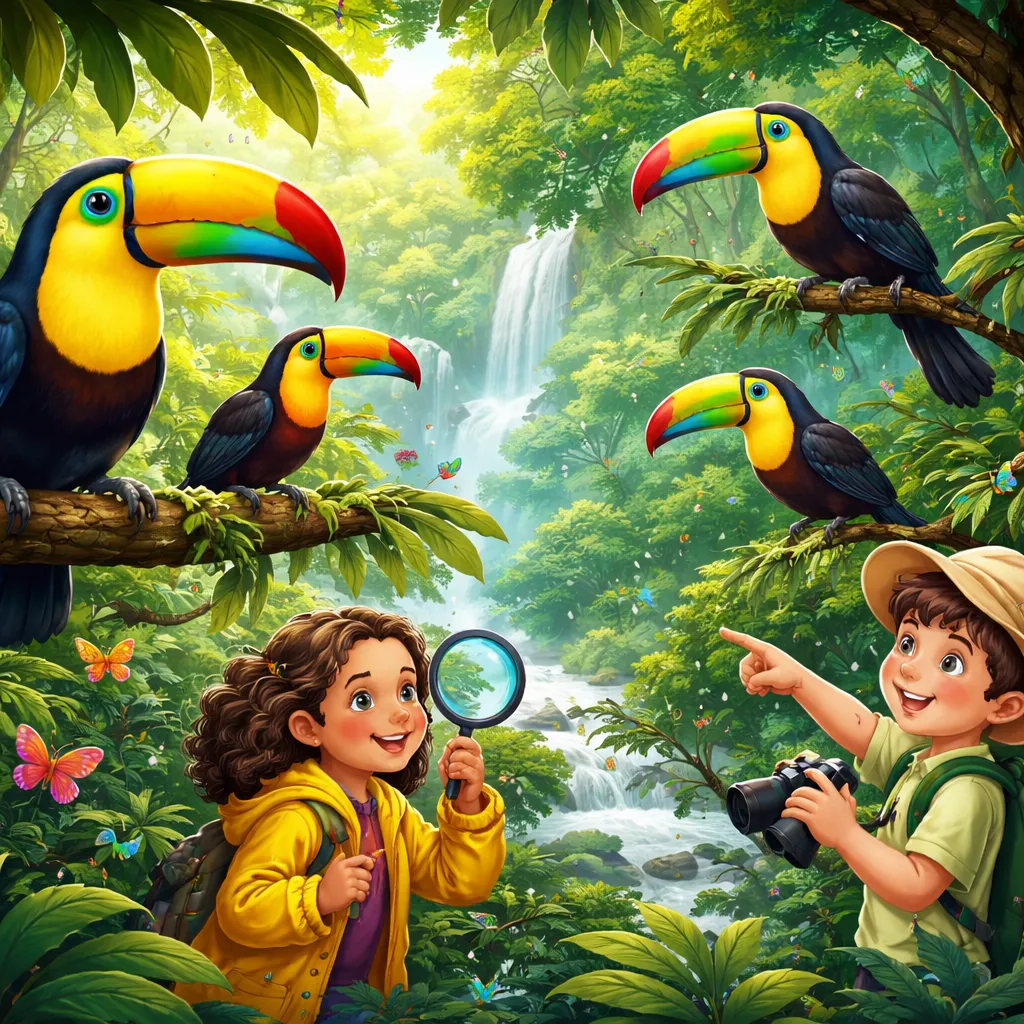
A toucan is a colorful bird with a huge, bright beak. Its beak is often orange, yellow, red, and black. The beak looks heavy but is actually light. It is made of hollow bone covered in keratin. Toucans have black feathers with bright patches of color on their bodies.
Toucans live in the rainforests of Central and South America. They spend most of their time in trees. They are social birds. They live in small flocks. They hop from branch to branch. They use their large beaks to reach fruit on branches that are too thin to support their weight.
These birds are known for their loud calls. They make croaking, clicking, and rattling sounds. Their calls travel far through the rainforest. They call to each other to stay in touch. Toucans are active during the day.
For children, toucans are unforgettable. Their giant, colorful beaks make them one of the most recognizable birds. Learning about toucans teaches children about rainforest wildlife, bird adaptations, and the amazing diversity of life in tropical forests.
English Learning About This Animal
Let us learn the English word toucan. We say it like this: /ˈtuːkæn/. The tou sounds like “too.” The can sounds like “kan.” Put them together: toucan. Say it three times. Toucan. Toucan. Toucan.
Now let us learn words about a toucan’s body. The beak is large, colorful, and lightweight. The feathers are black with bright patches. The feet have two toes forward and two back for gripping branches. The tongue is long and feather-like. The chicks are baby toucans.
There is a famous saying about toucans. Rainforest people say, “The toucan’s beak is a rainbow in the trees.” This celebrates their bright colors. Another saying is, “The toucan calls to its friends across the forest.” This describes their social nature.
These English words help children understand toucan anatomy. When they say beak, they learn about the giant, light structure. When they say chicks, they know the babies. Parents can practice these words while looking at pictures. Point to the parts. Say the words together.
Animal Facts and Science Knowledge
Toucans belong to the family Ramphastidae. There are about forty toucan species. They are found in Central and South America. The keel-billed toucan is the most famous. The toco toucan has the largest beak. Toucans are related to woodpeckers.
Toucans live in tropical rainforests. They live in the canopy. They nest in tree cavities. They often use holes made by woodpeckers. They need large trees with cavities. They live in small family groups. They travel together through the forest.
Toucans are omnivores. They eat mostly fruit. They also eat insects, eggs, and small birds. They use their beaks to pluck fruit from branches. They toss the fruit in the air and swallow it whole. They are important seed dispersers. They spread seeds throughout the forest.
Toucans have special abilities. Their beaks are lightweight. The beak has air pockets inside. It is strong but not heavy. The beak helps them reach food. It also helps them regulate body temperature. Blood vessels in the beak release heat. This keeps them cool in hot rainforests.
Toucans are social birds. They live in groups. They call to each other. They preen each other. They sleep together in tree cavities. They take turns sitting on the eggs. Both parents care for the chicks.
How to Interact With This Animal Safely
Toucans are wild birds. They are not pets. In some places, toucans are kept in zoos and aviaries. They need large spaces to fly. They need a diet of fresh fruit. They are sensitive to cold temperatures.
If you visit a rainforest or zoo, observe toucans from a distance. Do not try to touch them. Their beaks are strong. They can bite if they feel threatened. Watch them hop and call.
Teach children to respect wild birds. Toucans are beautiful but wild. They need their forest home. Watching them in their natural habitat is a special experience. Never try to catch or keep a wild toucan.
If you want to help toucans, support rainforest conservation. Toucans need healthy forests to survive. Protecting their habitat protects them. Learning about them helps us understand why rainforests matter.
Toucans are popular in art and cartoons. Remember that real toucans are wild animals. They are not like cartoon characters. They have their own lives in the rainforest.
What Can We Learn From This Animal
Toucans teach us about being colorful. Their bright beaks stand out. Children learn that being colorful is wonderful. Sharing our colors, talents, and personalities makes the world brighter.
Toucans teach us about using what we have. Their beaks look heavy but are light. Children learn that things are not always what they seem. Looking deeper, asking questions, and understanding how things work are good habits.
Toucans teach us about community. They live in groups. They call to each other. Children learn that friends are important. Playing together, helping each other, and staying in touch make life better.
Toucans teach us about the rainforest. They show us that tropical forests are full of amazing creatures. Children learn that protecting rainforests protects animals like toucans. Every rainforest matters.
Fun Learning Activities
Let us make learning about toucan fun. One activity is the toucan beak game. Ask your child to pretend to have a big, colorful beak. Reach for fruit on branches. Toss the fruit up. Catch and swallow. Say “toucan reaches” and “toucan eats fruit.”
Another activity is drawing a toucan. Look at pictures of toucans. Notice the huge beak, black feathers, and bright colors. Draw a toucan in a rainforest tree. Add colorful fruit. Label the parts. Say the words aloud.
Create a story about a toucan family. Ask your child what the toucans do. Do they call to each other? Do they find fruit? Do they sleep in a tree hole? Write a few sentences together. Let your child draw pictures. Read the story aloud.
Make a toucan craft. Use black paper for the body. Add a large, colorful beak from construction paper. Add bright patches of color on the chest. Add large eyes. Move the craft toucan. Practice saying “toucan calls” and “toucan hops.”
Learn about rainforest animals. Talk about other animals that live with toucans. Compare toucans to parrots and macaws. Use words like “canopy,” “rainforest,” and “seed disperser.”
Learn about bird adaptations. Talk about why toucans have such large beaks. Compare to other birds with special beaks like hummingbirds or woodpeckers. Use words like “adaptation,” “thermoregulation,” and “frugivore.”
These simple activities bring learning to life. Children build English vocabulary while playing. They learn science through understanding rainforest ecosystems. They develop appreciation through learning about tropical wildlife. Learning about toucan becomes a journey into the colorful canopy. Each moment spent together strengthens language, curiosity, and a growing appreciation for the rainbow-beaked birds that teach us that being bright, using what we have, and staying connected with our flock make life beautiful.