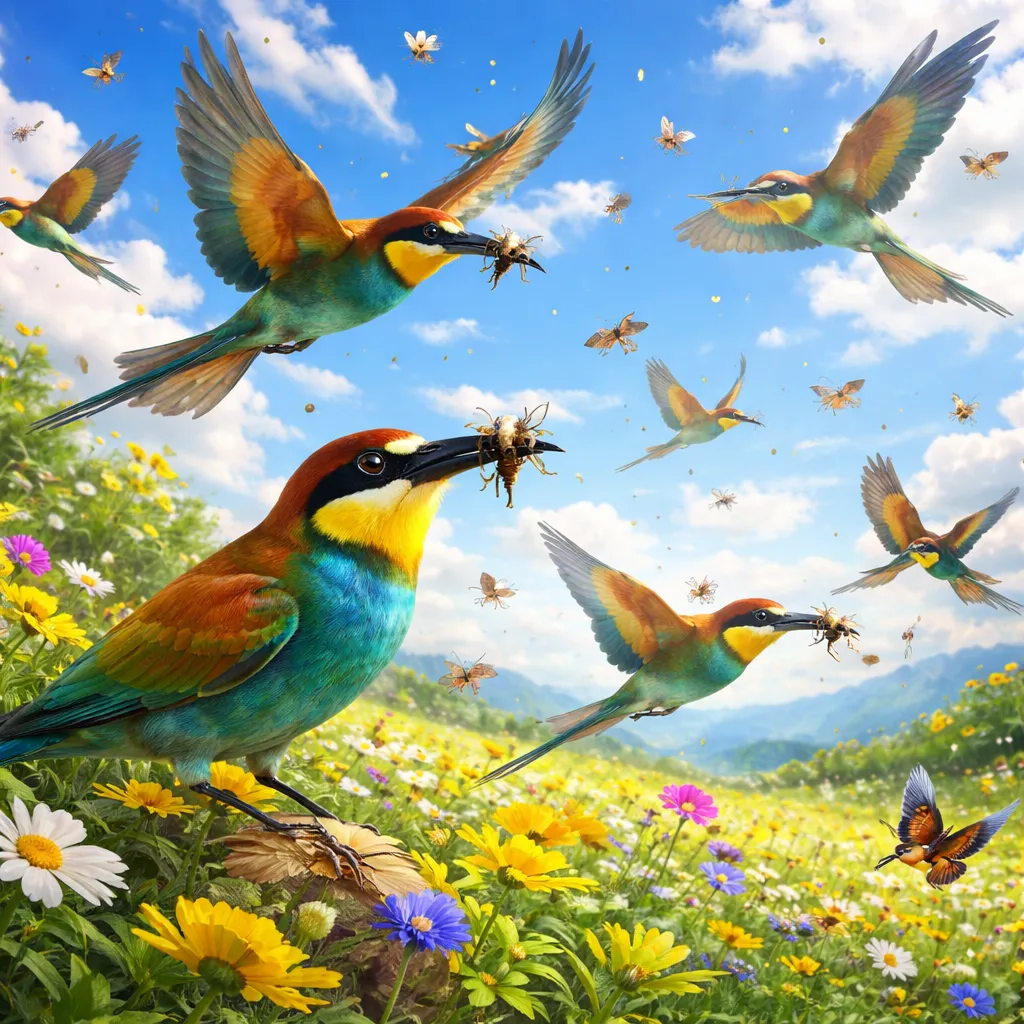

What Is This Animal?
A bee-eater is a colorful bird with a long, curved beak and pointed wings. Its feathers are bright green, blue, yellow, or red. It has a black stripe through its eyes. Bee-eaters are named for their favorite food. They catch bees and other flying insects in the air.
Bee-eaters live in Africa, Asia, and southern Europe. They are found in open country near water. They perch on branches, telephone wires, or fences. They watch for insects. They launch into the air to catch them. They are expert fliers.
These birds are social. They live in colonies. They nest in burrows dug into riverbanks or cliffs. They raise their young together. They call to each other with loud, musical notes. They are a splash of color in the landscape.
For children, bee-eaters are dazzling. Their bright colors and hunting skills make them exciting. Learning about bee-eaters teaches children about African and Asian wildlife, insect control, and the beauty of birds that live in open country.
English Learning About This Animal
Let us learn the English words bee-eater. We say it like this: /ˈbiː iːtər/. Bee sounds like “bee.” Eater sounds like “ee-ter.” Put them together: bee-eater. Say it three times. Bee-eater. Bee-eater. Bee-eater.
Now let us learn words about a bee-eater’s body. The beak is long, curved, and sharp. The feathers are bright green, blue, yellow, or red. The eyes have a black stripe through them. The wings are long and pointed. The chicks are baby bee-eaters.
There is a beautiful saying about bee-eaters. People say, “The bee-eater is a rainbow with wings.” This describes their brilliant colors. Another saying is, “Where bee-eaters nest, the riverbank is alive with color.” This celebrates their colonies.
These English words help children understand bee-eater anatomy. When they say beak, they learn about the hunting tool. When they say chicks, they know the babies. Parents can practice these words while looking at pictures. Point to the parts. Say the words together.
Animal Facts and Science Knowledge
Bee-eaters belong to the family Meropidae. There are about thirty bee-eater species. The European bee-eater is found in Europe, Africa, and Asia. The carmine bee-eater lives in Africa. The green bee-eater is common in Asia. Bee-eaters are related to kingfishers and rollers.
Bee-eaters live in open country near water. They need sand or soil banks for nesting. They live in grasslands, savannas, and farmlands. They perch on exposed branches. They have large territories. They return to the same nesting sites each year.
Bee-eaters are insectivores. They eat bees, wasps, hornets, and other flying insects. They remove the sting before eating. They beat the insect against a branch. They rub it to remove the venom. They are immune to bee venom. They eat up to two hundred insects a day.
Bee-eaters have special abilities. They are expert fliers. They catch insects in midair. They can hover briefly. They can turn sharply. Their eyesight is excellent. They see insects from far away. Their calls are loud and musical. They use them to communicate.
Bee-eaters are social. They live in colonies of up to several hundred pairs. They nest in burrows. Both parents dig the burrow. The burrow can be three to six feet long. They raise one brood each year. All colony members help defend the nest.
How to Interact With This Animal Safely
Bee-eaters are wild birds. They are not pets. The best way to interact is to watch them from a distance. If you are in bee-eater country, sit quietly near their perches. Use binoculars. Watch them catch insects. Listen to their calls.
Teach children to respect bee-eaters. They are wild and need space. Do not try to approach their nests. Bee-eaters will dive at intruders. They are protecting their young.
If you find a bee-eater colony, keep your distance. Do not disturb the burrows. The birds will abandon their nests if disturbed too much. Watch from a safe distance.
Bee-eaters need open spaces and clean water. They need insect populations to survive. Pesticides harm them. Protecting their habitat helps them thrive.
In some countries, bee-eaters are declining. Their nesting sites are disappearing. Learning about them helps us understand why they need protection.
What Can We Learn From This Animal
Bee-eaters teach us about beauty. Their colors are bright and joyful. Children learn that beauty is all around us. Looking for color, noticing details, and appreciating nature bring happiness.
Bee-eaters teach us about skill. They catch insects with precision. Children learn that practice makes perfect. Trying, practicing, and improving help us get better at things.
Bee-eaters teach us about community. They live in colonies. They help each other. Children learn that working together is powerful. Families, teams, and communities succeed when everyone helps.
Bee-eaters teach us about the balance of nature. They eat insects that sting. Children learn that every animal has a role. Bee-eaters keep insect populations in check. Nature works best when all parts are present.
Fun Learning Activities
Let us make learning about bee-eater fun. One activity is the bee-eater hunt game. Ask your child to perch on a stool or rock. Watch for pretend insects. Launch into the air. Catch them with hands together like a beak. Remove the sting. Eat. Say “bee-eater hunts” and “bee-eater catches bees.”
Another activity is drawing a bee-eater. Look at pictures of bee-eaters. Notice the bright colors, long beak, and black eye stripe. Draw a bee-eater on a branch. Add insects in the air. Label the parts. Say the words aloud.
Create a story about a bee-eater colony. Ask your child what the bee-eaters do. Do they dig burrows? Do they catch insects? Do they feed their chicks? Write a few sentences together. Let your child draw pictures. Read the story aloud.
Make a bee-eater craft. Use green, blue, and yellow paper for the feathers. Add a long, curved beak. Add a black stripe through the eye. Add pointed wings. Move the craft bee-eater. Practice saying “bee-eater hunts” and “bee-eater calls.”
Learn about African and Asian animals. Talk about other animals that live with bee-eaters. Compare bee-eaters to kingfishers. Use words like “savanna,” “colony,” and “insectivore.”
Learn about insect adaptations. Talk about why bees have stingers. Talk about how bee-eaters remove the sting. Use words like “adaptation,” “venom,” and “defense.”
These simple activities bring learning to life. Children build English vocabulary while playing. They learn science through understanding predator-prey relationships. They develop appreciation through learning about colorful birds. Learning about bee-eater becomes a journey to sunlit savannas. Each moment spent together strengthens language, curiosity, and a growing appreciation for the rainbow birds that teach us that beauty, skill, community, and balance make the world a richer place.