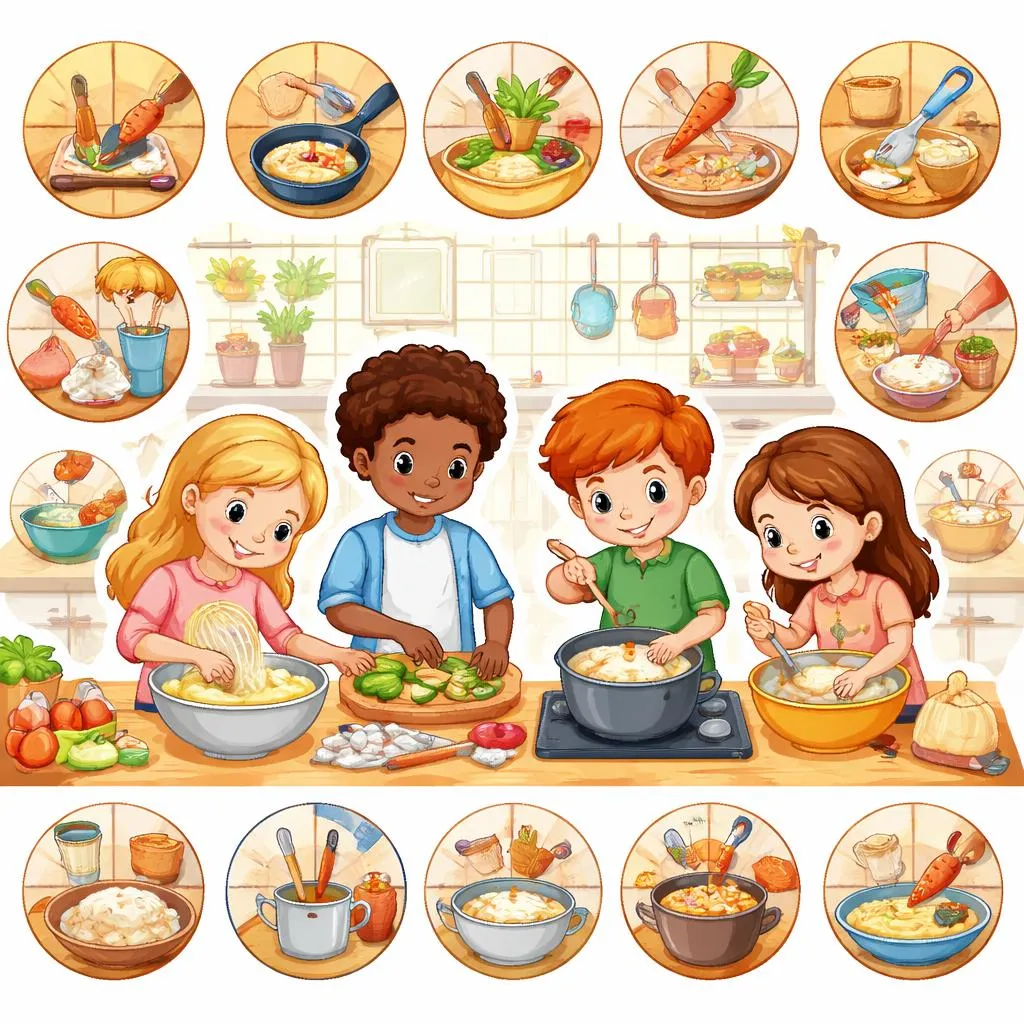

The kitchen is a wonderful place for learning language. Children see adults chopping, mixing, and pouring. They want to help and talk about what happens. Cooking verbs are action words that describe food preparation. These words appear in recipes, stories, and daily conversations. A cooking verbs list helps children understand instructions and talk about food. They learn to describe what they do in the kitchen. They build vocabulary they can use at home and school. Let us explore how to guide young learners through these essential action words with clear explanations and engaging activities.
Meaning of Cooking Verbs Cooking verbs are action words that describe what people do when preparing food. Each verb names a specific action in the cooking process.
Basic cooking verbs: Cut - to divide something with a knife Mix - to stir ingredients together Pour - to make liquid flow from one container to another Stir - to move a spoon around in a liquid Spread - to put a thin layer of something on a surface
Preparation verbs: Peel - to remove the skin from fruits or vegetables Chop - to cut into small pieces Slice - to cut into thin, flat pieces Grate - to rub food against a tool to make small pieces Measure - to find out how much of something is needed
Cooking method verbs: Boil - to cook in hot water that bubbles Fry - to cook in hot oil Bake - to cook in an oven Roast - to cook with dry heat in an oven Grill - to cook on a metal frame over heat
Finishing verbs: Serve - to put food on plates for eating Taste - to try a small amount to check flavor Season - to add salt, pepper, or herbs for flavor Decorate - to make food look nice
For young learners, start with the most common verbs. Stir, pour, mix, and cut appear in many simple cooking activities.
Categories of Cooking Verbs Organizing cooking verbs into categories helps children understand different stages of food preparation.
Getting ready verbs: Wash - to clean with water Peel - to take off the skin Measure - to find the right amount Open - to take the lid or wrapper off Crack - to break open an egg
Cutting and preparing verbs: Cut - to divide with a knife Chop - to cut into small pieces Slice - to cut into thin pieces Dice - to cut into small cubes Grate - to make small shreds Mash - to crush into a soft mixture
Mixing and combining verbs: Mix - to combine ingredients Stir - to move around with a spoon Beat - to mix quickly Whisk - to beat with a special tool Fold - to gently combine Blend - to mix until smooth
Heating and cooking verbs: Cook - to prepare food with heat Boil - to cook in bubbling water Simmer - to cook just below boiling Fry - to cook in oil Sauté - to fry quickly in a little oil Bake - to cook in an oven Roast - to cook with dry heat Toast - to brown with heat Microwave - to cook in a microwave oven
Finishing and serving verbs: Season - to add flavor Salt - to add salt Pepper - to add pepper Taste - to check flavor Serve - to put on plates Plate - to arrange on a dish Garnish - to add decoration
Use these categories when teaching. Children learn that different verbs belong to different stages of cooking.
Daily Life Examples of Cooking Verbs The best cooking verb learning happens in real kitchen contexts. Here are examples of cooking verbs in daily life.
Breakfast time: Mom cracks an egg into the bowl. Dad pours milk into the cereal. I stir my oatmeal. We spread jam on toast. She fries bacon in the pan.
Lunch time: I wash the apple before eating. He peels an orange. She slices the cheese for sandwiches. We spread butter on bread. They pour juice into cups.
Dinner time: Dad chops onions for the soup. Mom stirs the sauce on the stove. I measure flour for the cookies. We mix all the ingredients together. He bakes the chicken in the oven.
Snack time: We peel bananas for smoothies. I pour yogurt into a bowl. She mixes fruit with granola. They dip crackers in hummus. He spreads peanut butter on celery.
Baking time: We measure sugar and flour. I crack eggs into the bowl. She beats the mixture until smooth. He greases the pan with butter. We bake the cookies for ten minutes.
Special occasions: Grandma roasts a turkey for Thanksgiving. We decorate the cake with frosting. Dad grills hamburgers outside. I taste the soup to check the seasoning. She serves the food on pretty plates.
Use these examples during cooking activities. Name the actions as they happen. "Now we are stirring the soup." "Watch me chop the apple." This connects vocabulary to real experiences.
Printable Flashcards for Cooking Verbs Flashcards provide visual support for learning cooking verbs. Here are ideas for creating and using them.
Action picture cards: Create cards with clear pictures of each cooking action. A person stirring a pot. A person chopping a carrot. A person pouring milk. Write the verb below each picture.
Before and after cards: Create pairs showing the before and after of an action. A whole apple and sliced apples for "slice." A whole carrot and grated carrot for "grate." This shows the result of the action.
Tool cards: Create cards showing kitchen tools. A knife, a spoon, a whisk, a grater. Children match the tool to the verb. Knife goes with cut, chop, slice. Whisk goes with whisk, beat.
Recipe cards: Create simple recipe cards with pictures. Each step shows a cooking verb. "Chop the apple." "Mix the fruit." "Pour the yogurt." Children sequence the steps.
Verb matching cards: Create two sets of cards. One set has verbs. One set has pictures. Children match the word to the picture.
Action charades cards: Create cards with verbs written on them. Children draw a card and act out the verb without speaking. Others guess the action.
Laminate the cards for durability. Keep them in a box for easy access. Use them for games, sorting, and vocabulary building.
Learning Activities for Cooking Verbs Active learning helps children remember cooking verbs. Here are activities that work well in the classroom or at home.
Pretend Kitchen: Set up a pretend kitchen area with play food and utensils. Children act out cooking actions. They chop play vegetables. They stir in pots. They pour from pitchers. Name the actions as they play.
Cooking Show and Tell: If possible, do simple cooking activities in class. Make no-bake cookies. Prepare fruit salad. Make lemonade. Children see the verbs in action and can help with safe tasks.
Play Dough Cooking: Use play dough to practice cooking verbs. Children roll, cut, shape, and flatten. They pretend to bake cookies. They decorate cakes. This builds fine motor skills while learning verbs.
Verb Charades: Act out cooking verbs without speaking. Pretend to stir a pot. Pretend to chop vegetables. Pretend to pour a drink. Children guess the verb. The person who guesses correctly acts out the next verb.
Recipe Sequencing: Write simple recipes on sentence strips. Mix up the steps. Children put them in the correct order. "First, wash the apple. Then, chop the apple. Next, mix with yogurt. Finally, serve."
Cooking Verb Bingo: Create bingo cards with pictures of cooking actions. Call out verbs. Children cover the matching picture. First to cover a row wins.
I Spy in the Kitchen: Play I Spy using cooking verbs. "I spy someone stirring." "I spy someone chopping." Children look around and find the person or picture doing that action.
Educational Games for Cooking Verbs Games make learning cooking verbs joyful. Here are games for practicing these action words.
Cooking Verb Memory Match: Create pairs of cards with verbs and pictures. Place them face down. Children take turns flipping two cards, trying to match the verb to the picture. When they make a match, they say the verb.
What's in the Pot?: Place picture cards of food in a pot. Children take turns pulling out a card. They must say a sentence using a cooking verb. "I will chop the carrot." "I will boil the egg."
Cooking Relay Race: Divide children into teams. Place a pile of verb cards at one end of the room. Call out a food. "Apple!" One child from each team runs, finds a verb that works with apple, and brings it back. "Chop!" "Peel!" "Slice!" First correct answer wins.
Kitchen Tool Match: Show a kitchen tool. A whisk, a knife, a peeler, a grater. Children name the verb associated with that tool. Whisk goes with whisk or beat. Knife goes with cut, chop, slice.
Cooking Verb Freeze Dance: Play music while children act out cooking actions. When the music stops, they freeze in position. Name the action they are frozen in. "Maria is stirring!" "Juan is chopping!"
Recipe Scramble: Write a simple recipe with the verbs missing. "First, ___ the apple. Then, ___ the yogurt. Finally, ___ it in a bowl." Children choose the correct verbs from a word bank.
Simon Says Cooking: Play Simon Says using cooking verbs. "Simon says stir the pot." "Simon says chop the vegetables." "Pour the milk" (if Simon didn't say it, children shouldn't move).
Connecting Cooking Verbs to Writing Writing activities reinforce cooking verb vocabulary. Here are writing ideas.
My Favorite Recipe: Children write a simple recipe for their favorite food. They use cooking verbs to describe each step. "First, spread peanut butter on bread. Then, spread jelly. Finally, put the pieces together."
Cooking Instructions: Give children a picture of a simple dish. They write instructions for making it using cooking verbs. This builds procedural writing skills.
Cooking Verb Book: Create a class book of cooking verbs. Each page has one verb, a picture, and a sentence. "Stir. I stir the soup." Bind the pages together and read often.
Sequencing Sentences: Provide sentences from a recipe in mixed-up order. Children rewrite them in the correct sequence using words like first, next, then, finally.
Label the Kitchen: Create labels for different actions in the pretend kitchen. Place "stir" near the pot. Place "chop" near the play vegetables. This builds word recognition.
Cooking Journal: If children cook at home, they can draw and write about what they made. "I helped chop apples. Mom stirred the pot. We baked a pie."
Using Stories to Teach Cooking Verbs Children's books about cooking provide wonderful examples of cooking verbs in context. Here are ways to use books for cooking verb learning.
Read and Find: Read a story about cooking. Have children raise their hand every time they hear a cooking verb. List them on the board. Discuss what each verb means.
Story Sequencing: After reading a story about making something, sequence the steps. What did the character do first? What next? This builds comprehension and verb knowledge.
Act Out the Story: As you read a cooking story, children act out the actions. When the character stirs, they stir. When the character pours, they pour. This kinesthetic approach reinforces learning.
Create a Class Cookbook: After reading several cooking stories, create a class cookbook. Each child contributes a page with a recipe and pictures. Use cooking verbs throughout.
Compare Recipes: Read two different stories about making the same thing. Compare the steps. Did both stories use the same verbs? Different verbs? This builds vocabulary flexibility.
A cooking verbs list opens up a whole world of language for children. They learn to talk about food preparation. They understand recipes and instructions. They can describe what they see in the kitchen. These words connect to real life in meaningful ways. Children use them at home with family. They use them at school during cooking activities. With pictures, games, and hands-on experiences, cooking verbs become natural. Children learn that language is not just for books. It is for making things, helping in the kitchen, and sharing food with people they love.