
What Is This Animal?
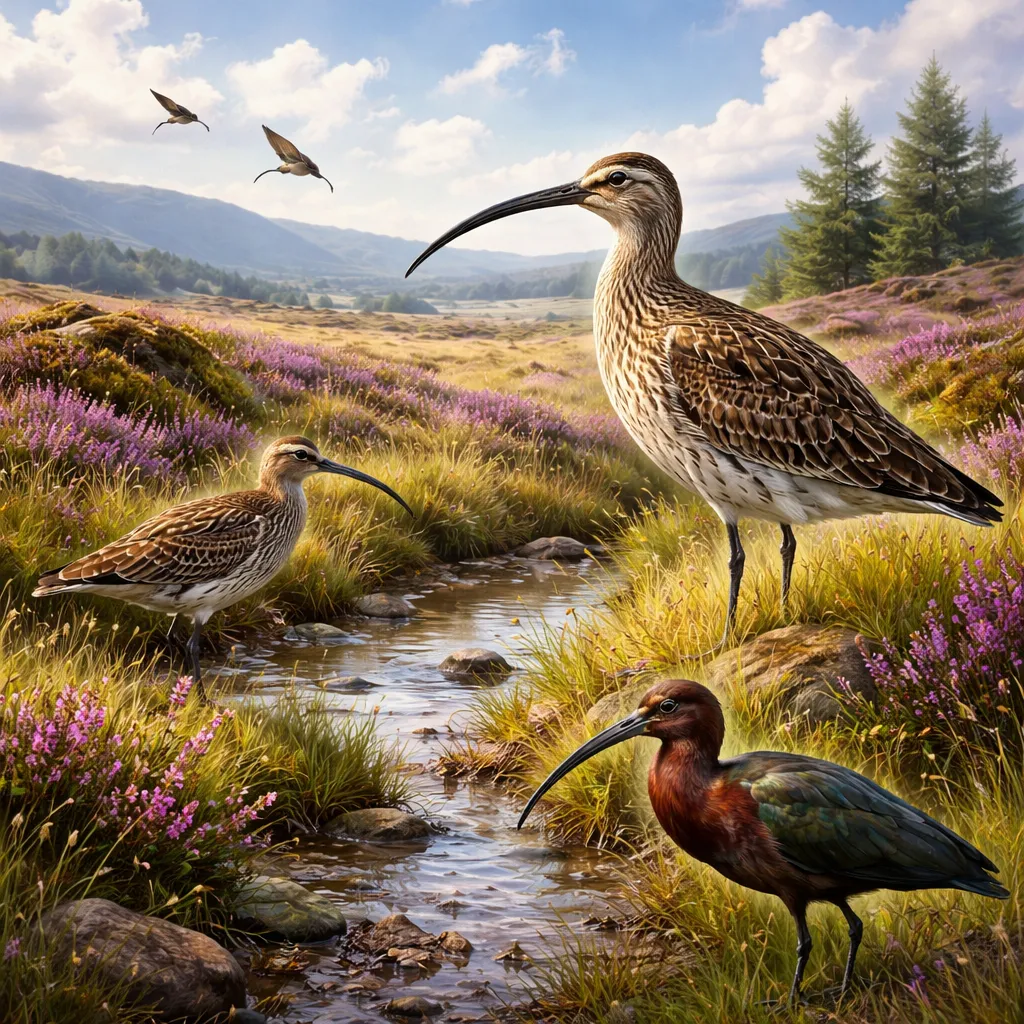
A curlew is a large shorebird with a very long, curved beak. Its beak curves downward. It is one of the longest beaks of any shorebird. Curlews have brown, streaked feathers. They have long legs. They make haunting, bubbling calls that echo across marshes and moors.
Curlews live in wetlands, moorlands, and coastal areas. They are found in Europe, Asia, Africa, and North America. They breed on grasslands and moors. They winter on coasts and estuaries. They are known for their beautiful, melancholy calls.
These birds are the largest of the shorebirds. They have a distinctive silhouette. Their long, curved beaks make them easy to recognize. They walk slowly through grass and mud. They probe deep for food.
For children, curlews are magical. Their curved beaks and haunting calls make them unforgettable. Learning about curlews teaches children about wetland birds, migration, and the importance of protecting rare species.
English Learning About This Animal
Let us learn the English word curlew. We say it like this: /ˈkɜːrluː/. The cur sounds like “cur.” The lew sounds like “loo.” Put them together: curlew. Say it three times. Curlew. Curlew. Curlew.
Now let us learn words about a curlew’s body. The beak is very long and curves downward. The legs are long for wading. The feathers are brown and streaked. The wings are long and pointed. The chicks are baby curlews.
There is a beautiful saying about curlews. People say, “The curlew’s call is the voice of the wild moor.” This describes their haunting sound. Another saying is, “Where curlews nest, the land is ancient.” This connects them to wild places.
These English words help children understand curlew anatomy. When they say beak, they learn about the curved tool. When they say chicks, they know the babies. Parents can practice these words while looking at pictures. Point to the parts. Say the words together.
Animal Facts and Science Knowledge
Curlews belong to the sandpiper family Scolopacidae. There are eight curlew species. The Eurasian curlew is the largest. The long-billed curlew lives in North America. The whimbrel is a smaller relative. Curlews are found on every continent except Antarctica.
Curlews live in wetlands, moorlands, and coastal areas. They breed on grasslands, moors, and tundra. They winter on coasts, estuaries, and mudflats. They need open spaces. They are shy birds. They avoid people.
Curlews are carnivores. They eat insects, worms, crustaceans, and small mollusks. They use their long beaks to probe deep into mud and soil. They feel for prey. They also eat berries and seeds.
Curlews have special abilities. Their beaks are sensitive at the tip. They can feel prey underground. They can probe deeper than most shorebirds. They are strong fliers. They migrate long distances. Their calls carry for miles.
Curlews are declining in many areas. Their habitats are disappearing. Farming and development reduce nesting areas. Conservation programs work to protect them. They are protected in many countries.
How to Interact With This Animal Safely
Curlews are wild birds. They are shy and easily disturbed. The best way to interact is to watch from a distance. Visit wetlands, moors, or coastal areas. Use binoculars. Listen for their calls.
Teach children to respect curlews. Do not approach them. Do not chase them. They will fly away if disturbed. Stay on paths. Keep dogs on leashes. Dogs scare nesting curlews.
If you find a curlew nest, stay away. Curlews nest on the ground. They are easily disturbed. Give them space.
Curlews need protected habitats. Supporting conservation helps them. Learning about them helps us understand why wild places matter.
In some areas, curlews are endangered. Every nesting pair matters. Respecting their space helps them survive.
What Can We Learn From This Animal
Curlews teach us about beauty. Their curved beaks and haunting calls are beautiful. Children learn that beauty comes in many forms. Finding beauty in nature, in sounds, and in wild places enriches our lives.
Curlews teach us about vulnerability. They are declining. They need protection. Children learn that some animals need our help. Protecting nature, caring for habitats, and learning about endangered animals are important.
Curlews teach us about home. They return to the same places each year. Children learn that home is where we belong. Knowing our home, caring for it, and returning to it are important.
Curlews teach us about the wild. They live in wild places. Children learn that wild places are special. Visiting nature, listening to sounds, and appreciating wildness bring peace.
Fun Learning Activities
Let us make learning about curlew fun. One activity is the curlew call game. Ask your child to make a long, bubbling call. Make it rise and fall. Echo across the moor. Say “curlew calls” and “curlew sings over the marsh.”
Another activity is the curlew probe game. Ask your child to use a long, curved stick like a beak. Probe into sand or soil. Find pretend worms. Probe deep. Say “curlew probes” and “curlew finds food.”
Draw a curlew. Look at pictures of curlews. Notice the long, curved beak, streaked feathers, and long legs. Draw a curlew on a moor or mudflat. Add water and grass. Label the parts. Say the words aloud.
Create a story about a curlew family. Ask your child what the curlews do. Do they build a nest on the moor? Do they fly to the coast? Do they call to each other? Write a few sentences together. Let your child draw pictures. Read the story aloud.
Make a curlew craft. Use brown paper for the feathers. Add a very long, curved beak. Add long legs. Add streaked patterns. Move the craft curlew. Practice saying “curlew calls” and “curlew probes the mud.”
Learn about wetlands and moors. Talk about what makes these habitats special. Discuss the animals that live there. Use words like “moor,” “estuary,” and “conservation.”
Learn about bird calls. Listen to recordings of curlew calls. Try to imitate them. Use words like “haunting,” “melancholy,” and “bubbling.”
These simple activities bring learning to life. Children build English vocabulary while playing. They learn science through understanding wetland ecosystems. They develop appreciation through learning about endangered birds. Learning about curlew becomes a journey to wild moors and estuaries. Each moment spent together strengthens language, curiosity, and a growing appreciation for the curving-beaked birds that teach us that beauty, vulnerability, and the call of the wild are treasures worth protecting.