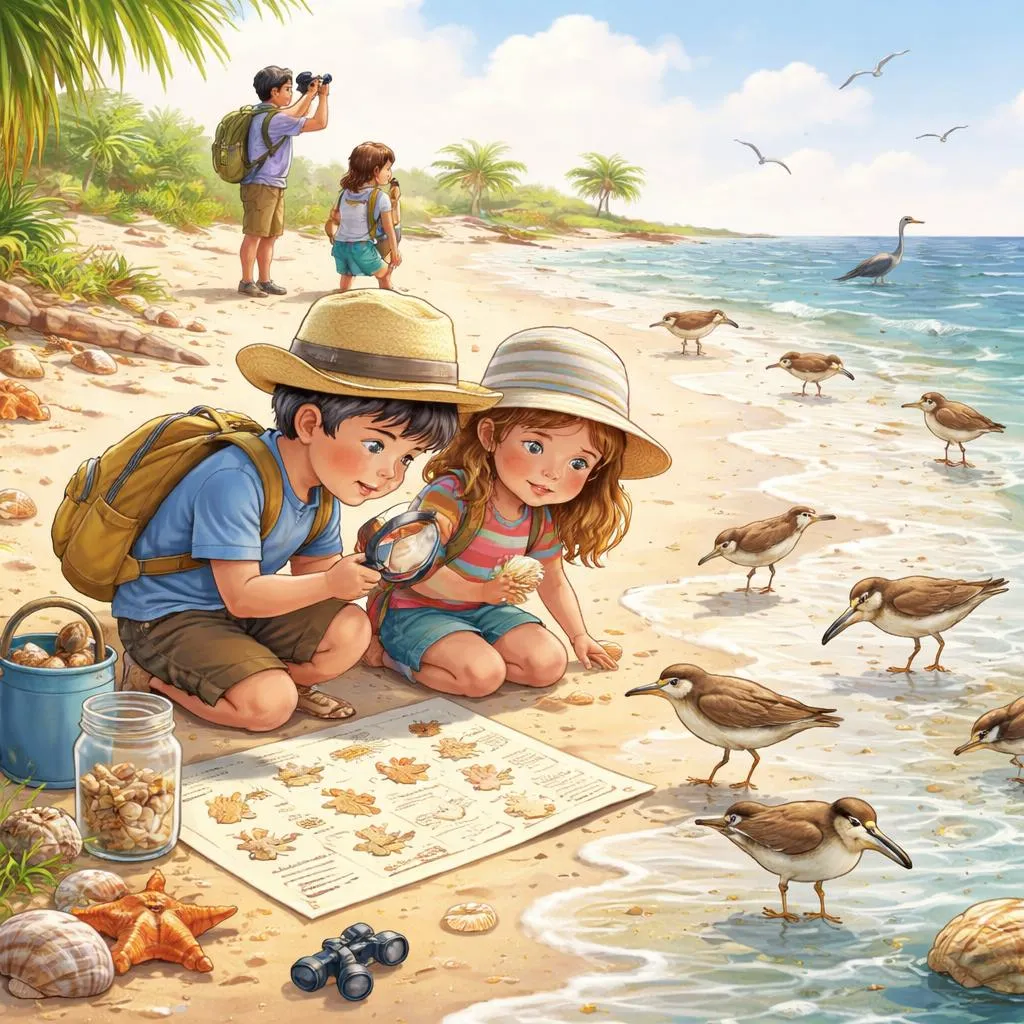

What Is This Animal?
A sandpiper is a small shorebird with a long bill, long legs, and slender body. It has brown, gray, or spotted feathers. Sandpipers run along the water's edge. They probe the sand with their bills. They are always in motion. They are one of the most common birds on beaches and mudflats.
Sandpipers live on beaches, mudflats, marshes, and lakeshores around the world. There are many sandpiper species. The spotted sandpiper bobs its tail. The least sandpiper is tiny. The sanderling runs with the waves. Sandpipers are known for their constant foraging.
These birds are migratory. They breed in the Arctic and northern regions. They winter in warmer coastal areas. They travel thousands of miles each year. They fly in flocks. They are strong, agile fliers.
For children, sandpipers are delightful. Their quick movements and probing bills make them fun to watch. Learning about sandpipers teaches children about shorebirds, migration, and the rich life of coastal habitats.
English Learning About This Animal
Let us learn the English word sandpiper. We say it like this: /ˈsændpaɪpər/. The word has two parts. Sand sounds like “sand.” Piper sounds like “pipe-er.” Put them together: sandpiper. Say it three times. Sandpiper. Sandpiper. Sandpiper.
Now let us learn words about a sandpiper’s body. The bill is long and slender for probing in sand. The legs are long for wading. The feathers are brown, gray, or spotted. The wings are pointed for fast flight. The chicks are baby sandpipers.
There is a lovely saying about sandpipers. People say, “The sandpiper writes its name on the shore with every wave.” This describes their constant motion. Another saying is, “Where sandpipers run, the beach is alive.” This reflects their energy.
These English words help children understand sandpiper anatomy. When they say bill, they learn how sandpipers find food. When they say chicks, they know the babies. Parents can practice these words while watching sandpipers on the beach. Point to the parts. Say the words together.
Animal Facts and Science Knowledge
Sandpipers belong to the sandpiper family Scolopacidae. There are over eighty sandpiper species. They are found on every continent except Antarctica. Common species include the least sandpiper, spotted sandpiper, and sanderling. They are related to turnstones and phalaropes.
Sandpipers live on beaches, mudflats, marshes, and lakeshores. They need areas with soft sand or mud. They probe for food. They are found on coasts and inland waters. They are adaptable. They live in many habitats.
Sandpipers are carnivores. They eat insects, worms, crustaceans, and small mollusks. They probe the sand with their bills. They feel for movement. They also pick food from the surface. They run quickly to catch prey.
Sandpipers have special abilities. They are fast runners. They can run in and out of waves without getting wet. They are agile fliers. They fly in tight flocks. They twist and turn together. Their long bills can probe deep into sand.
Sandpipers are long-distance migrants. They travel from Arctic breeding grounds to southern wintering grounds. Some fly thousands of miles without stopping. They migrate in large flocks. They return to the same beaches each year.
How to Interact With This Animal Safely
Sandpipers are wild birds. They are not pets. The best way to interact is to watch them on the beach. Sit quietly. Let them come close. They are used to people on busy beaches but still need space.
Teach children to respect sandpipers. Do not chase them. They need to save energy for migration. If they fly away, they use energy they need. Walk slowly. Let them feed.
Do not feed sandpipers. Human food is not good for them. They need to find their own natural food. Feeding makes them less wild.
Keep beaches clean. Sandpipers eat small animals in the sand. Trash can harm them. Leave seaweed and shells in place. They provide food for sandpipers.
Sandpipers are protected in many places. Disturbing them is against the law. Learning about them helps us protect coastal habitats.
What Can We Learn From This Animal
Sandpipers teach us about being busy. They never stop moving. They always look for food. Children learn that staying busy and active is good. Playing, exploring, and doing things keep us healthy.
Sandpipers teach us about adaptation. Their bills are perfect for probing sand. Children learn that we all have tools that help us. Using our strengths, learning new skills, and adapting to our world help us thrive.
Sandpipers teach us about migration. They travel thousands of miles. Children learn that the world is connected. Birds that visit our beaches in winter spend summer in the Arctic.
Sandpipers teach us about the beach. They show us that the shore is full of life. Children learn that sand and mud hide small animals. Looking closely, being curious, and exploring the shore reveal wonders.
Fun Learning Activities
Let us make learning about sandpiper fun. One activity is the sandpiper run game. Ask your child to run along the sand. Run to the water. Run back. Probe with a finger like a bill. Find pretend worms. Say “sandpiper runs” and “sandpiper probes the sand.”
Another activity is the sandpiper flock game. Ask your child to fly in a group with friends. Twist and turn together. Land on the shore. Run together. Probe for food. Say “sandpipers fly together” and “sandpipers feed as a flock.”
Draw a sandpiper. Look at pictures of sandpipers. Notice the long bill, long legs, and spotted feathers. Draw a sandpiper running by the water’s edge. Add waves and sand. Label the parts. Say the words aloud.
Create a story about a sandpiper’s migration. Ask your child where the sandpiper goes. Does it fly from the Arctic? Does it stop on beaches? Does it find food in the sand? Write a few sentences together. Let your child draw pictures. Read the story aloud.
Make a sandpiper craft. Use brown and gray paper for the feathers. Add a long bill. Add long legs. Add pointed wings. Move the craft sandpiper. Practice saying “sandpiper runs” and “sandpiper probes.”
Learn about shorebirds. Talk about other birds that live on beaches. Compare sandpipers to plovers and turnstones. Use words like “shorebird,” “migration,” and “probing.”
Learn about coastal ecosystems. Talk about what lives in sand and mud. Use words like “invertebrate,” “tide,” and “habitat.”
These simple activities bring learning to life. Children build English vocabulary while playing. They learn science through understanding coastal ecosystems. They develop appreciation through learning about shorebirds. Learning about sandpiper becomes a journey to the water’s edge. Each moment spent together strengthens language, curiosity, and a growing appreciation for the dainty, busy birds that teach us that staying active, using our tools, and running with the waves are ways to thrive on the shores of life.