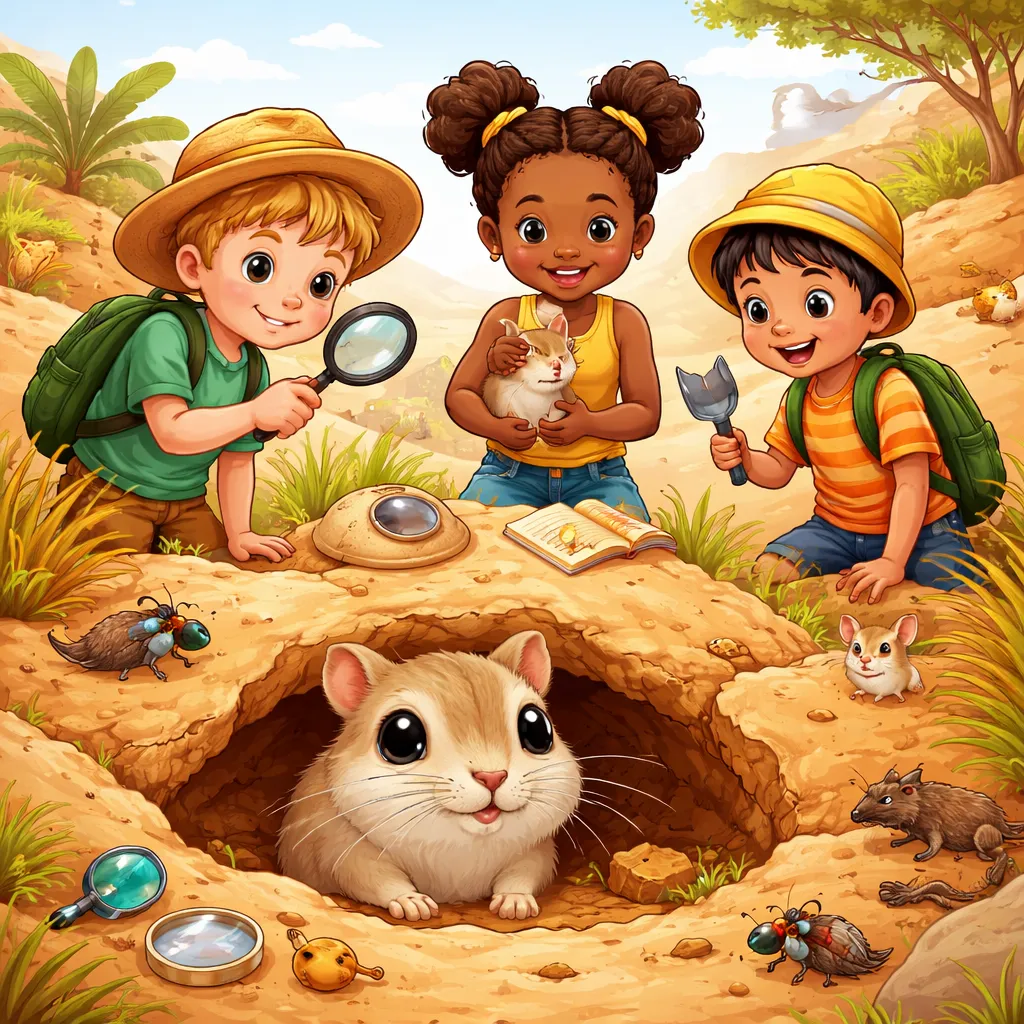

What Is This Animal?
A gerbil is a small rodent with a long, furry tail and strong back legs. It has soft fur in colors like golden, gray, or brown. Gerbils are active and curious. They stand on their hind legs to look around. They jump and dig with enthusiasm.
Gerbils come from deserts in Africa, Asia, and the Middle East. They are adapted to dry, sandy environments. They dig burrows underground. These burrows keep them cool in hot weather. They are social animals. They live in family groups.
These animals are popular pets. They are clean, friendly, and easy to care for. They are active during the day. They love to dig, tunnel, and run on wheels. They are curious about their surroundings.
For children, gerbils make wonderful first pets. Their playful nature and gentle temperament bring joy. Learning about gerbils teaches children about desert animals, pet care, and the importance of companionship.
English Learning About This Animal
Let us learn the English word gerbil. We say it like this: /ˈdʒɜːrbəl/. The ger sounds like “jur.” The bil sounds like “bul.” Put them together: gerbil. Say it three times. Gerbil. Gerbil. Gerbil.
Now let us learn words about a gerbil’s body. The tail is long and furry. The hind legs are strong for jumping. The fur is soft and comes in many colors. The claws are small for digging. The pups are baby gerbils.
There is a sweet saying about gerbils. Pet owners say, “A gerbil stands tall to see the world.” This describes their curious nature. Another saying is, “Gerbils dig tunnels as fast as they run.” This reflects their energy.
These English words help children understand gerbil anatomy. When they say hind legs, they learn how gerbils jump. When they say pups, they know the babies. Parents can practice these words while watching a pet gerbil. Point to the parts. Say the words together.
Animal Facts and Science Knowledge
Gerbils belong to the rodent family Muridae. The most common pet gerbil is the Mongolian gerbil. Wild gerbils live in deserts and grasslands. They are found in Mongolia, China, and parts of Africa. They live in colonies underground.
Wild gerbils live in burrows. Their burrows have tunnels, sleeping rooms, and food storage. They are active during the day. They avoid the hottest part of the day. They come out in the morning and evening. They are prey animals. They depend on their group for safety.
Gerbils are omnivores. In the wild, they eat seeds, grains, grasses, and insects. Pet gerbils eat specially made gerbil food. They also enjoy small treats like sunflower seeds and fresh vegetables. They need fresh water daily.
Gerbils have special abilities. Their tails are furry and help them balance. Their back legs are strong. They can jump high. They are excellent diggers. They can dig tunnels quickly. They do not need water baths. They clean themselves with sand. They produce very little urine. This helps them survive in the desert.
Gerbils are social animals. They need to live with other gerbils. A single gerbil can become lonely. They live in family groups. They groom each other. They sleep together. They play together. They communicate with sounds and body language.
How to Interact With This Animal Safely
Gerbils make wonderful family pets. They need proper care. If your family is getting gerbils, learn about their needs first. They need a large cage with deep bedding for digging. They need a wheel for exercise. They need a friend. Never keep a gerbil alone.
Teach children to handle gerbils gently. Gerbils are quick and curious. Let them run on hands. Support their body. Do not squeeze them. Do not grab their tails. A gerbil’s tail can break if pulled. Supervise young children with gerbils.
Gerbils are active during the day. This is when they are awake. Handle them during the day. They enjoy exploring. Let them run in a safe play area. Provide tunnels and boxes. Gerbils love to dig. Give them deep bedding in their cage.
Clean the cage regularly. Gerbils are clean animals. They choose one spot for bathroom use. Remove soiled bedding. Provide fresh food and water daily. Involve children in daily care. Teach them responsibility.
Gerbils need a sand bath. They clean themselves in sand. Provide a small dish of chinchilla sand. Do not use dust. Do not use water. Gerbils should not get wet. Their fur does not dry easily.
What Can We Learn From This Animal
Gerbils teach us about curiosity. They stand tall to see what is around. Children learn that being curious helps us learn. Asking questions, exploring, and looking at the world with wonder are good habits.
Gerbils teach us about family. They live in groups. They groom and sleep together. Children learn that family takes care of each other. Helping, sharing, and spending time together make families strong.
Gerbils teach us about being active. They run, dig, and jump. Children learn that being active is fun and healthy. Running, playing, and moving our bodies keep us strong.
Gerbils teach us about responsibility. They depend on us for food and care. Children learn that pets need daily attention. Feeding, cleaning, and playing with pets are responsibilities we take seriously.
Fun Learning Activities
Let us make learning about gerbil fun. One activity is the gerbil stand game. Ask your child to stand on two legs like a gerbil. Look around. Jump forward. Dig in a sandbox or with blankets. Say “gerbil stands tall” and “gerbil digs a tunnel.”
Another activity is drawing a gerbil. Look at pictures of gerbils. Notice the long furry tail, strong back legs, and curious face. Draw a gerbil standing on its hind legs or digging in a tunnel. Label the parts. Say the words aloud.
Create a story about a gerbil family. Ask your child what the gerbils do. Do they dig tunnels together? Do they run on the wheel? Do they sleep in a pile? Write a few sentences together. Let your child draw pictures. Read the story aloud.
Make a gerbil craft. Use golden or brown paper for the fur. Add a long furry tail. Add strong back legs. Add small ears and eyes. Move the craft gerbil. Practice saying “gerbil digs” and “gerbil jumps.”
Learn about desert habitats. Talk about where wild gerbils live. Name other desert animals. Use words like “desert,” “burrow,” and “adaptation.”
Learn about pet care. If you have gerbils, involve children in daily care. Make a chart of tasks. Talk about why each task is important. Use words like “responsibility,” “social,” and “habitat.”
These simple activities bring learning to life. Children build English vocabulary while playing. They learn science through understanding desert adaptations. They develop responsibility through learning about pet care. Learning about gerbil becomes a journey into the sandy burrows of the desert. Each moment spent together strengthens language, curiosity, and a growing appreciation for the small, standing creatures that teach us to be curious, to be active, and to treasure the family that digs, plays, and sleeps together.