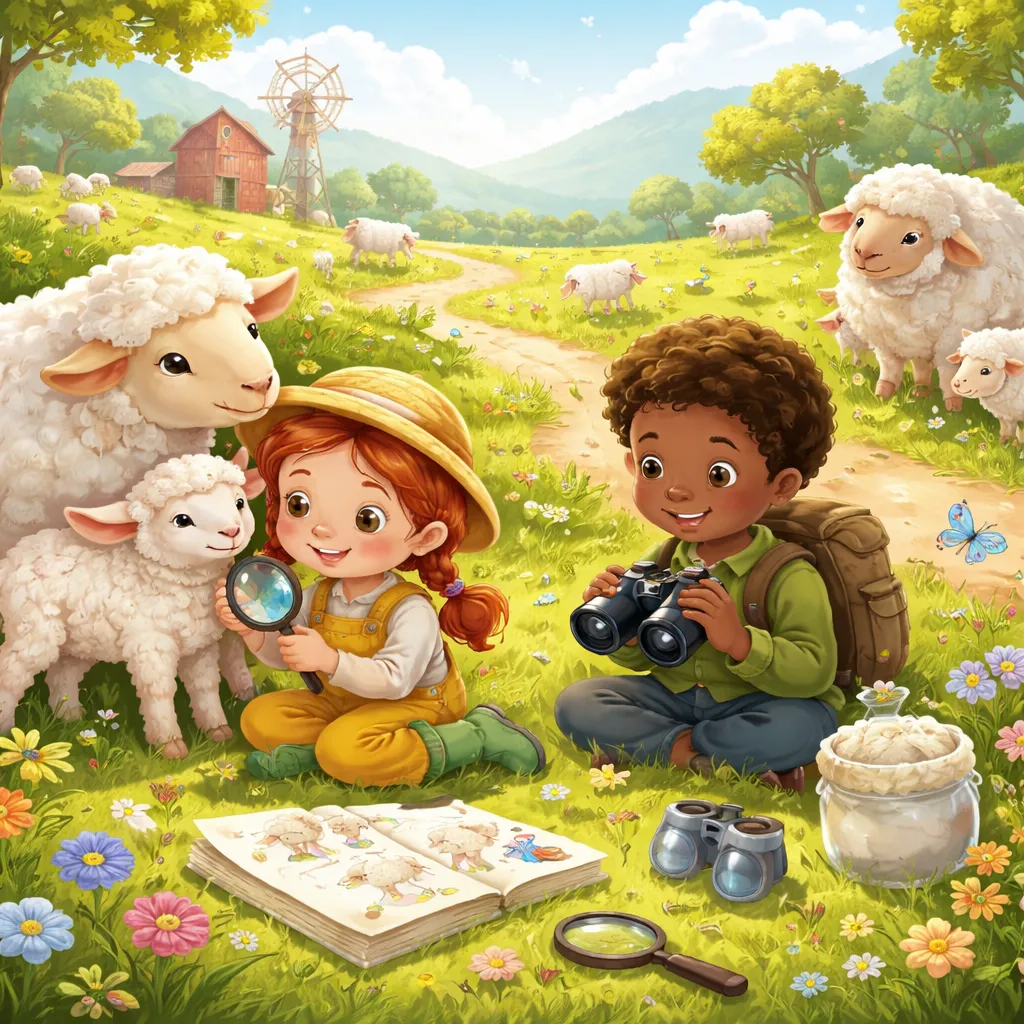

Have you ever seen a flock of sheep in a field, with their fluffy white wool and gentle faces? Maybe in a storybook, on a farm, or in a park. Sheep are calm, social animals that give us wool for warm clothes. Learning about sheep is a wonderful adventure that takes us to green pastures and farms. Let’s begin our journey of learning about sheep friends and their amazing world!
English Language Learning
Vocabulary and Spelling
Our fluffy friend is called a sheep.
The word "sheep" is a noun. A noun names a person, place, or thing. So, a sheep is a thing—a gentle, farm animal.
Spelling "sheep" is simple: S-H-E-E-P. The 'S' starts the word, the 'H' and two 'E's are in the middle, and it ends with 'P'. S-H-E-E-P spells sheep. The plural of sheep is also sheep!
Sound and Pronunciation
Let’s say the word correctly. It sounds like this: /ʃiːp/.
We can say it in one clear part. First, say "sh". It’s the quiet sound at the start of "shoe". Next, say "eep". It rhymes with "beep" or "deep".
Now, blend it together! "Sh" "eep". Sheep! Great!
The word "sheep" has just one beat, or one syllable. Clap your hands once: Sheep! It’s a soft, quiet word.
Related Words
Learning about sheep is more fun with new words! Here are some important ones.
Baby: A baby sheep is called a lamb. A young female sheep is called a ewe lamb.
Sound: The sound a sheep makes is a baa.
Group: A group of sheep is called a flock. They live, eat, and move together for safety.
A Famous Saying
There is a common saying: "The black sheep of the family."
This means someone who is a bit different or doesn’t fit in with the rest of the group. It comes from the fact that most sheep are white, so a black one stands out. It reminds us that it’s okay to be different and unique.
Say the saying with me: "The black sheep of the family." It’s a way to celebrate being yourself!
Now you know the word "sheep"! Are you ready to graze on some amazing facts? Let’s walk from words to wonderful knowledge!
Animal Knowledge
Who Are They? – Family and Group
What kind of animal is a sheep? Sheep are mammals. They have wool, are warm-blooded, and mother sheep feed their babies milk.
They are part of the bovine family, in a group called Ovis. Their close cousins are goats. Sheep were one of the first animals to be domesticated by people, thousands of years ago.
What Do They Look Like? – Amazing Bodies
Sheep are about the size of a large dog. They are famous for their thick, curly wool. Their wool can be white, black, or brown. Some sheep have horns.
Their wool is their super suit! It keeps them warm in winter and cool in summer. Farmers cut, or shear, the wool once a year to make yarn. Underneath, sheep have a thin layer of skin and hair.
Sheep have special body tools. They have a split upper lip to help them nibble grass close to the ground. Their feet are split into two toes, which helps them walk on rough hills.
Where Do They Live and How? – Home and Habits
Most sheep live on farms and ranches all over the world. They need open fields with grass to eat. Some wild sheep live in mountains and hills.
Sheep are herbivores. This means they only eat plants. They are grazers, so they eat grass and hay. They spend most of their day eating and chewing cud, just like cows.
Sheep are very social and live in flocks. In a flock, they feel safe and follow a leader. They are most active during the day. They spend their time grazing, resting, and staying close to their friends.
A Sheep’s Life Story – Growing Up
A baby sheep is called a lamb. Sheep are mammals, so lambs are born live from their mother. A mother sheep, called a ewe, usually has one or two lambs at a time.
The mother sheep takes excellent care of her lambs. She licks them clean and feeds them milk. The lamb can stand and walk just a few hours after birth. The mother and lamb know each other’s special call.
Lambs are born with a soft coat. They drink their mother’s milk for a few months, then start to eat grass. A lamb grows quickly and becomes an adult at about one year old.
How Do They "Talk"? – Communication
Sheep talk with sounds and body language. They baa to talk to their lambs and to the flock. Each sheep has its own voice, so friends can recognize each other.
They use their bodies to show how they feel. A relaxed sheep will stand quietly. If a sheep is scared, it might stomp its foot. They stay very close to their friends in the flock for comfort.
Their best senses are their excellent hearing and eyesight. They can hear very well and have wide-set eyes that let them see almost all the way around without turning their head. This helps them watch for danger.
Are They Okay? – Taking Care of Them
Most farm sheep are cared for by farmers. Some types of wild sheep are threatened because they lose their mountain homes or are hunted.
Problems for sheep can include bad weather, predators, or getting sick. Good farmers make sure their sheep have food, water, shelter, and a vet when needed.
You can be a sheep friend! You can learn about where wool comes from. You can thank farmers for their hard work. You can choose to be kind to all animals. Remember, sheep are living beings that feel safe and happy when they are treated well.
Life Connections and Inspiration
How to Be With Them – Safety and Love
Sheep are gentle, but they are also animals that can be scared easily. Being around them requires calmness and care.
If you visit a farm: Always have an adult with you. Move slowly and talk softly. Let the sheep see you. Do not shout or run. You can pet a sheep gently on its back if the farmer says it is okay. Never chase or startle sheep.
Owning sheep is a big responsibility. They need a field, fresh water, hay, a vet, and a safe barn. They are flock animals, so they need other sheep friends.
We show our love by understanding their needs and treating them with gentleness. A happy sheep is a calm and healthy sheep.
Super Qualities We Learn from Them
Sheep teach us wonderful things. One super quality is gentleness and community. Sheep are very gentle animals. They stay together in a flock to feel safe and help each other. They teach us to be kind, to stick together with our friends and family, and to look out for one another.
Another quality is providing warmth and comfort. Sheep give us their wool, which we use to make cozy clothes and blankets. They provide for us in a gentle way. This reminds us to be warm and comforting to others, and to share what we have.
Think about it: How can you be a gentle and kind friend? How can you provide comfort and warmth to someone in your family or community?
Take Action! – Your "Sheep Friend" Project
Let’s do a fun and gentle activity! Your project is to create a fluffy sheep picture.
You will need: a piece of paper, glue, cotton balls, and crayons. Draw the shape of a sheep on the paper. It can be a simple oval for the body and a circle for the head. Now, pull apart the cotton balls to make them fluffy. Glue the cotton all over the sheep’s body to make its wool. Draw a happy face and four legs. You can even draw a green field and a sun in the background. Write one thing you learned about sheep on your picture. Hang it up to remind you of these fluffy friends!
Closing
Learning about sheep calm is a wonderful adventure! We learned the word "sheep" and how to say its soft, one-syllable name. We discovered amazing facts about their woolly coats, their gentle baas, and their life in the flock. We know that sheep are gentle, providing animals who are important to people. You can use your new words to tell stories about these fluffy creatures. You can use your knowledge to appreciate farmers and the wool that keeps us warm. The animal world is full of gentle and caring teachers. Always remember to treat all animals with kindness, be a gentle friend, and value the warmth of community. Keep exploring with a soft heart, provide comfort where you can, and be a loyal member of your own flock. Your caring actions and gentle spirit make you a true friend to the wonderful sheep.