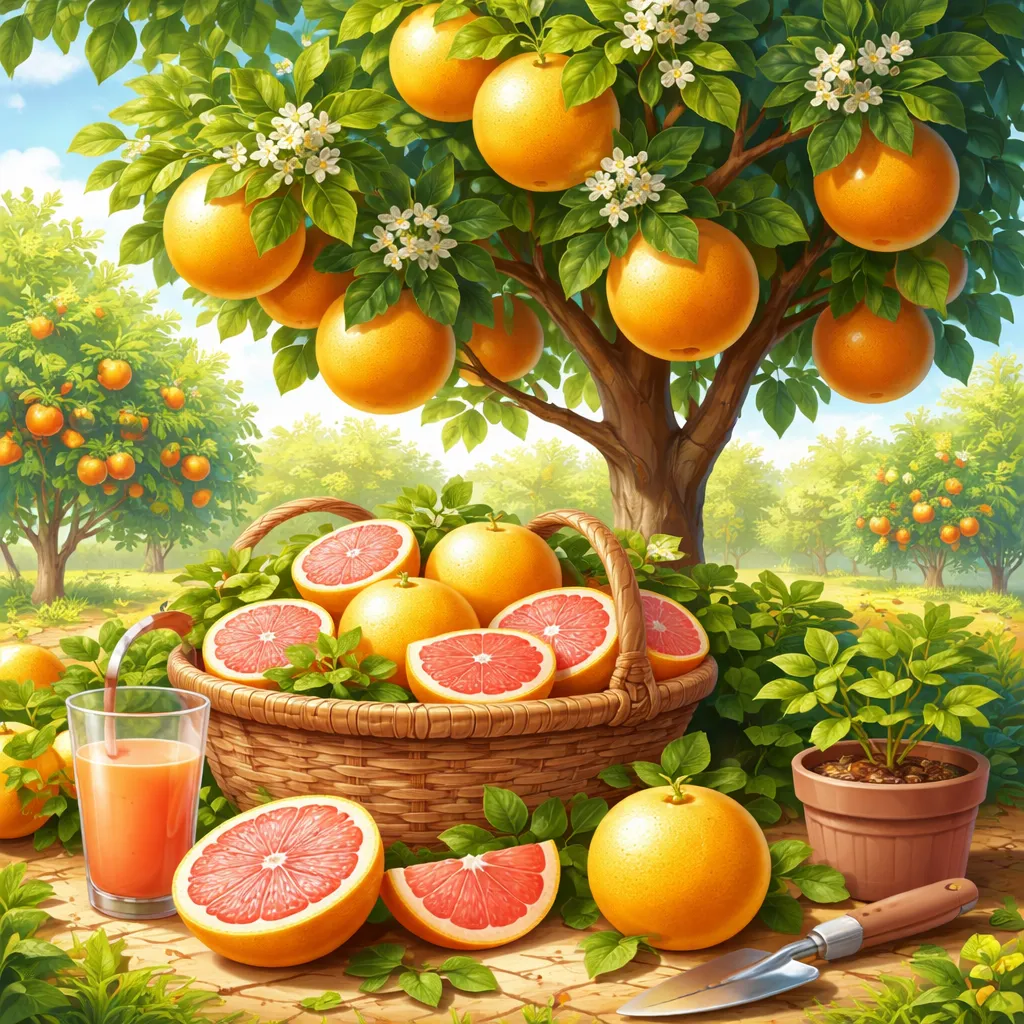

Have you ever lifted a huge, round citrus fruit and felt its heavy weight in your hands?
Have you peeled open its thick skin and smelled a bright, zesty scent that fills the whole room?
This tall evergreen tree grows the biggest citrus fruits of all, and today we will learn about grapefruit tree plant together.
It stands strong and tall, with glossy leaves that shine like green satin all year long.
It bears snowy flowers in spring and giant golden fruits that ripen slowly under the sun.
Let us begin an exciting adventure to explore this amazing and powerful fruit tree.
Let‘s Learn the Word! – Open the Treasure Box of Language
Formal Name and Pronunciation
The full name of this plant is grapefruit tree, pronounced /ˈɡreɪpfruːt triː/.
Clap twice for grape-fruit and once for tree to make a strong and clear rhythm.
Stretch your hands wide as you say it, to show how big the fruits really are.
Word Origin Story
The name grapefruit comes from the way fruits grow in tight clusters like grapes.
People first saw this growing pattern in Barbados hundreds of years ago.
It is a cross between sweet oranges and pomelos, two other sunny citrus fruits.
The name combines grape and fruit to describe its unique growing habit.
Nicknames and Other Names
Gardeners call it the giant citrus tree for its large size and huge fruits.
Children love to name it “Sun Ball Tree” for its round, golden-yellow fruits.
It is also known as a pomelo hybrid, since it comes from the large pomelo fruit.
Core Plant Parts Vocabulary
Trunk grows thick and sturdy, like a brown pillar holding up the whole grapefruit tree.
Branches spread wide and strong, holding heavy clusters of big fruits and leaves.
Leaves are large, oval and glossy, with a deep green color that shines in sunlight.
Blossoms are white and fragrant, with soft petals that smell like sweet honey.
Roots spread deep underground, drinking water to feed its large branches and fruits.
Fruits are round and huge, with thick bumpy skin that is yellow or pinkish inside.
Thorns appear on young branches to protect the tree from hungry animals.
Segments are the juicy parts inside the fruit, full of bright and tangy juice.
Action and State Words
Cluster describes how fruits grow in groups hanging together on branches.
Bloom means white flowers open and release a sweet, strong fragrance in spring.
Ripen shows green fruits turn golden yellow and grow juicy in warm sunlight.
Zesty tells the bright, fresh taste that makes grapefruit so lively and fun.
Glossy describes how leaves shine smoothly when the tree is healthy and strong.
Ecosystem Related Vocabulary
Honeybees fly to white blossoms to collect sweet nectar for their hives.
Butterflies rest on large leaves and enjoy the warm sun near the tree.
Birds perch on thick branches and eat small insects that harm the leaves.
Bats visit blossoms at night and help the tree make more big fruits.
Cultural Imprints in Language
A cheerful saying tells that grapefruit brings energy and brightness to every new day.
It teaches children that fresh citrus fruits can make them feel lively and happy.
A simple nursery rhyme sings, “White flowers bloom, big fruits loom, sunshine fills the sunny room.”
It paints a lively picture of the grapefruit tree’s growth from flower to fruit.
The phrase “grapefruit glow” means a healthy, bright look on someone’s face.
Now we have all the useful words to explore deeper, and we can learn about grapefruit tree plant’s hidden natural secrets.
Discover the Plant’s Secrets! – Nature Detective’s Exploration Notes
Plant Passport
The grapefruit tree plant belongs to the Rutaceae family, the citrus fruit family.
Its scientific genus is Citrus, closely related to oranges, lemons and pomelos.
It grows as a tall evergreen tree with a full, bushy crown and dense foliage.
Its leaves are larger than orange tree leaves, with a thick and leathery texture.
White fragrant flowers bloom in clusters, and very large green fruits form afterward.
The grapefruit tree follows a long and slow growing cycle across the seasons.
New leaves and white flowers appear in mild spring weather.
Tiny green fruits form and grow extremely large through summer and autumn.
Fruits ripen to golden yellow in late winter and early spring, taking many months to mature.
It keeps all its green leaves year-round and never goes fully dormant in cold weather.
Survival Wisdom
Grapefruit trees need long hours of full sunlight to grow huge and juicy fruits.
They have thick waxy leaves that hold water during hot and dry weather.
They first grew in the Caribbean islands, a warm and sunny part of the world.
Now they grow in warm climates like Florida, California, Spain and Israel.
They dislike cold frost, and freezing temperatures can hurt their branches easily.
Ecological Niche and Contributions
As a powerful producer, the grapefruit tree makes food from sunlight, water and air.
Bees and insects get rich nectar from its fragrant spring blossoms.
Small animals find safe shelter in its thick, tall branches from wind and heat.
Its deep roots hold soil firmly and stop erosion during heavy tropical rains.
Leaves take in harmful gases and release clean oxygen for all living things.
Fallen leaves break down into rich soil that feeds other plants in the garden.
Human History and Cultural Symbols
Grapefruit is a modern fruit, first discovered in the 18th century in Barbados.
In many cultures, it symbolizes health, freshness and morning energy.
People eat fresh grapefruit segments, drink its juice and use its peel for baking.
Grapefruit oil makes fragrant soaps, candles and room sprays with a bright scent.
Fun Wow Facts
A single grapefruit can weigh as much as a small football, making it the largest citrus fruit.
Grapefruits grow in clusters just like grapes, which gives them their special name.
Some grapefruit varieties have pink or red inside, while others are pale yellow.
We have unlocked all the amazing secrets of this giant tree, and now we can grow a grapefruit tree plant with our own hands.
Let’s Grow It Together! – Little Guardian’s Action Guide
Suitability for Home Planting
Dwarf grapefruit trees grow well in very large pots on sunny balconies and patios.
Regular trees need a big outdoor garden space to grow tall and spread wide.
It needs a spot with full sunlight for at least eight hours every single day.
Older kids can help care for it, as it needs gentle but consistent attention.
Little Gardener’s Tool Kit
A young dwarf grapefruit sapling works better than seeds for fast fruit growth.
An extra-large sturdy pot with drainage holes to hold its big root system.
Special citrus soil mixed with compost to give the tree enough nutrients.
A large watering can, citrus fertilizer and a small trellis for young branch support.
A soft cloth to wipe dust off large glossy leaves regularly.
Step-by-Step Planting and Care
Plant the sapling in early spring when frost is gone and air grows warm.
Fill the pot with soil, place the sapling carefully and cover its roots completely.
Water the soil slowly until it is moist, not soggy, for the first planting.
Check the top soil daily, water only when it feels dry to the touch.
Keep the pot in full sunlight, as sunshine makes fruits big and juicy.
Feed the tree with citrus fertilizer once a month during spring and summer.
Watch the tree every day and draw its changes in a special nature notebook.
Record when white flowers bloom, green fruits grow and golden fruits ripen.
Problem Diagnosis Room
Yellow leaves mean too much water, stop watering and let soil dry out fully.
Tiny green bugs on leaves can be wiped away with mild soapy water gently.
Dropping leaves show the tree is cold, move it to a warmer sunny spot.
Small fruits mean not enough sunlight, give the tree more sun every day.
Harvest and Growth Gifts
Wait three to four years, and you can pick your own home-grown giant grapefruits.
Harvesting heavy fruits teaches kids patience and respect for slow-growing plants.
Caring for the tree builds responsibility and an appreciation for nature’s big gifts.
Making fresh grapefruit juice with your harvest creates happy family moments.
Creative Extension Activities
Make a growth diary to draw and write about the tree’s changes each week.
Create leaf rubbings with paper and crayons to save large grapefruit leaf shapes.
Paint a picture of white blossoms and huge golden fruits on a tall green tree.
Learn the grapefruit nursery rhyme and sing it while caring for your tree.
Make colorful decorations with dried grapefruit peels and share them with friends.
Nurturing a grapefruit tree helps us connect with nature and truly learn about grapefruit tree plant each passing day.
Conclusion and Eternal Curiosity
Today we have finished a wonderful journey with the magnificent grapefruit tree plant.
We learned useful English words, discovered natural secrets and learned to grow this giant citrus tree with care.
This special evergreen tree gives us fragrant flowers, huge juicy fruits and helps many small creatures thrive.
It teaches us that great things take time, patience and lots of warm sunlight to grow.
Keep your eyes wide open when you walk through sunny gardens, orchards or warm parks.
Look closely at tall citrus trees and giant round fruits, and you will find new magic every single day.
Never stop asking questions about nature, because the world holds endless giant wonders waiting for you to explore and discover.