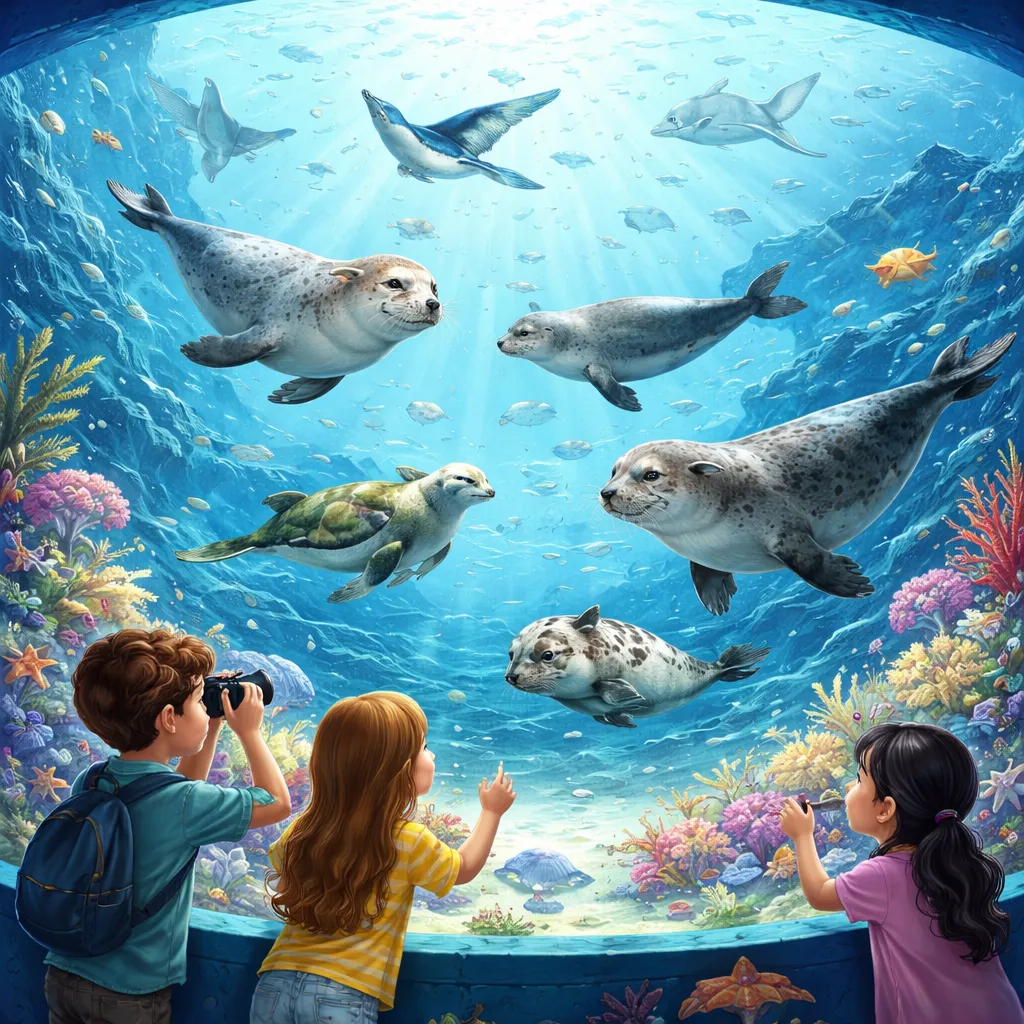

What Is This Animal?
A seal is a marine mammal with a streamlined body and flippers. It lives in the ocean but comes onto land or ice to rest. Seals have thick layers of blubber under their skin. This keeps them warm in cold water. Their bodies are built for swimming.
Seals belong to a group called pinnipeds. This means “fin-footed.” They have flippers instead of feet. Their front flippers help them steer. Their back flippers provide power for swimming. On land, seals move by wriggling their bodies. They cannot walk like dogs or cats.
These animals live in oceans around the world. Some live in cold Arctic waters. Others live in warm tropical seas. Seals are found on coastlines and ice floes. They spend much of their time in the water hunting for food.
For children, seals are delightful animals. Their round eyes and whiskered faces look friendly. Their playful movements in water entertain. Learning about seals teaches children about marine life and how animals adapt to ocean environments.
English Learning About This Animal
Let us learn the English word seal. We say it like this: /siːl/. The s sounds like “s.” The ea sounds like “ee” in “see.” The l is soft. Say it together: seal. Say it three times. Seal. Seal. Seal.
Now let us learn words about a seal’s body. The blubber is the thick layer of fat under the skin. The flippers are the front and back limbs for swimming. The whiskers are stiff hairs called vibrissae. They help detect movement in water. The fur is short and dense. The pup is a baby seal.
There is a thoughtful saying about seals. In Celtic folklore, seals are called selkies. Stories say, “The seal can shed its skin and walk on land as a person.” This reminds us that creatures have hidden depths. Another saying is, “A seal sings when the tide comes in.” This connects seals to the rhythm of the sea.
These English words help children understand seal anatomy. When they say blubber, they learn how seals stay warm. When they say pup, they know the baby seal. Parents can practice these words while looking at pictures. Point to the parts. Say the words together.
Animal Facts and Science Knowledge
Seals belong to the family Phocidae. They are true seals. There are about thirty seal species. They are found in oceans worldwide. Some common seals include harbor seals, leopard seals, and elephant seals. Each species has its own size and habits.
Seals live in coastal waters and on sea ice. They spend time in the water hunting. They come onto land or ice to rest, molt, and give birth. Some seals migrate long distances. Others stay in one area year-round.
Seals are carnivores. They eat fish, squid, and crustaceans. They hunt underwater. They use their whiskers to detect vibrations from prey. They can dive deep and stay underwater for a long time. Some seals dive over 1,500 feet deep.
Seals have special abilities. They can slow their heartbeat to conserve oxygen. They can close their nostrils and ears underwater. Their eyes see well in dim light. They have excellent hearing both in and out of water. They can hold their breath for over an hour.
Seals are social animals. Many species gather in colonies. Females give birth to one pup each year. Pups are born on land or ice. Mother seals recognize their pups by smell and sound. They nurse their pups with rich milk. Pups grow quickly on this milk.
How to Interact With This Animal Safely
Seals are wild animals. They are not pets. The best way to interact is to observe from a safe distance. If you see a seal on the beach, do not approach it. Seals need to rest. Approaching can stress them. They may bite if frightened.
Teach children to stay at least fifty yards away from seals. Do not try to feed them. Do not throw things at them. If a seal approaches you, back away slowly. Give it space. Seals are curious but wild.
If you see a seal pup alone, do not touch it. The mother may be nearby hunting. She will return. Human scent on the pup may cause the mother to abandon it. Call a wildlife rescue if the pup seems injured or alone for a long time.
In zoos and aquariums, follow the rules. Stay behind barriers. Do not tap on glass. Watch the seals swim. Learn about them from signs and keepers. This is a safe way to see seals up close.
Seals are protected in many places. Disturbing them can result in fines. Teaching children to respect wild animals helps protect both people and seals. Enjoying them from a distance is the best way to appreciate them.
What Can We Learn From This Animal
Seals teach us about adaptation. They live in water and on land. They have blubber for cold oceans. Children learn that adapting to our surroundings helps us succeed. Dressing for weather, learning new skills, and adjusting to change are all adaptations.
Seals teach us about family. Mothers care for their pups. They recognize their own babies among many. Children learn that family bonds are strong. Caring for each other, staying close, and protecting loved ones matter.
Seals teach us about playfulness. They swim, leap, and chase in water. Children learn that play is important. Playing helps us learn, stay active, and feel joy. Even busy animals make time to play.
Seals teach us about the ocean. They show us that the sea is full of life. Children learn that oceans are home to amazing creatures. Protecting the ocean protects seals and their homes.
Fun Learning Activities
Let us make learning about seal fun. One activity is the seal wiggle game. Ask your child to lie on the floor. Use arms as front flippers. Wiggle the body to move forward. Slide across the floor. Say “seal hauls out” and “seal rests on the beach.”
Another activity is drawing a seal. Look at pictures of seals. Notice the round body, whiskers, and flippers. Draw a seal on a rock or ice. Add the flippers and whiskers. Label the parts. Say the words aloud.
Create a story about a seal pup. Ask your child what the pup does. Does it swim with mother? Does it rest on the beach? Does it learn to catch fish? Write a few sentences together. Let your child draw pictures. Read the story aloud.
Make a seal craft. Use a small paper plate for the body. Add paper flippers. Add a paper head with whiskers from yarn. Paint or color the seal gray or brown. Move the craft seal. Practice saying “seal swims” and “seal dives deep.”
Learn about marine mammals. Compare seals to sea lions and walruses. Notice the differences in ears, flippers, and movement. Talk about how each animal survives in the ocean. Use words like “pinniped,” “blubber,” and “marine mammal.”
Visit an aquarium if possible. Watch seals swim. Notice how they move in water. Count how long they stay underwater. Listen to the sounds they make. Use words like “dive,” “bark,” and “colony.”
These simple activities bring learning to life. Children build English vocabulary while playing. They learn science through understanding adaptation. They develop respect through learning about wild animals. Learning about seal becomes a journey to the coast. Each moment spent together strengthens language, curiosity, and a growing appreciation for the graceful swimmers that glide through cold waters, reminding us that life thrives where land meets sea.