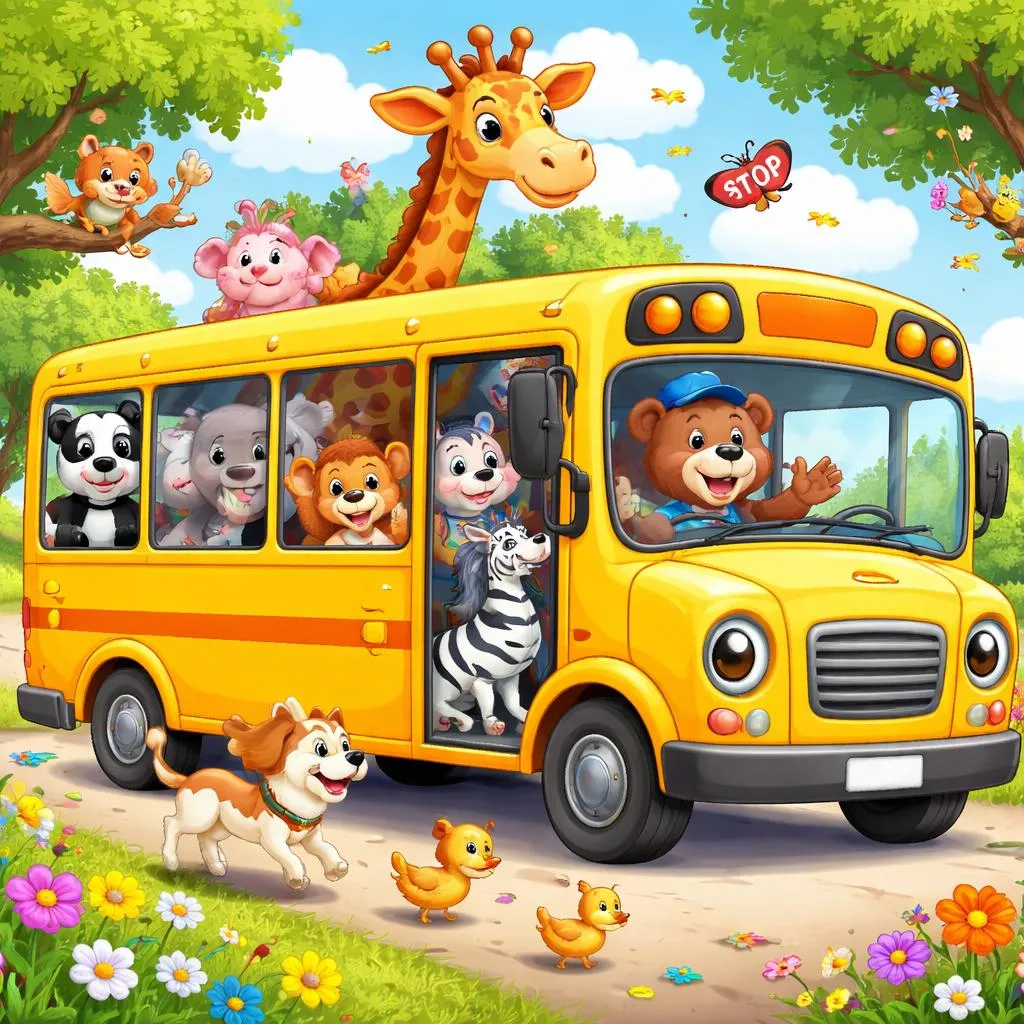

The "Wheels on the Bus" is one of the most beloved children's songs of all time. Its repetitive structure and fun actions make it a classroom favorite. Today, we are going to explore a delightful variation that puts animals on a bus. This version adds animal sounds and movements to the classic tune, creating new opportunities for learning and fun.
What Is the Animals on the Bus Song? The "Animals on the Bus" song is a creative variation of the classic "Wheels on the Bus." In this version, different animals become passengers on the bus. Each animal makes its characteristic sound instead of the usual bus sounds.
The song follows the same repetitive structure as the original. Each verse introduces a new animal. Children make the animal sound and add corresponding movements. The familiarity of the tune makes new verses easy to learn.
This variation is perfect for young learners. It combines animal vocabulary with the beloved bus theme. Children practice animal names and sounds. They also practice the repetitive language patterns from the original song.
The Lyrics of Animals on the Bus Let us look at the animals on a bus lyrics. Here is a common version:
The cows on the bus go moo, moo, moo, Moo, moo, moo, moo, moo, moo. The cows on the bus go moo, moo, moo, All through the town.
The sheep on the bus go baa, baa, baa, Baa, baa, baa, baa, baa, baa. The sheep on the bus go baa, baa, baa, All through the town.
The horses on the bus go neigh, neigh, neigh, Neigh, neigh, neigh, neigh, neigh, neigh. The horses on the bus go neigh, neigh, neigh, All through the town.
Additional verses can include: The ducks on the bus go quack, quack, quack. The pigs on the bus go oink, oink, oink. The chickens on the bus go cluck, cluck, cluck. The cats on the bus go meow, meow, meow. The dogs on the bus go woof, woof, woof.
Each verse follows the same pattern with a new animal and its corresponding sound.
Vocabulary Learning from the Song The animals on a bus lyrics introduce several important vocabulary categories.
Animal Names: Cows, sheep, horses, ducks, pigs, chickens, cats, dogs. Children learn to identify these common farm and domestic animals.
Animal Sounds: Moo, baa, neigh, quack, oink, cluck, meow, woof. These onomatopoeic words are fun to say and help children remember each animal.
Transportation Words: Bus, wheels, town, all through. The setting provides transportation vocabulary in a familiar context.
Action Words: Go, ride, drive, travel. These verbs describe what the animals and bus are doing.
Repetitive Phrases: "All through the town" appears in every verse. Children learn this phrase naturally through repetition.
Phonics Points in the Song We can use this song to practice specific sounds. The animal sounds are perfect for phonics practice.
The /m/ sound in "moo" requires closed lips. Children practice this nasal sound.
The /b/ sound in "baa" is a voiced sound made with lips together. Practice: "bbbaa."
The /n/ sound in "neigh" requires the tongue behind the teeth. This sound appears in many animal names.
The /kw/ sound in "quack" is a blend. Children practice putting /k/ and /w/ together smoothly.
The /k/ sound in "cluck" appears at the beginning and end. Children hear this sound in multiple positions.
Grammar Patterns in the Lyrics The song contains several important grammar patterns that children absorb naturally.
Plural Nouns: "The cows" uses the plural -s ending. Children learn that we add -s when talking about more than one animal.
Present Tense: "The cows go moo" uses present tense. Children learn to describe habitual or current actions.
Repetitive Structure: Each verse follows the exact same pattern. This predictability builds confidence and language awareness.
Prepositional Phrases: "On the bus" and "through the town" teach prepositions of location and movement.
Subject-Verb Agreement: "The cows go" shows correct agreement between plural subject and verb. Children internalize this pattern.
Learning Activities with the Song The song can be the center of many engaging activities. Here are some ways to extend the learning.
Animal Puppets: Create simple animal puppets on craft sticks. Children hold up the correct puppet when their animal's verse is sung. They can make the puppet move like the animal.
Animal Actions: Add movements for each animal. Cows might sway slowly. Sheep might bounce gently. Horses might prance. Ducks might waddle. This adds physical engagement to the music.
Animal Sound Orchestra: Assign different animal sounds to different groups. One group moos, one group baas, one group neighs. Children listen for their turn and make their sound at the right time.
Bus Dramatic Play: Arrange chairs like a bus. Children sit in rows. One child is the driver. As each animal verse is sung, the children make that animal sound and movement while staying in their seats.
Animal Sorting: After singing, sort the animals by categories. Farm animals, pets, animals with fur, animals with feathers. This builds classification skills.
Printable Materials for the Song Printable resources can enhance the learning experience. Here are some materials to create.
Animal Picture Cards: Create cards showing each animal from the song. Cows, sheep, horses, ducks, pigs, chickens, cats, dogs. Children hold up the correct card when their animal is sung.
Bus Picture: Create a large picture of a bus. Add windows where animal cards can be placed. Children place the animal in the bus window when that verse is sung.
Animal Sound Cards: Create cards with each animal sound written out. Moo, baa, neigh, quack, oink, cluck, meow, woof. Children match the sound to the animal.
Mini Song Book: Create a simple foldable book with each animal on a page. Children can "read" their book at home, making the animal sounds for each page.
Educational Games with the Song Games make the song even more engaging. Here are some games to try.
Animal Guessing Game: Make an animal sound without showing a picture. Children guess which animal is on the bus. Then everyone sings that verse together.
Animal Freeze Dance: Play the song. Children move like the animals. When the music stops, they freeze in an animal pose. Call out an animal, and children strike that pose.
What Animal Is Next? Game: Sing the song but pause before naming the next animal. Children guess what animal comes next. This builds prediction and memory.
Animal Memory Match: Create pairs of animal cards. Place them face down. Children take turns flipping two to find matches. When they find a match, they make that animal sound.
Bus Load Game: Give each child an animal card. The bus driver calls out animals one by one. "Cows, get on the bus!" Children with cow cards come to the front. When all animals are on the bus, everyone sings.
Connecting to the Original Song This variation connects naturally to the original "Wheels on the Bus." Children already know the tune and structure. Adding animals feels like a fun game.
We can alternate between versions. Sing the original with bus sounds. Then sing the animal version. Children notice the differences and similarities.
We can also create mixed verses. "The wheels on the bus go round and round. The cows on the bus go moo, moo, moo." This combines both versions.
Creating New Animal Verses Children love creating new verses for the song. This builds creativity and language skills.
What other animals might ride the bus? Lions would roar. Elephants would trumpet. Monkeys would chatter. Birds would tweet.
Children suggest animals and sounds. Some sounds are real. Some are silly imagination. Both are valuable for creative thinking.
Write the new verses on chart paper. Children illustrate them. Sing them together. The class feels proud of their creations.
Animal Sounds in Different Languages For multilingual classrooms or cultural learning, we can explore animal sounds in different languages.
In Spanish, cows say "muu." In French, ducks say "coin coin." In Japanese, dogs say "wan wan."
Children learn that animal sounds are different around the world. This builds cultural awareness and respect for linguistic diversity.
Building a Classroom Menagerie Create a classroom display of all the animals from the song. Add each animal as you learn its verse.
Children can draw or color their favorite animal. Add speech bubbles with the animal sound. "Moo!" says the cow. "Baa!" says the sheep.
The display becomes a reference for the song. Children can point to the animals as they sing. This connects visual and auditory learning.
As we explore animals on a bus with young children, we combine several beloved elements. The familiar tune of "Wheels on the Bus" provides structure. Animal sounds add fun and variety. Actions and games build physical engagement. Through this simple song, children practice animal vocabulary, phonics, and grammar patterns. They develop listening skills and memory. Most importantly, they experience the joy of music and movement together. The bus rolls through town with its mooing, baaing, neighing passengers, and children sing along with delight.