
What Is This Animal?
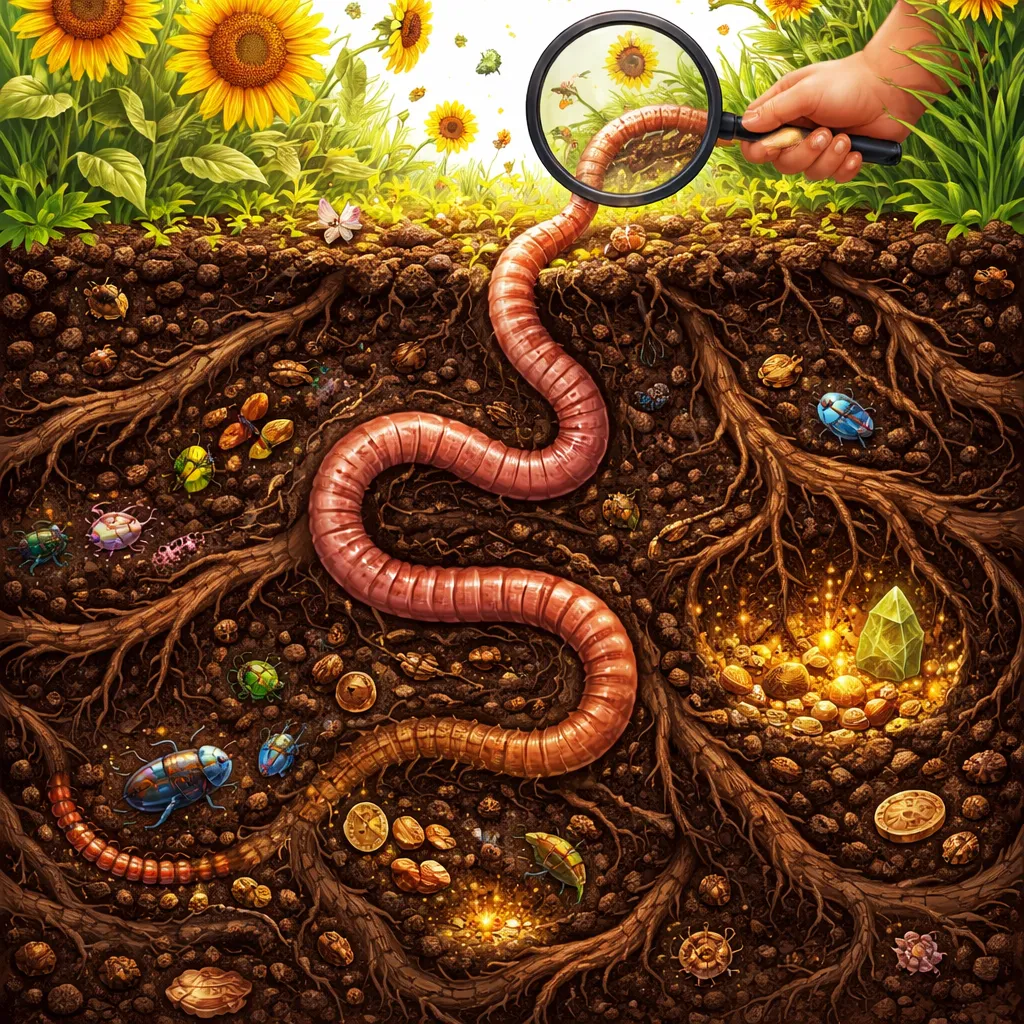
An earthworm is a long, soft-bodied creature that lives in soil. Its body is divided into many segments. It has no legs. It moves by stretching and contracting its muscles. Earthworms tunnel through the ground. They create paths that let air and water reach plant roots.
Earthworms are annelids. This group includes leeches and marine worms. Their name means “little rings.” Each segment of the body has tiny bristles. These bristles help the worm grip the soil as it moves. Earthworms have no eyes. They sense light and vibrations through their skin.
These creatures live underground. You find them in gardens, fields, and forests. They come to the surface when the soil is wet. Earthworms are most active at night. During the day, they stay below ground. They hide from birds and other predators.
For children, earthworms are fascinating. Their wiggly movement makes children laugh. Their work beneath the soil helps plants grow. They show us that even small creatures do big jobs.
English Learning About This Animal
Let us learn the English word earthworm. We say it like this: /ˈɜːrθwɜːrm/. The word has two parts. Earth sounds like “urth.” Worm sounds like “wurm.” Put them together: earthworm. Say it three times. Earthworm. Earthworm. Earthworm.
Now let us learn words about an earthworm’s body. The segments are the rings that make up the body. The clitellum is the thick band near the front. It helps in reproduction. The bristles are tiny hairs on each segment. They help the worm move. The mouth is at the front end. The anus is at the back end.
There is a famous quote from Charles Darwin about earthworms. He said, “It may be doubted whether there are many other animals which have played so important a part in the history of the world.” He studied earthworms for many years. Another simple saying is, “The earthworm is the farmer’s best friend.” This reminds us that worms help grow our food.
These English words help children understand earthworm anatomy. When they say segments, they see how the body is built. When they say clitellum, they learn the special band. Parents can practice these words while holding a worm gently. Point to the parts. Say the words together.
Animal Facts and Science Knowledge
Earthworms belong to the class Oligochaeta. This name means “few bristles.” Earthworms are annelids. They have long, segmented bodies. There are over six thousand earthworm species. They live on every continent except Antarctica.
Earthworms live in soil. They prefer moist, rich soil with organic matter. They burrow through the ground. Their tunnels create spaces for air and water. This helps plant roots grow. Earthworms cannot survive in dry soil. Their skin must stay moist to breathe.
Earthworms eat decaying leaves and organic matter. They pull leaves into their burrows. They eat soil as they tunnel. The soil passes through their body. They digest the organic material. What comes out is called castings. Worm castings are rich in nutrients. They make excellent fertilizer for plants.
Earthworms have special abilities. They can regenerate lost segments. If a worm loses part of its tail, it can grow back. They breathe through their skin. Their skin must stay moist for oxygen to pass through. Earthworms can sense vibrations in the ground. This helps them escape from predators like moles and birds.
Earthworms are hermaphrodites. Each worm has both male and female parts. Two worms mate. They exchange sperm. Later, the clitellum forms a cocoon. The cocoon holds the eggs. Baby worms hatch from the cocoon. Young worms look like tiny adults.
How to Interact With This Animal Safely
Earthworms are gentle creatures. They are safe to hold and observe. If you find an earthworm in the garden, let your child watch it. Notice how it moves. Look at the segments. Watch it stretch and contract. Then place it back on damp soil.
If your child wants to hold an earthworm, show them how. Wet your hands first. Dry hands can damage the worm’s skin. Let the worm crawl onto your palm. Feel the gentle movement. Feel the tiny bristles. Then place it back in soil.
Teach children to be gentle. Earthworms have soft bodies. Their skin is delicate. Do not squeeze them. Do not pull them. Let them move at their own pace. Always return worms to soil after observing. They need the earth to survive.
Never keep an earthworm in a jar for long. Earthworms need soil, moisture, and organic matter. If your family wants to observe worms longer, create a small worm observation box. Use a clear container with damp soil and leaves. Add a few worms. Watch them tunnel for a day or two. Then release them back into the garden.
Teach children to protect earthworm homes. Avoid using chemicals on soil. Leave leaves on garden beds. Earthworms need organic matter to eat. When we care for soil, we care for earthworms. Healthy soil means healthy gardens.
What Can We Learn From This Animal
Earthworms teach us about working unseen. They work underground where no one watches. Yet their work benefits everything above. Children learn that good work does not need attention. Helping quietly, sharing without praise, and doing small tasks all matter.
Earthworms teach us about transformation. They eat dead leaves and turn them into rich soil. Children learn that we can transform things too. Turning a sad moment into a learning opportunity, turning mistakes into lessons, and turning effort into achievement are all transformations.
Earthworms teach us about connection. Their tunnels connect the surface to the deep soil. They bring air and water to plant roots. Children learn that we are all connected. Our actions affect others. Being kind, sharing, and helping create connections that make communities strong.
Earthworms teach us about persistence. They tunnel through hard soil. They do not give up. Children learn that persistence moves us forward. Learning a new skill, finishing a project, or trying again after failure all take persistence.
Fun Learning Activities
Let us make learning about earthworm fun. One activity is the worm wiggle game. Ask your child to lie on the floor. Wiggle like a worm. Stretch long. Contract short. Move forward slowly. Say “earthworm stretches” and “earthworm tunnels.”
Another activity is soil exploration. Take a small shovel to the garden. Dig a small hole. Look for earthworms. Count how many you find. Notice the tunnels. Look at the soil color and texture. Use words like “burrow,” “castings,” and “segments.”
Draw an earthworm and label its parts. Draw the segments, clitellum, mouth, and bristles. Write the words next to each part. Say them aloud. For younger children, draw the worm first. Let them point to the parts as you say the words.
Create a story about an earthworm’s day. Ask your child where the worm goes. Does it tunnel deep? Does it find a leaf to eat? Does it escape a bird? Write a few sentences together. Let your child draw pictures. Read the story aloud.
Make a worm observation box. Use a clear plastic container. Fill it with layers of damp soil and sand. Add leaves on top. Place a few earthworms inside. Watch them tunnel. Notice how they mix the layers. Observe for a few days. Then release the worms into the garden.
These simple activities bring learning to life. Children build English vocabulary while playing. They learn science through observation. They connect with nature in hands-on ways. Learning about earthworm becomes a journey into the hidden world beneath our feet. Each moment spent together strengthens language, curiosity, and a lasting appreciation for the humble, wiggly creatures that turn soil into life.