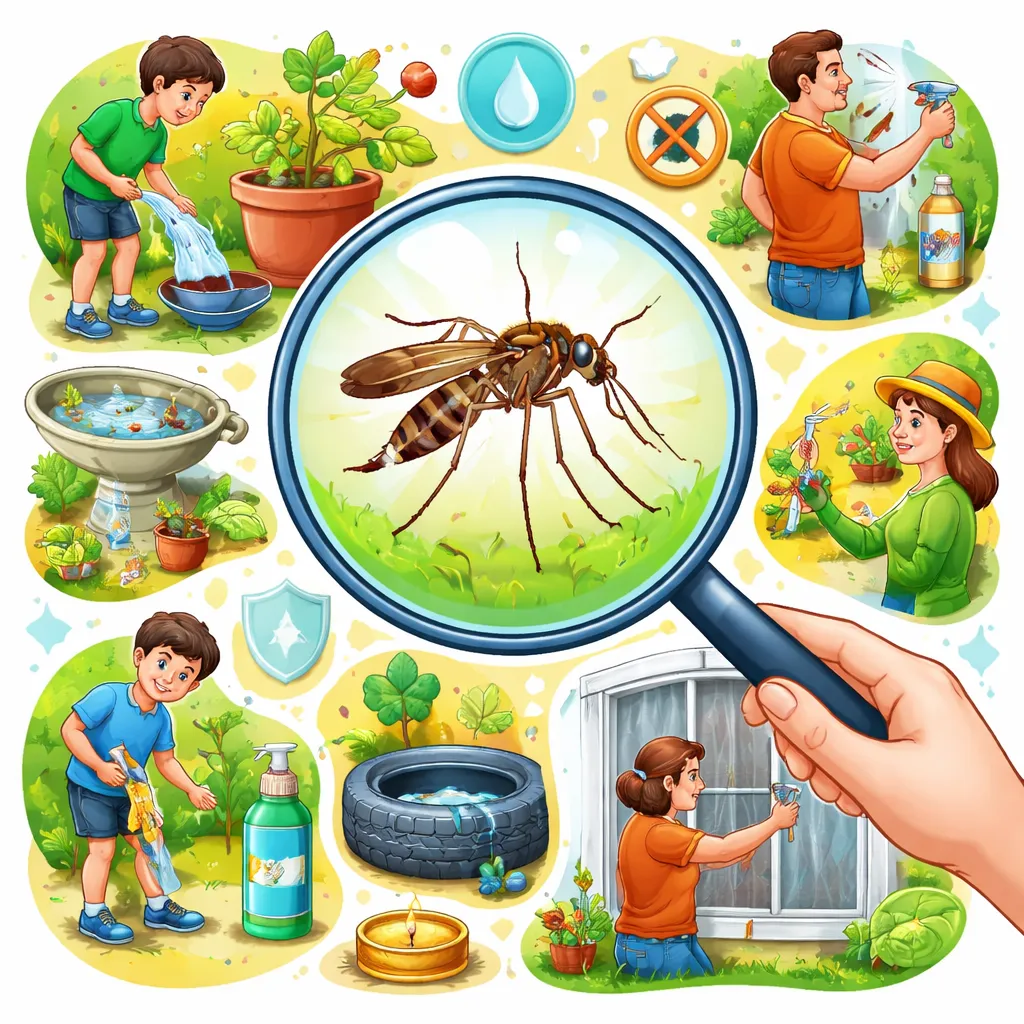

What Is This Animal?
A mosquito is a small flying insect with a long, thin body. It has one pair of wings. Its most noticeable feature is the long proboscis. This is a tube-like mouthpart. Female mosquitoes use it to drink blood. Male mosquitoes do not drink blood.
Mosquitoes belong to the fly family. They are related to house flies and gnats. Like flies, they have two wings. Their wings make a high-pitched buzzing sound. You hear this sound when they fly near your ear.
These insects live near water. They lay eggs in standing water. You find them around ponds, puddles, and containers with water. Mosquitoes are most active at dawn and dusk. They rest in shady areas during the day.
For children, mosquitoes are familiar but require awareness. Learning about them teaches children how to protect themselves and understand why these insects exist in nature.
English Learning About This Animal
Let us learn the English word mosquito. We say it like this: /məˈskiːtoʊ/. The word has three parts. Mos sounds like “muhs.” Kee sounds like “kee.” Toe sounds like “toe.” Put them together: mosquito. Say it three times. Mosquito. Mosquito. Mosquito.
Now let us learn words about a mosquito’s body. The head holds the eyes and antennae. The proboscis is the long tube for feeding. The thorax is the middle part where wings attach. The wings are clear and narrow. The abdomen is the long back part. The scales cover the wings and body.
There is a thoughtful saying about mosquitoes. An old proverb says, “The mosquito that bites you does not know your worth.” This means that creatures act on instinct, not intent. Another saying is, “One mosquito can ruin a whole night’s sleep.” This reminds us how small things can have big effects.
These English words help children understand mosquito anatomy. When they say proboscis, they learn about the feeding tube. When they say abdomen, they know the back part. Parents can practice these words while looking at pictures. Point to the parts. Say the words together.
Animal Facts and Science Knowledge
Mosquitoes belong to the insect family Culicidae. There are over three thousand mosquito species. They are found on every continent except Antarctica. Mosquitoes have been on Earth for millions of years. They are part of many ecosystems.
Mosquitoes live near water. Females lay eggs in standing water. Eggs hatch into larvae called wrigglers. Larvae live in water and eat tiny organisms. They turn into pupae. Adult mosquitoes emerge from the water. The whole life cycle takes about one to two weeks.
Only female mosquitoes drink blood. They need blood to produce eggs. The female uses her proboscis to pierce skin. She drinks a small amount of blood. Her saliva contains chemicals that prevent clotting. These chemicals cause the itchy bump. Male mosquitoes drink nectar and plant juices.
Mosquitoes have special abilities. They can detect carbon dioxide from far away. This helps them find animals to bite. They also sense body heat and chemicals on skin. Mosquitoes fly slowly compared to other insects. But they are agile. They can avoid swats and quick movements.
Mosquitoes are food for many animals. Fish eat mosquito larvae. Birds, bats, and dragonflies eat adult mosquitoes. They play a role in the food chain. Without mosquitoes, many animals would have less food.
How to Interact With This Animal Safely
Mosquitoes are wild insects that bite. The safest way to interact is to prevent bites. Teach children to wear protective clothing when mosquitoes are active. Long sleeves and pants help. Use insect repellent made for children. Follow the instructions carefully.
Teach children to avoid areas with standing water. Puddles, buckets, and old tires can hold mosquito eggs. Empty containers around the home. Change water in bird baths weekly. These steps reduce mosquitoes near where children play.
If a mosquito lands on your child, brush it away gently. Do not slap hard. Slapping may cause the mosquito to release more saliva. After coming indoors, check for bites. Wash bites with soap and water. Apply a cold pack if itchy.
Teach children that scratching bites makes them worse. It can cause infection. Instead, ask an adult for help. Calamine lotion or anti-itch cream can help. Most bites heal in a few days.
If your family lives in an area with mosquito-borne diseases, take extra precautions. Use screens on windows. Use mosquito nets for sleeping. Follow local health advice. Learning about mosquitoes helps children understand why these steps are important.
What Can We Learn From This Animal
Mosquitoes teach us about prevention. We cannot always avoid them. But we can prepare. Children learn that thinking ahead keeps us safe. Wearing protection, cleaning up water, and planning outdoor time are all prevention habits.
Mosquitoes teach us about life cycles. They change from eggs to larvae to adults. Children learn that all living things grow and change. Understanding life cycles helps us know when and where to expect animals.
Mosquitoes teach us about balance. They are pests to humans. But they feed birds, bats, and fish. Children learn that even creatures we do not like have roles in nature. Every animal connects to others in the web of life.
Mosquitoes teach us about patience. They remind us that small actions matter. Emptying a bucket of water takes little time. But it reduces many mosquitoes. Children learn that small, consistent efforts make a difference.
Fun Learning Activities
Let us make learning about mosquito fun. One activity is the mosquito life cycle game. Draw four circles. In the first, draw eggs on water. In the second, draw wrigglers swimming. In the third, draw pupae. In the fourth, draw an adult mosquito. Talk about each stage. Use words like “eggs,” “larvae,” “pupae,” and “adult.”
Another activity is finding and preventing mosquito homes. Walk around the yard with your child. Look for standing water. Empty flower pot saucers. Tip over buckets. Talk about why we remove standing water. Use words like “breeding” and “prevention.”
Draw a mosquito and label its parts. Draw the head, proboscis, thorax, wings, and abdomen. Write the words next to each part. Say them aloud. For younger children, draw the mosquito first. Let them point to the parts as you say the words.
Create a story about a mosquito’s life. Ask your child where the mosquito lays eggs. Do the wrigglers swim? Does the adult mosquito find nectar? Write a few sentences together. Let your child draw pictures. Read the story aloud.
Make a mosquito craft. Use a small paper roll for the body. Add pipe cleaner legs. Attach clear plastic wings. Add a long paper proboscis. Talk about how only females have the long proboscis for blood feeding.
Learn about mosquito predators. Talk about how dragonflies eat mosquitoes. Learn about bats that eat mosquitoes at night. Use words like “predator” and “prey.” This shows how mosquitoes fit into nature.
These simple activities bring learning to life. Children build English vocabulary while playing. They learn science through observation. They understand prevention through practical steps. Learning about mosquito becomes a lesson in awareness and responsibility. Each moment spent together strengthens language, curiosity, and a growing understanding that even small insects teach us to care for our environment and protect our health.