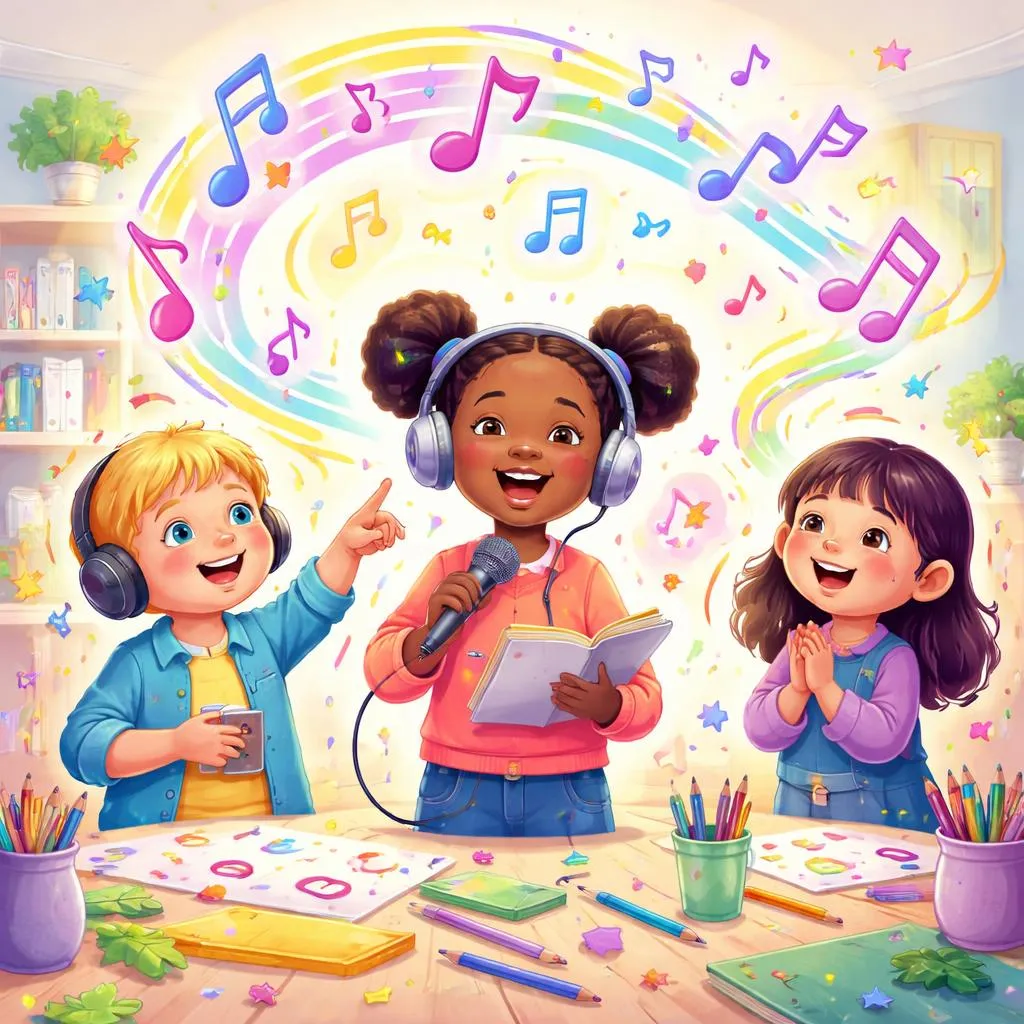

What is the Rhyme? Let's talk about a special kind of educational tool: the spell song. This is not one specific song, but a category of songs designed with a clear learning purpose. A spell song uses melody and rhythm to teach children how to spell words. It breaks down words into individual letters or sounds and sets them to music.
The magic of a spell song lies in how it makes memorization active and joyful. Instead of simply looking at static letters on a page, children sing them. This auditory and rhythmic approach engages different parts of the brain. It turns the sometimes challenging task of spelling into a catchy, repeatable activity that builds confidence and automatic recall.
The Lyrics of the Nursery Rhyme The lyrics of a spell song are built for clarity and repetition. They focus on the target word. A classic structure involves stating the word, spelling it letter by letter to a beat, and then stating the word again. For example, a simple spell song for "cat" might go:
C-A-T, that's how you spell cat! C-A-T, cat, cat, cat!
More advanced spell song lyrics might incorporate the word into a short sentence:
Let's all spell "jump," it's so much fun! J-U-M-P, and then you're done! You jump up high and touch the sky, That's how you spell J-U-M-P!
The lyrics are direct, repetitive, and always prioritize the clear articulation of each letter in sequence.
Vocabulary Learning While the primary goal of a spell song is teaching letter sequence, it also powerfully reinforces vocabulary. The song anchors the spelling to the meaning of a specific word. For instance, a spell song for "sun" not only teaches S-U-N but also reinforces that this combination of letters represents the bright object in the sky.
By choosing high-frequency or thematic words (like "friend," "play," "house"), these songs build a child's core written vocabulary. They learn that this collection of letters they are singing means something. This dual focus strengthens the crucial connection between phonics (sounds), orthography (spelling), and semantics (meaning).
Phonics Points A well-designed spell song is a direct phonics lesson. By isolating each letter, the song emphasizes the individual sounds (phonemes) that make up the word. Singing "B-I-G" slowly allows a child to hear the distinct /b/, /i/, and /g/ sounds.
Many spell songs also highlight common phonetic patterns. A song for "rain" reinforces the "ai" vowel team. A song for "shop" emphasizes the "sh" digraph. By setting these patterns to music, children internalize them in a way that feels more like play than study, building a strong foundation for decoding new words.
Grammar Patterns Spell songs often model simple but correct grammar within their framework. The act of spelling itself is usually presented in the present simple tense, used for facts and routines: "This is how you spell 'love'."
Furthermore, when spell songs include the word in a sentence ("I see the sun"), they provide a model of proper word usage. This subtly teaches that words exist to be used in communication, not just spelled in isolation. It connects the spelling exercise to meaningful language.
Learning Activities A perfect activity is "Create Your Own Spell Song." Start with a student's name or a favorite simple word. Work together to create a short, repetitive tune (or use a familiar one like "Twinkle Twinkle"). Clap or tap for each letter as you sing. This personalization makes learning deeply engaging and relevant.
Try "Spell Song Switch." Use the melody of a known spell song (like the "BINGO" tune) but change the target word. For example, instead of B-I-N-G-O, sing "M-O-T-H-E-R" or "P-U-P-P-Y." This activity leverages a familiar musical structure to practice spelling new words, reinforcing the adaptable nature of the format.
Printable Materials An excellent printable is a "Spell Song Lyric Sheet" with blank spaces. It has the musical framework written out with blanks for the word and its letters. For example: "Let's spell ____! ___ - ___ - ___ - ___ !" Children can fill in the blanks with their weekly spelling words and illustrate the word, creating their own custom songbook.
Create "Letter Tile Cards" to accompany specific spell songs. For a song about "FISH," provide cards with the letters F, I, S, and H. As children sing, they can physically arrange the tiles in the correct order. This combines auditory, kinesthetic, and visual learning for maximum impact.
Educational Games Play "Spelling Bee Karaoke." Prepare cards with words that have familiar spell songs. A child picks a card and must "perform" the song for that word, singing the letters to the correct tune. This removes the pressure of a traditional spelling bee and replaces it with musical recall.
Try "Rhythmic Dictation." Chant or sing the letters of a word from a known spell song in a rhythmic pattern (e.g., "C... A... T... CAT!"). Children must listen and write down the letters they hear in the correct order. This sharpens auditory processing and connects the song directly to the physical act of writing.
The true power of a spell song is its ability to disguise learning as fun. It takes the abstract, sequential task of spelling and embeds it in the universal joys of music and rhythm. By singing, moving, and creating with these songs, children build essential literacy skills on a foundation of joy and confidence. They learn that words are not just to be written, but to be sung, played with, and mastered—one memorable melody at a time.