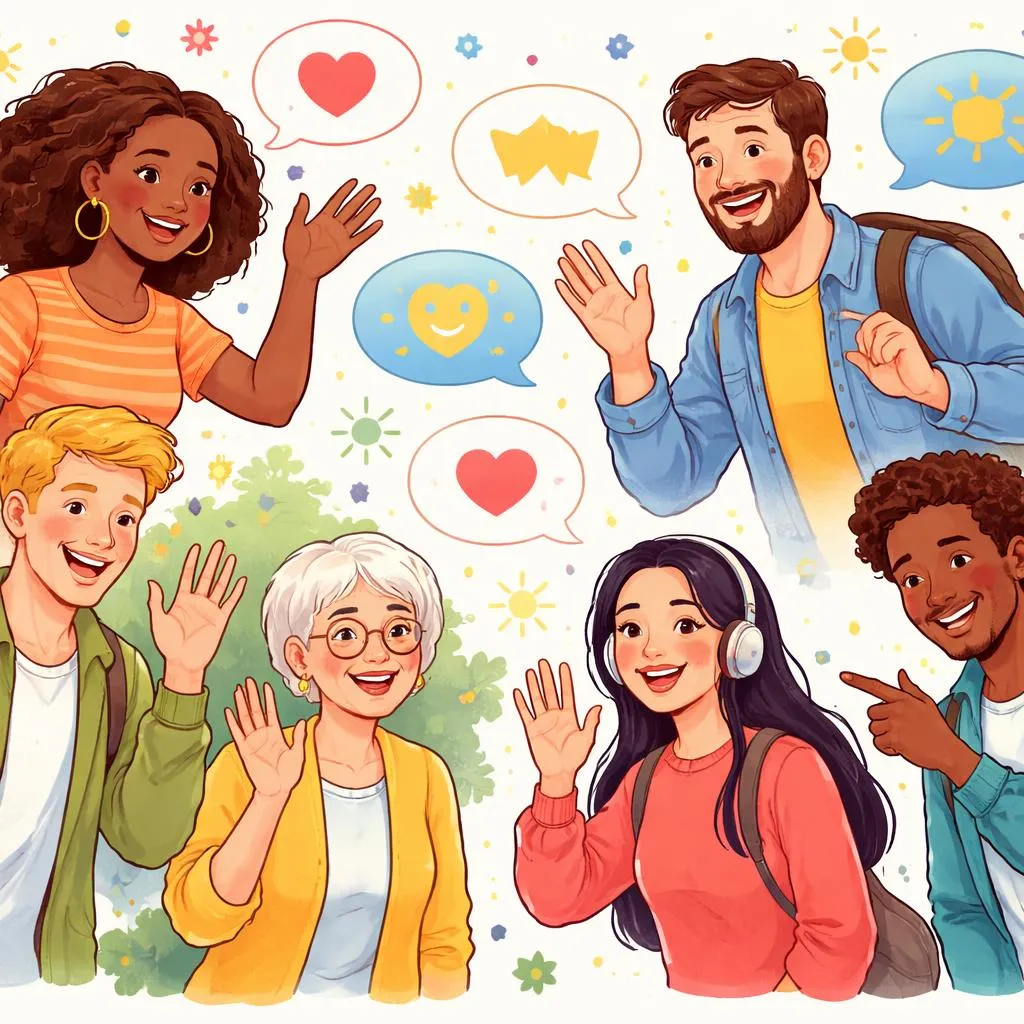

“Hello” is a common greeting in English.
It is used in many situations.
It can be formal.
It can be informal.
There are many other words for hello.
Different greetings fit different situations.
Formal Greetings
Some greetings are more formal.
They are used in professional settings.
They are used in polite conversations.
Good morning
Good afternoon
Good evening
Greetings
How do you do
These greetings show respect.
They are common in business.
They are common in school settings.
Casual Greetings
Some greetings are informal.
They are used with friends.
They are used with family.
Hi
Hey
Hi there
Hey there
What’s up
These greetings sound relaxed.
They are common in daily speech.
They are friendly.
Slang and Modern Greetings
Some greetings are slang.
They are used in casual talk.
They are popular with younger speakers.
Yo
What’s going on
Howdy
Sup
These forms are informal.
They are not used in formal writing.
Tone matters.
Context matters.
Friendly and Warm Greetings
Some greetings feel warm.
They show happiness.
They show kindness.
Nice to see you
Long time no see
Good to see you
These greetings express connection.
They show interest.
They build relationships.
Telephone and Online Greetings
Different situations use different greetings.
On the phone, people often say:
Hello
Hi, this is…
Online messages may begin with:
Hi
Hello everyone
Dear + name
The greeting matches the setting.
Formal emails use formal greetings.
Text messages use casual greetings.
Long Explanation Sentence
A greeting such as “hello” functions as a social expression used to acknowledge another person’s presence, initiate conversation, and establish tone, and alternative greetings vary according to formality, relationship, regional dialect, and communicative context.
Why Learning Different Greetings Matters
Using different greetings improves vocabulary.
It improves communication skills.
It shows awareness of context.
It shows cultural understanding.
It makes conversation more natural.
Choosing the right greeting supports clarity, politeness, and positive interaction in both spoken and written English.
Regional Variations of Hello
English greetings change by region.
Different countries prefer different forms.
In the United States, “Hey” is common.
In the United Kingdom, “Hiya” is often heard.
In Australia, “G’day” is a familiar greeting.
In some parts of the southern United States, “Howdy” is still used in friendly conversation.
These regional forms reflect culture.
They reflect history.
They reflect identity.
Choosing a regional greeting can signal belonging or familiarity within a community while still serving the same communicative function as the standard word “hello.”
Time-Based Greetings
Some greetings depend on the time of day, and these expressions follow social convention rather than strict grammar rules, meaning they are selected according to shared understanding of daily routine.
Good morning is used in the early part of the day.
Good afternoon is used after noon.
Good evening is used later in the day.
Good night is usually not a greeting.
It is often a farewell.
Time-based greetings show awareness.
They show politeness.
They organize daily interaction.
Professional and Academic Greetings
In professional or academic settings, greetings tend to be more structured and respectful, especially in written communication where tone must be clearly indicated without facial expression or vocal cues.
Dear Professor Smith
Dear Hiring Manager
To whom it may concern
Good morning, team
These greetings create a formal tone.
They show respect.
They establish professionalism.
Careful greeting choice influences first impressions and frames the entire message that follows in a structured and appropriate manner.
Energetic and Enthusiastic Greetings
Some greetings express excitement or strong positive emotion, often used when meeting someone after a long time or when celebrating a special occasion.
Hey!
So good to see you!
Look who it is!
It’s great to see you!
These greetings carry emotional tone.
They communicate enthusiasm.
They strengthen social bonds.
Intonation often changes meaning.
Voice and context matter.
Group Greetings
When addressing more than one person, greetings may shift slightly in structure, especially in public speaking, classroom interaction, or online meetings where the speaker acknowledges multiple listeners at once.
Hello everyone
Hi all
Good morning, class
Welcome, everyone
These greetings include plural reference.
They signal collective attention.
They organize group communication.
The greeting sets the tone for the discussion.
Cultural Considerations
Greeting styles vary across cultures, and understanding these differences helps speakers choose expressions that match expectations and avoid misunderstanding in intercultural communication.
Some cultures value formal distance.
Some prefer immediate friendliness.
Some expect titles.
Some prefer first names.
Greeting choice reflects respect.
Greeting choice reflects relationship.
Awareness improves communication.
Greeting as Social Function
A greeting does more than signal the beginning of conversation; it establishes social connection, signals politeness, indicates familiarity or distance, and prepares both speakers for interaction within a shared communicative framework.
It opens dialogue.
It reduces social tension.
It shows recognition.
It signals readiness.
It creates engagement.
Without greetings, conversation may feel abrupt.
With appropriate greetings, communication flows naturally.
Extended Analytical Sentence
Alternative expressions for “hello” function as socially meaningful linguistic markers that vary according to region, formality level, interpersonal relationship, communicative medium, and emotional tone, allowing speakers to signal politeness, familiarity, enthusiasm, or professionalism while initiating interaction in both spoken and written contexts.
Practical Language Awareness
Using a variety of greetings expands vocabulary.
It improves fluency.
It strengthens pragmatic competence.
It enhances cultural understanding.
It increases confidence in conversation.
A simple greeting shapes the entire interaction, and selecting the appropriate alternative to “hello” demonstrates awareness of context, relationship, and communicative purpose in everyday English use.
Greetings in Written Communication
Written greetings follow patterns.
They depend on purpose.
They depend on audience.
In formal letters, greetings are structured.
Dear Mr. Brown
Dear Ms. Lee
Dear Dr. Chen
A comma often follows.
Sometimes a colon is used.
In semi-formal emails, the greeting becomes lighter.
Hello Mr. Brown
Hi Ms. Lee
Good afternoon Dr. Chen
In friendly messages, greetings are simple.
Hi Anna
Hey Sam
Hello there
Tone changes with structure.
Punctuation also signals tone.
A greeting sets expectation.
It frames the message.
Greetings in Public Speaking
Public speakers often begin with a greeting.
It captures attention.
It shows respect to listeners.
Good morning, ladies and gentlemen
Good evening, everyone
Hello, and thank you for being here
These greetings organize the event.
They mark the beginning.
They create shared focus.
In classrooms, teachers greet groups.
Good morning, class
Hello everyone
Welcome back
Such greetings build routine.
Routine builds comfort.
Comfort supports learning.
Digital and Social Media Greetings
Online communication has influenced greeting style, because digital platforms encourage shorter, faster exchanges that still require social acknowledgment at the beginning of interaction.
Hi
Hey
Hello :)
Morning!
Even a single word works.
Sometimes no greeting appears.
In professional online spaces, greetings remain important.
Hello team
Good afternoon all
Digital tone still matters.
Clarity still matters.
Respect still matters.
Emotional Tone in Greetings
A greeting can signal mood.
It can signal energy.
It can signal relationship closeness.
A calm “Hello” feels neutral.
A bright “Hey!” feels energetic.
A warm “Good to see you” feels personal.
Intonation changes meaning.
Facial expression supports tone.
In writing, punctuation replaces voice.
An exclamation mark increases enthusiasm.
A period sounds neutral.
Careful choice shapes perception.
Greeting and Social Distance
Greetings reflect social distance, meaning they help indicate how close or formal a relationship is between speakers, and selecting the correct level of formality demonstrates awareness of context and social expectations.
Hello, Professor Adams shows distance and respect.
Hi, John shows familiarity.
Hey, buddy shows closeness.
Different contexts require different distance.
Workplace greetings differ from family greetings.
Cultural norms influence choice.
Language expresses relationship.
Greetings Across English-Speaking Countries
English is spoken worldwide.
Greeting style varies.
In Canada, “Hi there” is common.
In Ireland, “How’s it going” may function as hello.
In New Zealand, “Kia ora” is widely used alongside English greetings.
These forms reflect local culture.
They reflect shared identity.
They expand vocabulary knowledge.
Exposure increases understanding.
Understanding supports communication.
Non-Verbal Elements of Greeting
A greeting is not only verbal.
It includes gesture.
It includes eye contact.
It includes body language.
A smile strengthens a greeting.
A wave signals hello from distance.
A handshake may accompany a formal greeting.
Non-verbal cues reinforce meaning.
They reduce misunderstanding.
They support positive interaction.
Language and gesture work together.
Extended Structural Sentence
Greetings such as alternatives to “hello” function as pragmatic markers that initiate interaction, establish interpersonal tone, signal relative social distance, reflect regional and cultural identity, and shape the communicative environment in which subsequent dialogue unfolds, whether in spoken discourse, formal correspondence, academic presentation, or digital exchange.
Linguistic Awareness and Vocabulary Growth
Learning many ways to say hello expands expressive range.
It increases adaptability.
It strengthens communicative flexibility.
It enhances sociolinguistic competence.
It builds confidence.
Different greetings serve different roles.
Some open formal dialogue.
Some express excitement.
Some signal routine.
Some mark professional respect.
A simple greeting carries social meaning, emotional tone, and contextual awareness, and understanding these variations deepens mastery of English communication across diverse real-world situations.