What Is Cyrillic Lettering?
Cyrillic lettering is a writing system.
It is an alphabet.
It is used to write several languages.
Cyrillic lettering looks different from the English alphabet.
Some letters look familiar.
Some letters look completely new.
Learning about Cyrillic lettering builds global language awareness.
Writing systems shape communication.
Letters carry sound.
Sound carries meaning.
The Origin of Cyrillic Lettering
Cyrillic lettering was developed in the First Bulgarian Empire during the 9th–10th centuries. It was inspired by earlier scripts created for Slavic languages.
The name “Cyrillic” comes from Saint Cyril, a missionary who helped spread Christianity among Slavic peoples. Although he created the Glagolitic script, his followers later developed the Cyrillic system based on Greek letters.
Historical development matters.
Religion influenced writing.
Culture shaped letters.
Cyrillic lettering was designed to represent Slavic sounds clearly.
Clear sound-symbol connection supported literacy.
Languages That Use Cyrillic Lettering
Cyrillic lettering is used in several countries today.
The Russia uses Cyrillic for Russian.
Bulgaria uses Cyrillic for Bulgarian.
Serbia uses Cyrillic alongside Latin script.
Ukraine uses Cyrillic for Ukrainian.
Each language adapts the alphabet slightly.
Letters may vary.
Pronunciation may differ.
Same system.
Different sounds.
Comparing Cyrillic Lettering and the English Alphabet
Some Cyrillic letters look like English letters but sound different.
For example:
В looks like B but sounds like V.
Н looks like H but sounds like N.
Р looks like P but sounds like R.
Visual similarity can cause confusion.
Sound practice is important.
Other letters are completely different in shape.
Ж
Ш
Ю
Я
These letters represent specific sounds in Slavic languages.
Learning shapes builds recognition.
Recognition supports reading.
Structure of the Russian Cyrillic Alphabet
The Russian version of Cyrillic has 33 letters. It includes vowels and consonants, just like the English alphabet.
Some letters represent sounds that do not exist in English.
Soft sounds.
Hard sounds.
Palatalized consonants.
Sound distinction is important in pronunciation.
Cyrillic lettering often represents sounds more consistently than English spelling.
More direct mapping.
Clear phonetic logic.
Uppercase and Lowercase Forms
Cyrillic lettering includes uppercase and lowercase forms.
Some lowercase letters look very different from their uppercase versions.
For example:
Д (uppercase)
д (lowercase)
Understanding both forms is essential for reading books, signs, and digital text.
Case awareness improves literacy.
Literacy supports comprehension.
Cyrillic Lettering in Everyday Life
Cyrillic lettering appears on street signs, books, newspapers, and digital platforms in countries that use it.
Travelers to Moscow or Sofia will see Cyrillic lettering on public signs.
Metro stations.
Shop names.
Government buildings.
Recognizing letters helps navigation.
Basic decoding builds confidence.
Learning Cyrillic Lettering as an English Speaker
For English learners exploring new alphabets, Cyrillic lettering offers an interesting comparison.
Both systems are alphabets.
Both represent sounds with letters.
However, letter shapes and sound values differ.
Practice tips:
Learn five letters at a time.
Match letters with sounds.
Read short words daily.
Slow practice improves memory.
Memory builds fluency.
Cyrillic Lettering in Technology
Cyrillic lettering is fully supported in modern technology. Computers, smartphones, and websites display Cyrillic text easily.
Keyboards include Cyrillic layouts.
Digital communication crosses borders.
Unicode allows global scripts to appear online.
Technology preserves writing diversity.
Writing systems adapt to modern tools.
Why Understanding Cyrillic Lettering Matters
Learning about Cyrillic lettering builds cultural awareness. It helps understand global languages and writing diversity. It also strengthens understanding of how alphabets function.
Letters represent sounds.
Sounds represent meaning.
Different scripts show human creativity.
Cyrillic lettering connects history, culture, religion, and language development. Exploring this writing system expands knowledge beyond English and highlights the variety of global communication systems used today.
The Greek Influence on Cyrillic Lettering
Cyrillic lettering was influenced by the Greek alphabet. Many early Cyrillic letters were based on Greek shapes because religious texts were translated from Greek into Slavic languages.
Greek letter forms inspired structure.
Structure supported consistency.
Consistency improved learning.
For example, the Cyrillic letter А looks similar to the Latin A and the Greek Alpha. The letter К also looks similar across alphabets. However, over time, Cyrillic lettering developed its own identity and added letters for specific Slavic sounds.
Adaptation created uniqueness.
Uniqueness shaped culture.
Differences Between Russian and Other Cyrillic Alphabets
Although many countries use Cyrillic lettering, each language has slight differences. The Russian alphabet includes 33 letters. Bulgarian Cyrillic is similar but has small variations in pronunciation and usage.
In Serbia, both Cyrillic and Latin scripts are used. Serbian Cyrillic contains letters that match specific Serbian sounds exactly.
Alphabet stays similar.
Sound system changes.
Language determines pronunciation.
This variation shows how writing systems can adapt to different spoken languages while keeping the same foundation.
Reading Practice with Cyrillic Lettering
Learning Cyrillic lettering becomes easier with structured reading practice. Short words are the best starting point.
Мама (mama)
Дом (house)
Кот (cat)
Recognizing simple words builds decoding skill.
Decoding builds reading confidence.
Confidence encourages progress.
Gradual expansion is helpful. After mastering short words, learners can move to simple sentences.
Мама дома.
Кот спит.
Small steps create steady improvement.
Writing Practice with Cyrillic Lettering
Writing letters by hand improves memory. Tracing uppercase and lowercase forms strengthens recognition.
Practice lines help.
Repetition supports muscle memory.
Visual pattern becomes familiar.
Copying short words daily reinforces letter shapes. Writing reinforces reading skills.
Read.
Write.
Repeat.
Consistent exposure builds long-term retention.
Cyrillic Lettering and Pronunciation Awareness
Cyrillic lettering often represents sounds more directly than English spelling. In English, one letter may have multiple sounds. In Russian Cyrillic, many letters consistently represent one sound.
Sound-letter relationship is clearer.
Clear mapping improves pronunciation.
For example, the letter Б always represents a “b” sound. The letter М always represents an “m” sound.
Stable patterns reduce confusion.
However, some letters change pronunciation slightly depending on position in a word. This introduces advanced phonetic awareness.
Phonetics matters.
Listening supports reading.
Cyrillic Lettering in Signs and Media
Cyrillic lettering appears in newspapers, books, television subtitles, and online platforms in countries that use it. Public transportation signs in Moscow display station names in Cyrillic. In Kyiv, street signs often use Ukrainian Cyrillic lettering.
Real-world exposure supports learning.
Environmental print builds familiarity.
Seeing letters daily strengthens recognition speed.
Cultural Importance of Cyrillic Lettering
Cyrillic lettering is not only a writing system. It represents cultural identity. Literature, poetry, and historical documents in Slavic countries are written in Cyrillic script.
Famous works of Russian literature use Cyrillic lettering. Classic novels by Leo Tolstoy and Fyodor Dostoevsky were originally written in this script.
Script connects readers to heritage.
Heritage shapes national identity.
Writing systems preserve tradition.
Comparing Latin and Cyrillic Alphabets
The English alphabet uses the Latin script. Cyrillic lettering is a separate alphabet, even though some letters look similar.
Latin: A B C D E
Cyrillic: А Б В Г Д
Some shapes overlap.
Some shapes differ.
Sound values are not always the same.
Understanding differences prevents reading errors.
Visual similarity does not guarantee identical pronunciation.
Careful comparison improves accuracy.
Why Learning About Cyrillic Lettering Expands Language Knowledge
Exploring Cyrillic lettering deepens understanding of global writing systems. It shows how alphabets evolve from historical influences and adapt to spoken language needs.
Different scripts represent the same human goal.
Communication.
Expression.
Connection.
Studying Cyrillic lettering builds awareness of phonetics, orthography, and linguistic diversity. It encourages respect for cultural variation and supports multilingual learning development.
New alphabet.
New perspective.
Broader understanding.
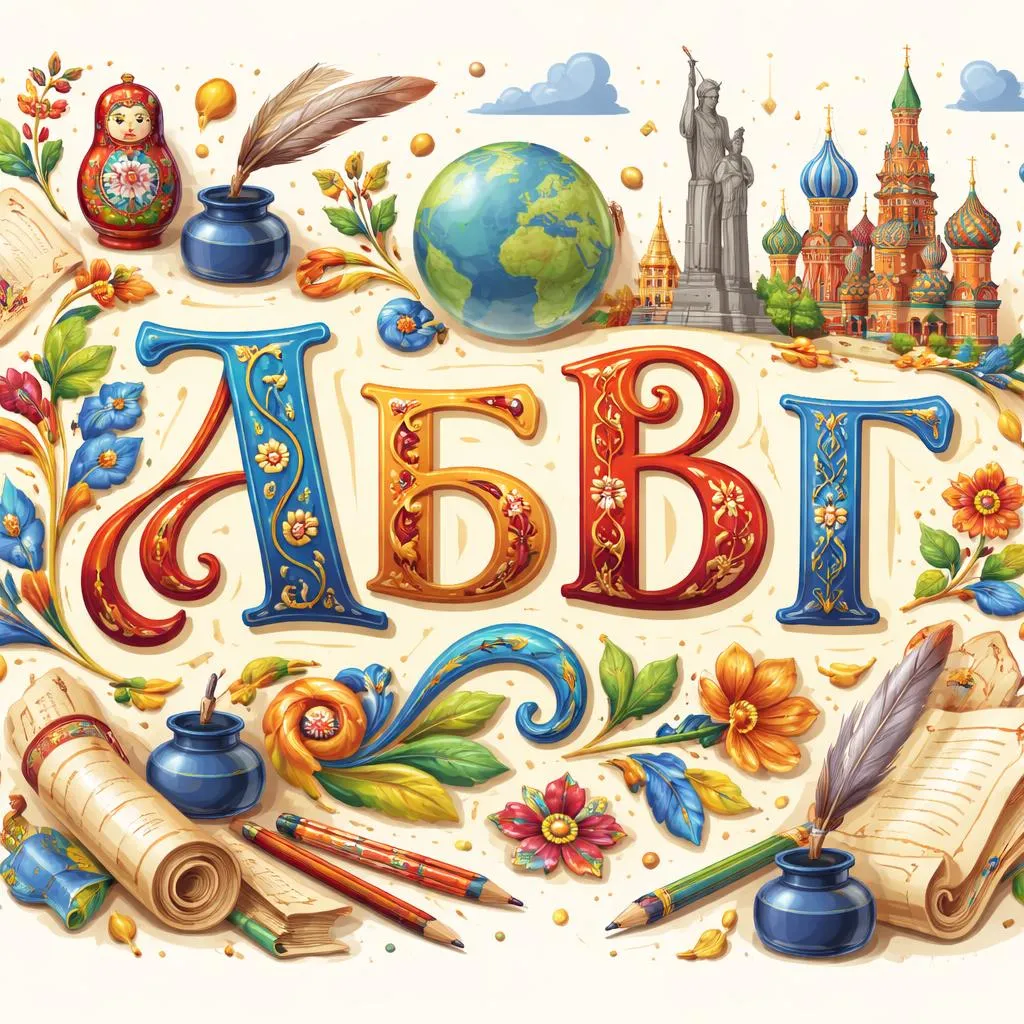
What Is Cyrillic Lettering and Where Is It Used Today?
