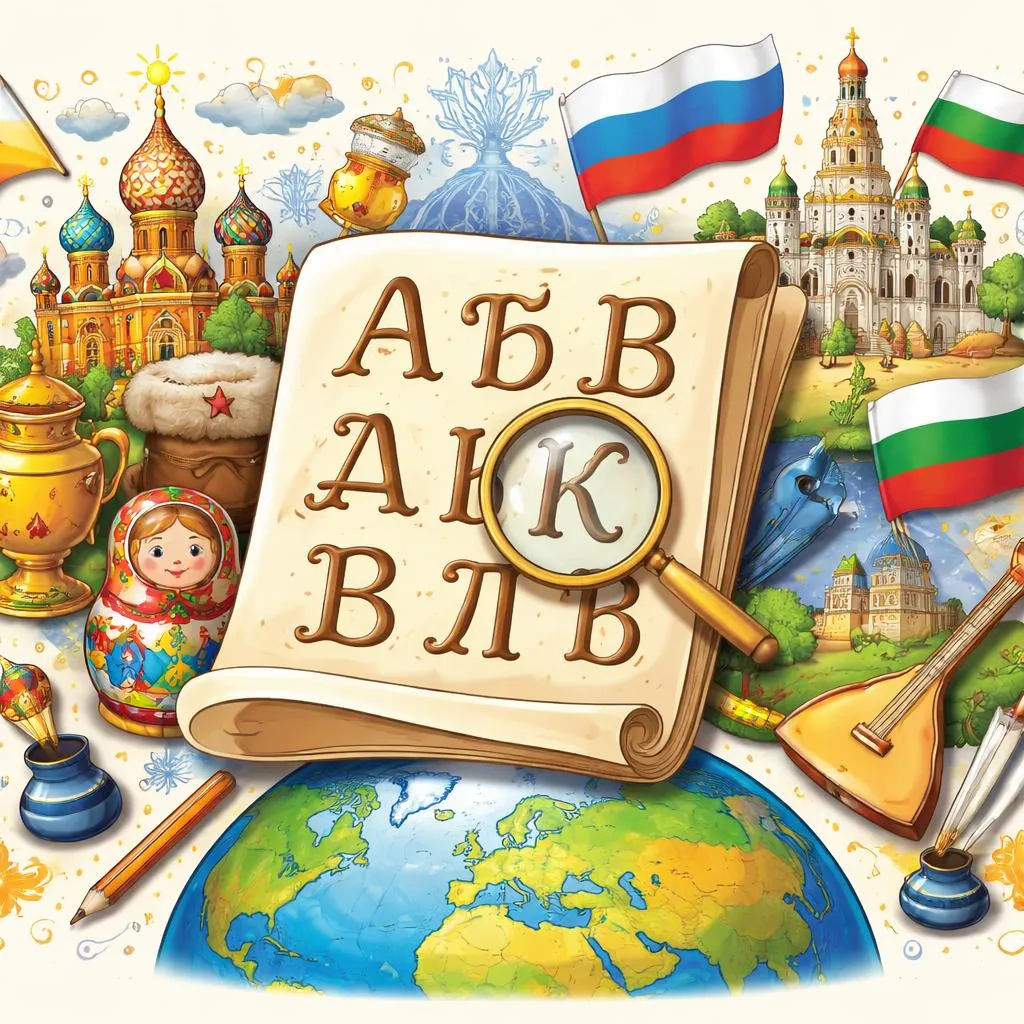

The Cyrillic script is an alphabet used to write many languages in Eastern Europe and parts of Asia. It is a writing system made up of letters. These letters represent sounds. Just like the English alphabet, each letter usually stands for one main sound.
Cyrillic may look different from the English alphabet, but it works in a similar way. Words are written from left to right. Letters combine to form syllables and words. Sentences follow standard punctuation rules.
Many languages use Cyrillic today. The most well-known is Russian language. Other languages that use Cyrillic include Ukrainian language, Bulgarian language, and Serbian language. Some Central Asian languages also use it.
Where Did Cyrillic Come From?
Cyrillic was developed more than one thousand years ago. It is connected to two important historical figures: Saint Cyril and Saint Methodius. These missionaries helped spread Christianity among Slavic peoples. To support religious teaching, a writing system was needed.
An earlier script called Glagolitic was created first. Later, Cyrillic developed and became more widely used. Over time, the alphabet changed and adapted to different languages.
How Many Letters Are in Cyrillic?
The number of letters depends on the language. For example, the Russian alphabet has 33 letters. Some letters look similar to English letters but sound different.
For example:
А looks like A and sounds like “a” in “father.”
В looks like B but sounds like “v.”
Р looks like P but sounds like “r.”
Н looks like H but sounds like “n.”
Because of these differences, learners must focus on sound rather than appearance.
Other letters are completely different from English letters.
Ж
Ц
Ч
Ш
Щ
Each represents a specific sound in the language.
Is Cyrillic Difficult to Learn?
Learning a new alphabet may feel challenging at first. However, Cyrillic is phonetic in many languages. This means letters usually represent consistent sounds. Once the sound-letter connection is learned, reading becomes easier.
Practice often begins with letter recognition. Next comes pronunciation. Then short words and simple sentences.
For example, in Russian:
мама means mother.
дом means house.
кот means cat.
Reading these words becomes easier once the letters are understood.
Why Is Cyrillic Important?
Cyrillic connects millions of speakers across different countries. It is used in literature, education, media, and government communication. Understanding the script opens access to books, news, and culture in multiple regions.
It also supports historical understanding. Many classical works in Eastern Europe are written in Cyrillic. Learning the script allows direct reading without translation.
Differences Between Cyrillic and Latin Alphabets
English uses the Latin alphabet. Cyrillic is a separate writing system. Although some letters look similar, the two systems are not the same.
For example:
English: CAT
Russian: КОТ
Both words mean cat, but the letters are different.
Recognizing these distinctions prevents confusion.
How to Start Learning Cyrillic
Begin with the alphabet chart.
Listen to pronunciation audio.
Practice writing each letter.
Read simple words daily.
Consistent short practice builds familiarity. After learning the letters, reading simple texts becomes possible.
The Cyrillic script is more than just a set of symbols. It is a key part of language, culture, and history in many countries. Understanding it expands global communication and supports deeper language learning.
How Does the Cyrillic script Compare to the Latin Alphabet?
Many learners first notice that some Cyrillic letters look familiar. However, appearance can be misleading. Several letters share shapes with the Latin alphabet but represent different sounds.
For example, the Cyrillic letter В looks like the English letter B, yet it sounds like “v.” The letter С looks like C, yet it sounds like “s.” The letter У looks like Y, yet it sounds like “oo” as in “food.”
Careful pronunciation practice prevents confusion. Sound recognition is more important than visual similarity.
At the same time, some letters do share both shape and sound.
А sounds like “a.”
К sounds like “k.”
М sounds like “m.”
Т sounds like “t.”
Recognizing these similarities helps learners progress faster.
Uppercase and Lowercase Letters
Like the Latin alphabet, Cyrillic has uppercase and lowercase forms. In printed text, many uppercase letters resemble their lowercase versions. However, in handwritten Cyrillic, certain lowercase letters may look very different from printed forms.
For example, the handwritten version of some Russian letters may appear unfamiliar to beginners. Exposure to both printed and handwritten styles improves reading confidence.
Sounds Unique to Cyrillic Languages
Some sounds represented in Cyrillic do not exist in English. Letters such as Ж, Ш, and Ч represent sounds similar to “zh,” “sh,” and “ch,” but often with slightly different pronunciation quality.
In the Russian language, soft and hard consonants play an important role. Certain letters signal softness. This concept may be new for English speakers.
The letter Ь, known as the soft sign, does not represent a sound by itself. Instead, it softens the consonant before it. Understanding this feature improves pronunciation accuracy.
Countries That Use Cyrillic Today
The Cyrillic script is used officially in several countries. It is the primary script in Russia, Bulgaria, and Ukraine. It is also used in Serbia alongside the Latin script. In parts of Central Asia, including Kazakhstan and Kyrgyzstan, Cyrillic has been widely used for decades.
Language reforms sometimes change alphabet usage. For example, Kazakhstan has announced plans to gradually shift from Cyrillic to the Latin alphabet. Such transitions show how writing systems can evolve over time.
Learning Strategies for Cyrillic
Learning any new alphabet requires repetition and patience. A structured approach supports progress.
Start by memorizing groups of letters rather than all at once. Focus first on letters that look similar to Latin forms and share the same sound. Then study letters that look similar but sound different. Finally, practice completely new symbols.
Reading simple children’s books or short dialogues strengthens familiarity. Writing practice reinforces memory. Copying short words daily builds muscle memory.
Flashcards are helpful tools. One side shows the Cyrillic letter. The other side shows the pronunciation. Frequent review increases speed of recognition.
Listening exercises also play an important role. Hearing native pronunciation while reading the written form connects sound and symbol clearly.
Cyrillic in Modern Technology
Cyrillic appears widely in digital communication. Computer keyboards include Cyrillic layouts. Mobile devices allow users to switch between Latin and Cyrillic input easily.
Online news websites, social media platforms, and international organizations publish content in Cyrillic. Learning the script allows direct access to these materials.
Unicode technology ensures that Cyrillic characters display correctly across devices. This digital support helps preserve and promote the script globally.
Cultural Importance of Cyrillic
The Cyrillic script represents more than letters. It reflects history, literature, and identity. Many famous works of literature were originally written in Cyrillic. Poetry, novels, and historical documents preserve cultural memory.
Understanding the script allows appreciation of names, places, and traditions in their original written form. Street signs, monuments, and official documents all use Cyrillic in countries where it is standard.
Is Cyrillic Difficult Compared to Other Alphabets?
Compared to character-based systems such as Chinese, Cyrillic is alphabetic and relatively systematic. Each letter usually represents a sound. Once letters are learned, reading becomes manageable.
The main challenge lies in adjusting to new visual patterns and pronunciation rules. With steady exposure, recognition becomes automatic.
Short daily practice sessions often produce strong results. Even fifteen minutes of focused study can lead to noticeable improvement over time.
The Cyrillic script continues to serve millions of speakers across continents. Learning it opens doors to communication, travel, research, and cultural understanding. Familiarity with the script builds confidence and expands global language awareness.