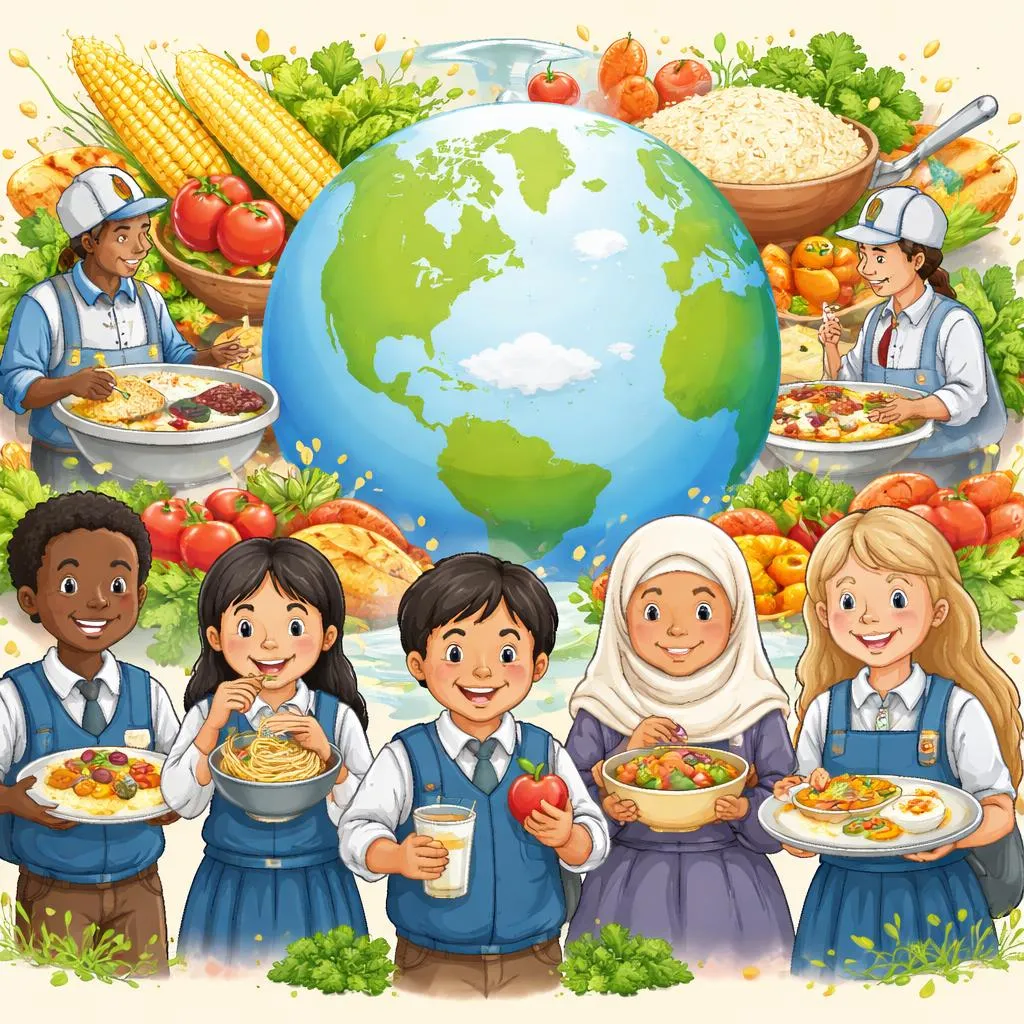

Hello, future global helpers! Do you like your school lunch? Do you ever think about food around the world? Let us talk about a wonderful Global Food project. It helps children everywhere. The United Nations has a school meal plan. It is fifty years old this year. This is a big birthday. Millions of kids get healthy food at school because of it. Let us learn about this important work. We will use English. It is a story of care and sharing.
A Big Birthday for School Meals
Imagine a huge party. It is for a very special plan. The UN school meal plan is fifty. A new report shared happy news. Now, over four hundred sixty-six million children get school meals. Their government gives the food. This number grew a lot. Twenty percent more children get food now than before. This is wonderful progress. The whole world cares more about child nutrition now. Countries are spending more money. They want their children to be healthy and strong. The money for these meals doubled in just a few years. Almost all the money comes from the countries themselves. This shows their big commitment.
Many places are doing great work. In Africa, many more children get school food. Countries like Madagascar improved very fast. In Asia, Indonesia helps many, many students. Their free meal plan reaches millions of children. The president wants it to be perfect for everyone. Cambodia helps children in poor areas. Their plan makes kids healthier. It also helps them go to school more. India's lunch plan is the biggest in the world. It helps the most students. It has a very good system to watch the plan. Latin America also has good news. More students get meals there. The meals are given more days each year. More countries now have laws for school food. The food often comes from local farmers. This helps families too.
There are special international projects. One is called "One Child, One Egg". The UN works with Bhutan on this. It is a simple, smart idea. It gives children good nutrition. It also gives farmers a steady job. In Bhutan, farmers carry eggs to schools. For many children, this egg is their best meal. Another project is in C?te d'Ivoire. The government and UNICEF work together. They have a big new plan for children. It focuses on health, protection, and good food. There is also a network for sustainable meals. Seventeen countries are in it. They work to make school meals better and last longer.
China also helps friends far away. A Chinese foundation runs a project in Ethiopia. It is the Smile Children School Feeding Project. It gives two meals a day to students. The project also helps the school grow its own food. They have a vegetable garden. They have a chicken coop. This makes the school stronger. The meals have fresh veggies and eggs. This Global Food work builds a healthier future.
Why Learn English with Global Food
This topic is perfect for learning English. It gives you real things to talk about. You learn important words. Words like nutrition, food security, and cooperation. You use them in real sentences. You learn about different countries. You see how India runs its lunch plan. You see Brazil's school food system. You learn about Bhutan's egg project. This teaches you about the world. You also learn about big global groups. You learn names like FAO and UNICEF. You learn what they do. This makes your English useful and powerful.
Real studies show school meals help learning. Good food helps your brain. In the Philippines, school meals helped English scores. In Bangladesh, a special biscuit plan helped test scores. Math scores improved a lot. In Uganda, a "take-home ration" plan helped older students. It helped their math and final exams. Many studies prove this. School meals help children think better. They help them learn more. This Global Food mission helps your mind grow too.
The topic fits how you think and learn. Food is part of your daily life. You see it and eat it every day. It is easy to understand. Pictures of meals and children eating are powerful. They make you feel connected. You can feel for other children. You learn about their lives. You build empathy. You feel like a global citizen. You want to help. Stories make it real. A teacher in Uganda was once a hungry child. School meals helped her. Now she teaches others. This story touches your heart. You can also do practical learning. You can design a simple meal plan. You can plan a help project. You use English to solve real problems.
This topic connects many school subjects. Connect language and science. Learn about protein and vitamins. Learn their English names. Learn how they keep you healthy. Connect language and math. Look at the big numbers. Four hundred sixty-six million children. Eight hundred forty billion dollars. Make charts and graphs in English. Connect language and social studies. Think about fairness. Why do all children deserve good food? Connect language and geography. Learn why different places have different food. This Global Food theme is a perfect bridge for learning.
It helps you become a capable world citizen. School meals link to big world goals. The UN has Sustainable Development Goals. Goal Two is "Zero Hunger". Goal Four is "Good Education". School meals help both. You learn about these important goals. You learn to look at big world problems. You see the challenges. You also see the solutions. You see how countries work together. You see how groups help each other. This teaches you about cooperation. It shows you the power of working as a team.
Your Big Learning Harvest
You will learn many useful things. Your English will get much better. You will know special words about food security. Words like malnutrition and sustainable agriculture. You will know how big global groups work. You will understand groups like the World Food Programme. You will learn to read data and reports. You will understand what the big numbers mean. You will learn how to design a project. You can study a country's meal plan. You can see how it works.
You will grow important skills. Your view of the world will get wider. You will understand a global problem. You will see different solutions. You will understand other cultures better. You can compare meal plans from different countries. You will learn to solve problems. You can think of a new idea for school food. You will learn to work in a team. You can do a group project on world nutrition. Your heart and values will grow too. You will feel like a global citizen. You will care about kids everywhere. You will understand fairness and justice. Every child needs good food. You will learn about healthy eating. Good food helps you grow. You will think about the future. You will see how food links to our planet. This is sustainable thinking. The Global Food story teaches you all this.
Your Action Plan for a Healthier World
Let us make a fun plan. You can start today. Start with small, simple steps. First, learn some new words. Learn fifty to eighty English words about food and health. Learn words about nutrition and safety. Pick one country's school meal plan. Learn about India or Brazil or Bhutan. Write a short English paragraph about it. Look at the key numbers from the report. Make a simple chart in English. Get your school involved. Have a class meeting. Call it "Global Nutrition and Me". Talk about children's nutrition worldwide. Do a small survey at your school. Ask about eating habits. Write a short report in English. Design a cool poster. Make it about global school meals. Use English words. Put it up at school for everyone to see.
Have fun with your family. Watch a documentary with your parents. Choose one about child nutrition. Try the English version. Plan healthy meals together. Design a week of balanced family meals. Write the food names in English. Try cooking a healthy dish from another country. Learn about its culture too. This is your start.
Think about the next few months. Do some deeper research. Compare two or three countries' meal plans. How are they the same? How are they different? Write about it. Pick one nutrition problem to study. Think about anemia. Find solutions. Design a small project for your own school. How can meals be better? Write an English plan for it. Practice sharing your ideas. Prepare an English speech. The topic is "Zero Hunger and Good Education". Join a school contest. Play a Model United Nations game. Pretend you are a country. Talk about child nutrition. Help your community. Tell people about good nutrition. Use Chinese and English.
Connect different subjects. Link nutrition and science. Use English to talk about vitamins. Where do they come from? Link farming and the environment. How does good farming help food security? Make an English fact sheet. Link money and society. How do healthy children help a country's future? Write a short analysis. Keep learning for a whole year or more. Follow the news about world nutrition. Learn more about health science. Try to connect with a school in another country. Talk about your meal plans. Practice sharing culture. Start a social media page about nutrition. Share news in English. Plan a school "International Nutrition Day". Invite an expert to talk. Join an English writing contest. The topic is youth health.
Try to create something new. Design a fun game about nutrition. Make an app for kids. Write the instructions in English. Start a small charity project. Call it "Nutrition Knowledge for School". Help younger kids learn about healthy food. Make a creative video or animation. Make it about global child nutrition. Use English. Make good daily habits. Learn one or two new nutrition words each day. Read a short English news piece. Write about your own food each week. Use English to see if it is balanced. Make one nutrition-themed English work each month. A report, a video, or a poster. Join or start a health activity every season. The Global Food mission needs your help.
What You Can Learn from This Article
You learn about the UN school meal plan's big birthday. You see how it helps millions of children. You understand why food and English learning go together. You discover the great things you can gain. You get a clear, fun plan to start helping. You feel the importance of sharing and care. This knowledge connects you to a world of action.
Life Practice Application
Talk to your teacher today. Ask about nutrition. Look at your own school lunch. Learn three English words about it. Say them. Find a picture of children sharing a meal. Write one English sentence about it. "Children eat together." Tell a friend. Draw a healthy plate of food. Label the parts in English. Start your own Global Food project now. Learn, share, and help make the world healthier. You can be a hero with your lunchbox and your words.