
Start! Find a Pair of 'Paper Order Twin' Words
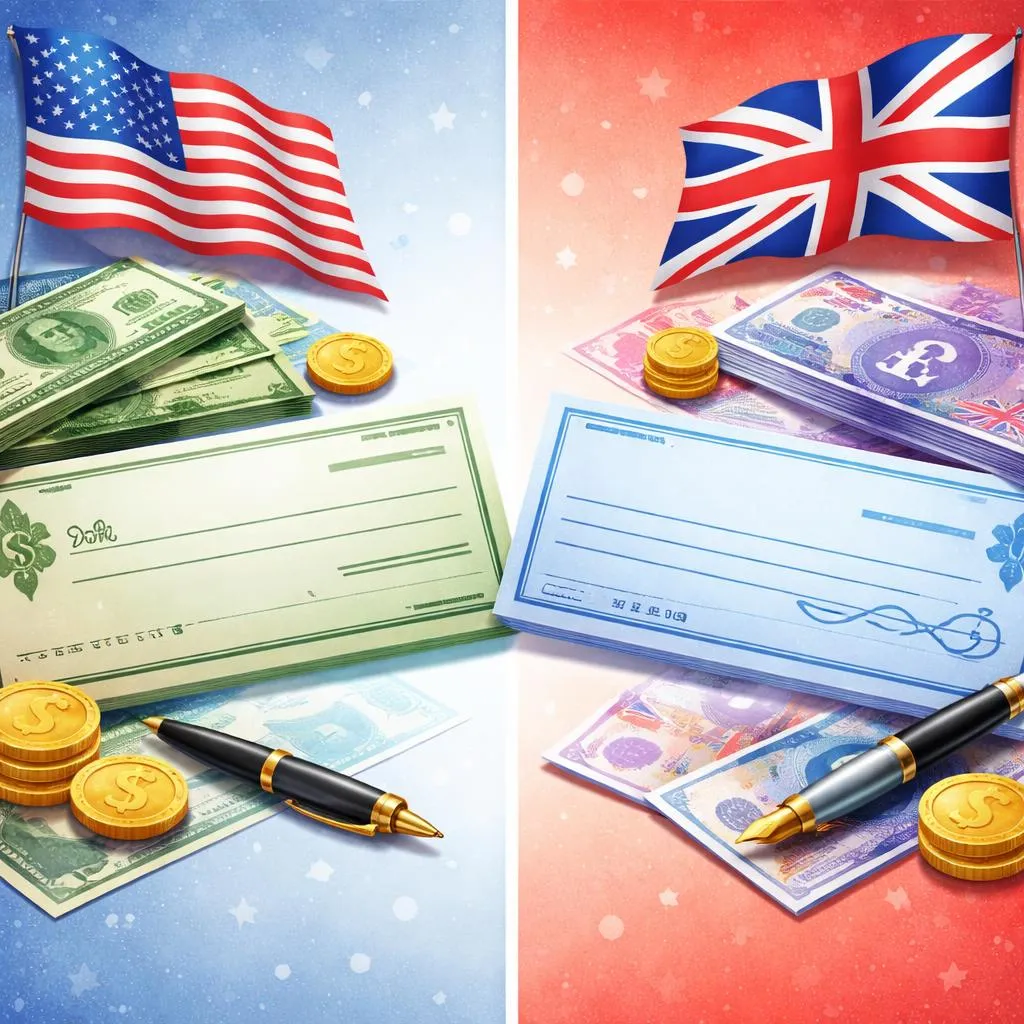
Hello, word explorer! Do you know about paying without cash? In America, your grandpa might pay a bill by writing a check. In England, someone might write a cheque. They look similar and do the same job. Are they the same? This is a fun language puzzle. Today we explore a word pair. We explore check and cheque. They are like two different costumes for the same superhero. The superhero is a paper bank order. One costume is American. One costume is British. Knowing the difference is a superpower. Your talk about money will be clear and smart. Let us start our word adventure!
Be a Language Observer now. Our first clue is at home. Your mom writes a check to pay for a school trip. A British movie shows a character writing a cheque. They are both paper payments. But are they the same? Let us test with two sentences.
"She paid her rent by mailing a check to the landlord." This uses the American spelling. "He wrote a cheque for fifty pounds to the charity." This uses the British spelling.
They sound the same. They do the same job. But the spelling is different. Your observation mission starts. Let us explore their word world.
Adventure! Explore the Word World
Feel the Word's American and British Vibe!
Feel the word check. It feels American, modern, and has many jobs. It can be a paper payment, a verb meaning to look at, or a pattern. The word cheque feels British, formal, and has one main job. It is almost always the paper bank order. Check is a multi-tool. Cheque is a special tool. One is busy with many tasks. The other is a specialist. Let us see this at school.
In math class in the US, you check your answers. This means to verify. In a life skills class, you learn how to fill out a check (or cheque in the UK) properly. The same word (check) does two jobs in American English. The word cheque only does the banking job. The feeling is different. One is versatile. The other is specific.
Compare Their Many Jobs vs. One Job!
Think about a Swiss Army knife and a butter knife. The word check is the Swiss Army knife. It has many tools: to verify, to stop, a pattern, a restaurant bill, and a bank paper. The word cheque is the butter knife. It has one main job: the bank paper order. Their scope is the key. Check (American) and cheque (British) mean the same paper bank order. But check also means many other things. One word wears many hats. The other wears one formal hat. Let us test this on the playground.
You play a game. You say, "Check!" This means you are challenging the king in chess. Your friend has a shirt with a check pattern. This means plaid. The word cheque is never used for these. The word check does these extra jobs. The playground shows the difference.
Meet Their Best Word Friends!
Words have favorite partners. The word check likes many different friends. It teams up with 'rain', 'in the', 'double-', 'blank', 'bounced', and 'check mark'. Rain check. A blank check. The word cheque likes banking and British friends. It teams up with 'traveller's', 'bank', 'pay by', 'dishonoured', and 'chequebook'. A traveller's cheque. Pay by cheque. Their partners show their different worlds. Let us go back to school.
In a US classroom, the teacher says, "Check your work." In a UK business lesson, they might learn about a bounced cheque. You would not "cheque your work." The word friends tell you which spelling to use.
Our Little Discovery!
We explored the world of paper orders. We made a clear discovery. The words check and cheque are different in spelling and use. Check is the American English spelling for the paper bank order. It also has many other meanings. Cheque is the British English spelling, used almost only for the paper bank order. They sound the same. They mean the same payment method. But one is American and multi-purpose. One is British and specific. This is the main difference.
Challenge! Become a Word Expert
"Best Choice" Challenge!
Let us look at a scene. An American business sends a paper payment to a Canadian company. Canada often uses the British spelling. The American might write a check. The Canadian might receive a cheque from a local client. Is the spelling difference about meaning or location? The champion idea is Location! The spelling shows if the writer uses American or British English conventions. The payment is the same. Excellent!
"My Sentence Show"!
Now, create your own sentences. Here is a fun scene: Imagine an American character paying for a new bike. Use the word check in a sentence. Now imagine a British character paying for a theatre ticket. Use the word cheque in a sentence. Try it! Here is an example. Sentence one: "My dad wrote a check to the bike shop." Sentence two: "She paid for the theatre tickets with a cheque." See the similarity? The action is the same. The spelling is different.
"Eagle Eyes" Search!
Can you find the part that might confuse? Read this sentence: "Before boarding the plane, the agent needed to cheque my passport and ticket, so I handed them over." Hmm. This is a mix! The verb meaning "to examine" is always spelled check, even in British English. "Cheque" is only for the bank order. A better sentence is: "Before boarding the plane, the agent needed to check my passport and ticket, so I handed them over." You fixed it!
What a clear exploration of word twins! You started as a curious observer. Now you are a word expert. You know the secret of check and cheque. You can feel their different American and British vibes. You know they sound the same but are spelled differently. You know "check" has many jobs and "cheque" has one. You know their best word friends. This is a real language superpower.
You can learn amazing things from this article. You now know that a 'check' (American spelling) and a 'cheque' (British spelling) are two ways to spell the same thing: a piece of paper that tells a bank to pay money from your account. You understand that 'check' is also a verb meaning to examine or verify something, and a noun for a pattern. You can explain that the spelling depends on whether the writer uses American or British English rules. You learned terms like 'rain check' and 'traveller's cheque'.
How can you use this today? It is easy and fun. Look at a checkbook or banking app with a grown-up. What spelling do you see? Read a book by a British author. Look for the word cheque. Read a book by an American author. Look for the word check. Play a game of chess. Say "Check!" when you threaten the king. Draw two pictures. Draw an American flag next to the word "check." Draw a British flag next to the word "cheque." You are using your new skill every day.
Keep your explorer eyes open. The world is full of interesting word pairs like check and cheque. You are learning to understand them all. Great work, word expert. Your English journey is getting more precise and global with every new word pair you discover!