
What Is This Plant?
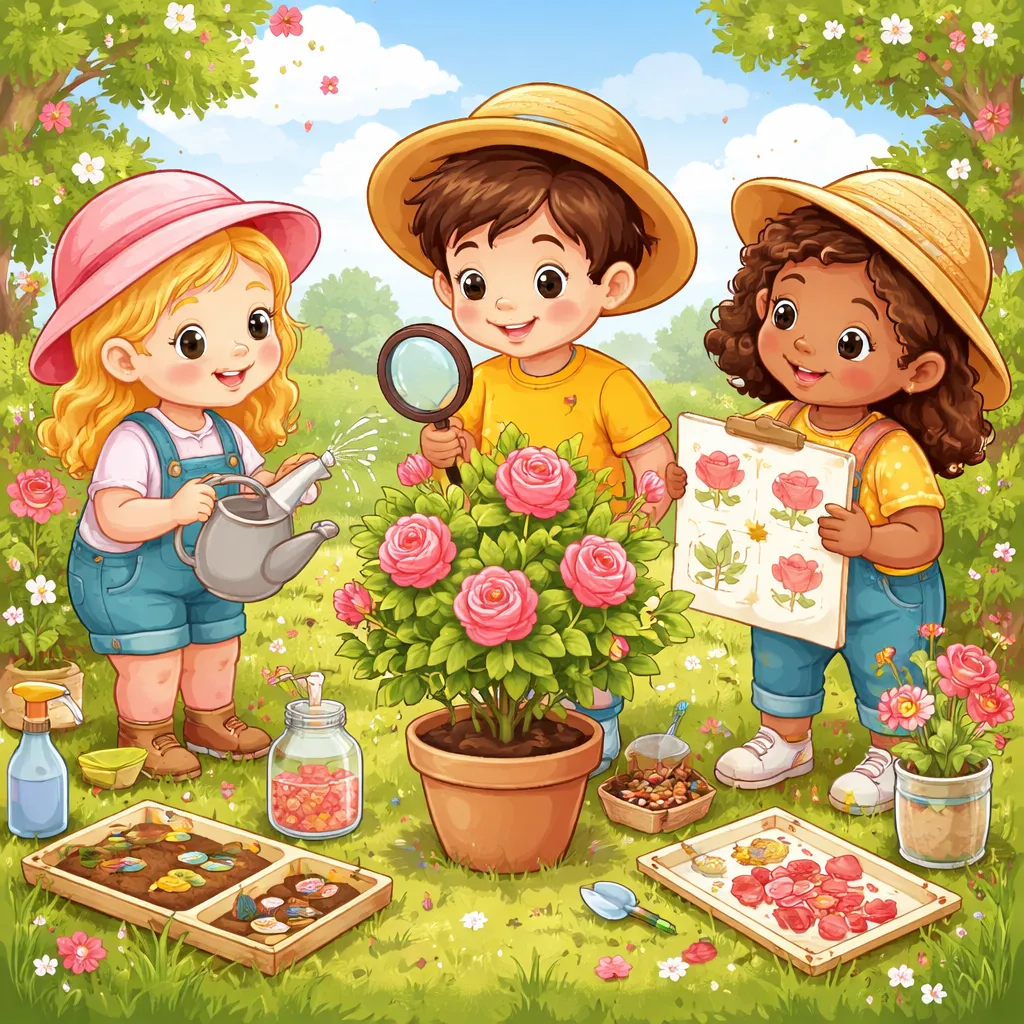
The rose plant is one of the most famous flowers in the world. It grows as a bush with woody stems. You can find roses in gardens, parks, and even in pots on a balcony. A rose plant has green leaves that are oval-shaped with edges like tiny teeth. The most special part is the flower. Rose flowers have soft petals that open in layers. They come in many colors like red, pink, yellow, white, and even orange. Some roses smell very sweet. Others have a light scent. The stems have sharp thorns. These thorns help protect the plant. When we look at a rose plant, we see something beautiful but strong. For children, this is a great plant to begin learning about nature. It is familiar and easy to find. Parents can show their child a rose bush and point out its parts. This makes learning simple and enjoyable.
English Learning About This Plant
The English name “rose” is simple to say. It sounds like “rohz.” The International Phonetic Alphabet (IPA) is /roʊz/. This is a one-syllable word. Children can practice saying it clearly. When we learn about rose plant, we also learn new words for its parts. The stem is the long part that holds up the flower. The leaf is the flat, green part that makes food for the plant. The root is the part underground that takes in water. The flower is the colorful part that we love to see. The thorn is the sharp point on the stem. These are easy words for young learners.
Roses appear in many famous sentences and poems. One well-known line comes from the poet Gertrude Stein. She wrote, “A rose is a rose is a rose.” This means things are what they are. A rose does not try to be something else. It simply exists as itself. This is a gentle idea for children to understand. Another famous line is from the play Romeo and Juliet. Shakespeare wrote, “A rose by any other name would smell as sweet.” This means a name does not change what something truly is. Parents can read these lines aloud. Then they can ask their child what they think. This makes language learning warm and meaningful.
Plant Facts and Scientific Knowledge
The rose plant belongs to the genus Rosa. There are over 300 species. People have grown roses for thousands of years. They come from many parts of the world, including Asia, Europe, and North America. Most roses are shrubs. Some grow as climbing plants. Rose flowers have five petals in the wild. But many garden roses have many more petals. This is because people grew them to look fuller.
Roses grow best in sunny places. They need good air around them. The flowers can be red, pink, white, yellow, purple, and even striped. Some roses bloom once a year. Others bloom many times from spring to fall. The fruit of a rose is called a hip. Rose hips are small, round, and often red or orange. Birds like to eat them.
Roses also have flower language. This is called floriography. A red rose means love. A yellow rose means friendship. A white rose means purity. People used to send roses to send messages without words. This is a fun fact to share with children. It connects nature to history and feelings. Roses also appear in many stories and traditions. They are a symbol of beauty and care.
How to Grow and Care for This Plant
Growing a rose plant is a wonderful family activity. Start by choosing a sunny spot. Roses need at least six hours of sunlight each day. The soil should be rich and drain well. You can buy a small rose plant from a garden store. Dig a hole twice as wide as the root ball. Place the plant inside. Fill the hole with soil. Then water it well.
Watering is important. Roses like deep watering. Give water to the roots, not the leaves. This helps prevent disease. Water once a week. If the weather is hot, water twice a week. Mulch around the base helps keep the soil moist. Mulch is a layer of bark or leaves on top of the soil.
Pruning means cutting back the plant. This helps it grow strong. Prune in early spring. Remove dead or thin branches. Cut at an angle just above a bud. Fertilizing gives the plant food. Use a rose fertilizer in spring and summer. Follow the instructions on the box. Children can help with watering and observing. They can also help remove dead leaves. With simple care, a rose plant grows well and makes everyone proud.
Benefits of Growing This Plant
Growing a rose plant brings many benefits. First, it makes the home or garden beautiful. The bright flowers bring color and joy. Second, caring for a rose teaches responsibility. Children learn to water, watch, and wait. They see that good care helps things grow.
Roses also attract butterflies and bees. These insects are important for nature. Watching them visit the flowers is exciting for young children. It creates a small world of life right outside the window.
Roses also provide flowers for the home. You can cut a few blooms and put them in a vase. This brings nature inside. It also gives children a sense of accomplishment. They helped grow something that others can enjoy. The gentle scent of roses can also make a room feel calm. Growing a rose plant is not just about gardening. It is about creating moments of peace and connection.
What Can We Learn From This Plant
A rose plant teaches us many things. One important lesson is patience. A rose does not grow fast. It takes time to form buds. Then the buds slowly open. Children learn to wait and watch. This builds patience in daily life.
Another lesson is strength. Roses have thorns. They protect themselves. This teaches that beauty and strength can go together. Children learn that it is okay to have boundaries. It is okay to be gentle but also strong.
Roses also teach about care. If you forget to water, the plant suffers. If you water and give sunlight, it thrives. This shows children that our actions matter. Kindness and attention help living things grow. These lessons apply to friendships and family too. Learning about a rose plant becomes a way to learn about life.
Fun Learning Activities
There are many fun ways to learn about rose plant with children. One simple activity is a drawing session. Give your child paper and crayons. Ask them to draw a rose plant. Encourage them to include the stem, leaves, flowers, and thorns. This helps them remember the parts of the plant.
Another activity is a plant diary. Take a small notebook. Each week, look at your rose plant together. Draw what you see. Write down the date. Note if new leaves appeared or if a bud opened. This builds observation skills and creates a keepsake.
You can also practice new words. Write the words stem, leaf, root, flower, and thorn on small cards. Say each word aloud. Ask your child to point to the part on the plant. This combines movement with learning.
A sensory activity is smelling and touching. Let your child carefully smell a rose flower. Let them touch a leaf. Remind them to be careful of the thorns. Talk about how the plant feels and smells. This connects language to real experience.
For older children, try a simple poetry activity. Read the line “A rose is a rose is a rose.” Ask your child to write or say their own version. For example, “A cat is a cat is a cat.” This makes language playful and creative.
Finally, consider a small planting project. If you have space, let your child help plant a rose bush. If space is small, use a pot. Let them scoop the soil and water the plant. This hands-on experience stays in their memory. It also gives them ownership of the learning.
Through these activities, children do not just learn facts. They build a relationship with nature. They grow in language, patience, and curiosity. Learning about rose plant becomes a joyful part of family life. Each petal, leaf, and thorn offers a moment to wonder and grow together.