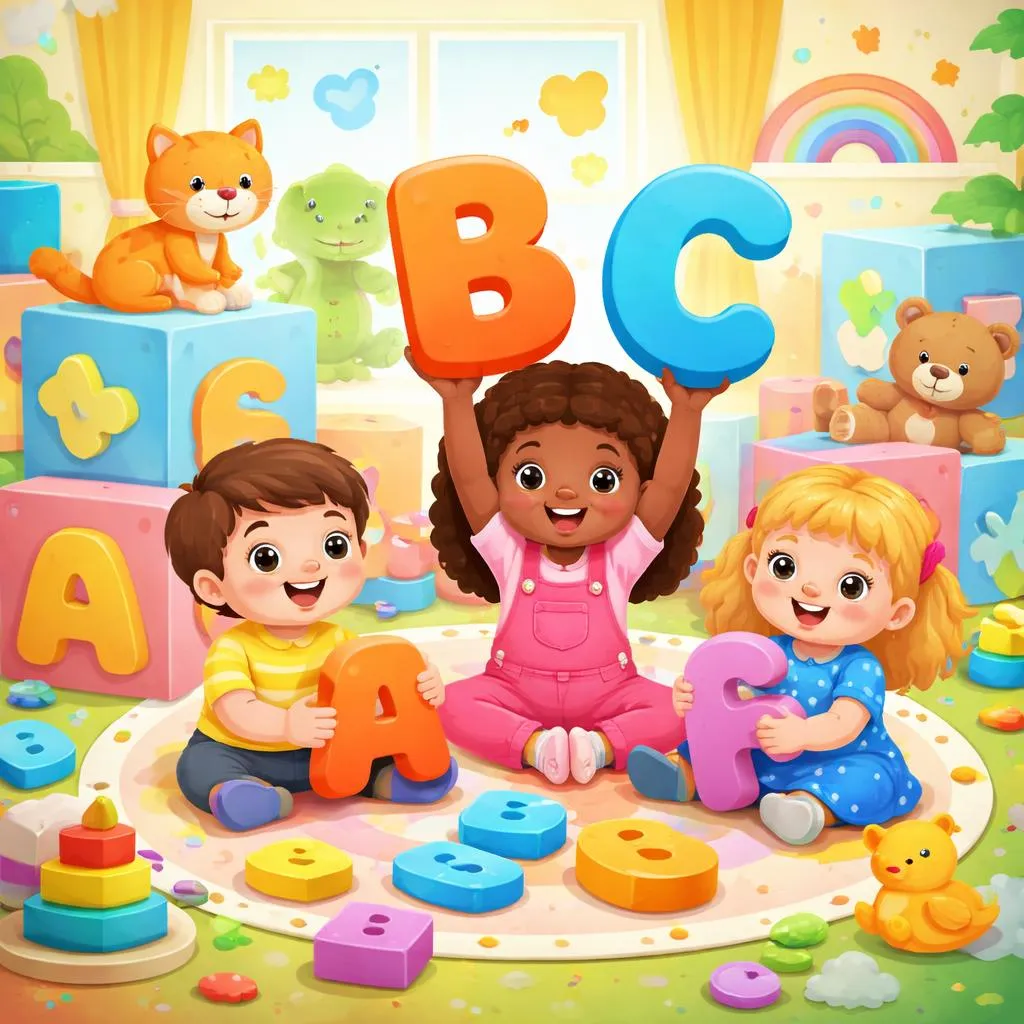

Welcome, wonderful learners and educators! Today, we begin a grand adventure with the building blocks of English. We are exploring the "alphabet for kids". This is the magical set of 26 letters that form every word we read and write. Learning them opens the door to stories, knowledge, and communication. Let us start this exciting journey from A to Z together.
What is the "Alphabet for Kids"? The "alphabet for kids" refers to the English alphabet, presented in a way that is accessible, engaging, and effective for young learners. It is not just the letters A, B, C. It is a complete learning system. This system includes recognizing letter shapes, knowing letter names, and connecting letters to their sounds. A strong understanding of the alphabet is the essential first step toward reading and writing. It gives children the code they need to unlock written language.
Meaning and Explanation The alphabet’s meaning is powerful. Each letter is a symbol that represents one or more sounds. We combine these symbols to make words, just like using building blocks to make a tower. The letter A can be the sound in apple or ape. The letter B is the sound in ball.
Learning the alphabet involves three key skills. First, letter recognition: knowing what each letter looks like, both in uppercase and lowercase. Second, letter naming: being able to say "Aye," "Bee," "Cee." Third, and most importantly, phonemic awareness: understanding that the letter C makes the /k/ sound, like in cat. Mastering these skills turns abstract shapes into meaningful tools for communication.
Categories or Lists We can think of the alphabet in helpful categories to make learning easier.
The Vowels: These are the letters A, E, I, O, U (and sometimes Y). They are the superstar letters. Every word must have at least one vowel sound. They often have both a long sound (say their name) and a short sound.
The Consonants: These are all the other letters, like B, C, D, F, G, etc. They work with vowels to form syllables and words.
We can also group letters by their shapes. Letters with circles: O, C, G, Q. Letters with straight lines: I, L, T, H. Letters with tails: g, j, p, q, y. Grouping them this way helps with writing and recognition.
The complete sequence is: A, B, C, D, E, F, G, H, I, J, K, L, M, N, O, P, Q, R, S, T, U, V, W, X, Y, Z.
Daily Life Examples The alphabet is all around us, every day. We can find it on food packages, street signs, and book covers. Point out the S on a stop sign. Find the M on a milk carton.
Use a child's own name as the most important example. "Your name, Sam, starts with a big letter S. Sss-sam."
During play, we can sort toys by their starting letter. The ball, block, and bear go in the "B" bin. The car, crayon, and cup go in the "C" bin.
Singing the "ABC Song" while pointing to letters makes the connection between the song and the symbols. Look for letters on a keyboard or a phone. This shows the alphabet's practical use in our modern world.
Printable Flashcards Printable flashcards are a classic and effective tool. Create a set with a clear, bold letter on one side. For the letter A, you could have both an uppercase 'A' and a lowercase 'a'.
On the reverse side, include a simple, colorful picture of something that starts with that letter's primary sound. For A, use an apple. For B, use a ball. Ensure the picture clearly represents the sound.
Use these cards for more than just drilling. Play a matching game. Spread out the picture cards and have children place the correct letter card on top. Use them for a scavenger hunt. "Find something in the room that starts with the same sound as this card." This builds sound-letter association.
Learning Activities or Games Learning the alphabet should be full of joy and discovery. Here are some favorite activities.
-
Alphabet Sensory Bins: Fill a bin with rice or beans. Hide small objects or plastic letters inside. Let children dig to find letters. When they pull one out, they say its name and sound. "I found a T! /t/ /t/ like tiger!"
-
Letter Hopscotch: Draw large letters with chalk on the ground. Call out a letter sound. The child hops to that letter. You can also call out, "Hop to the letter that starts 'moon'!" This combines physical movement with learning.
-
"I Spy" with Letters: Say, "I spy with my little eye, something that starts with the /b/ sound." The child looks around and guesses "book" or "box." Then, let them have a turn to spy. This sharpens listening for beginning sounds.
-
Playdough Letters: Rolling playdough into letter shapes is excellent for fine motor skills. It helps children feel the shape of the letter with their hands. Ask them to make the first letter of their name or the "snaky letter S."
The journey through the "alphabet for kids" is a foundational adventure. It is not a race. Celebrate each new letter learned. Connect letters to the child's world—their name, favorite foods, and beloved toys. Mix singing, playing, and writing to engage all the senses. With patience and fun, these 26 special friends will become familiar guides, leading confidently toward the wonderful world of reading. Keep exploring, sounding out, and discovering the magic in every letter