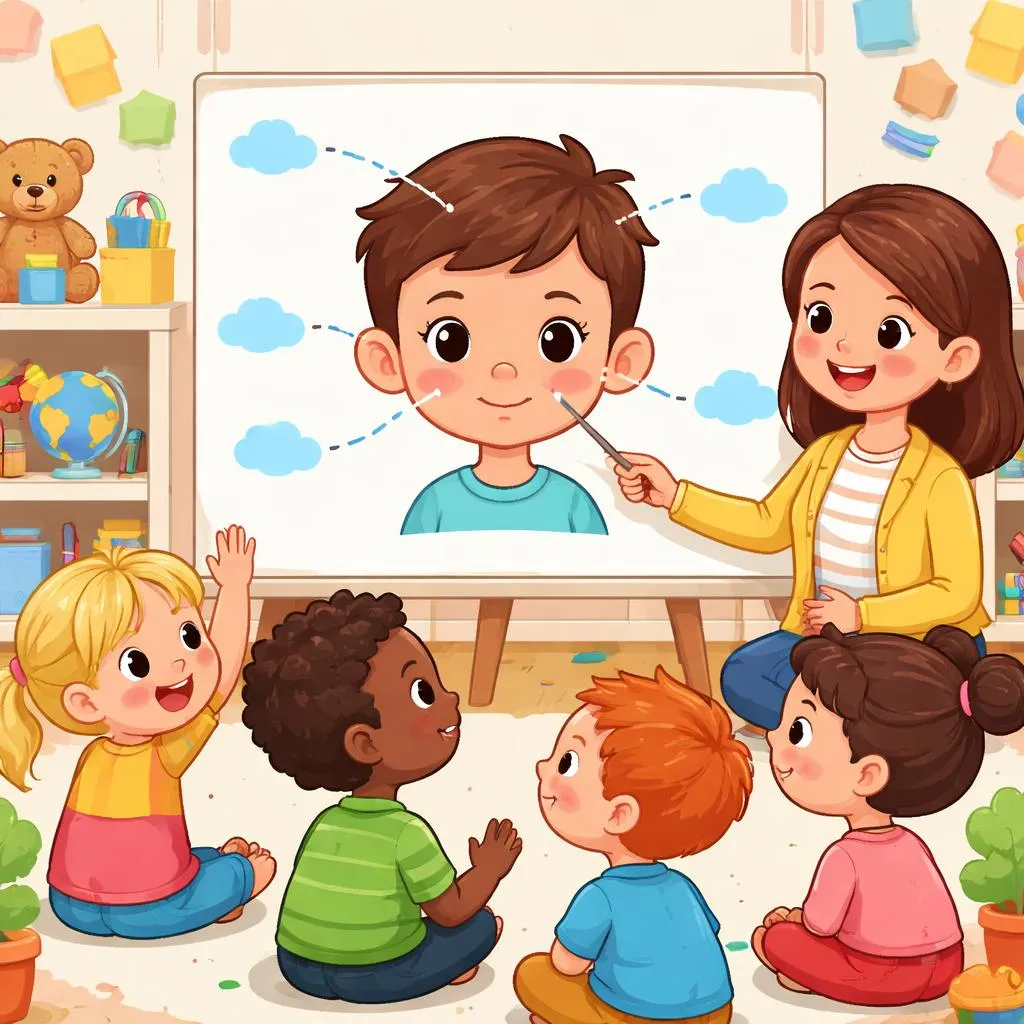

Teaching vocabulary to young children works best when it is personal. There is nothing more personal than their own face. Learning the names for parts of the face connects language directly to their bodies. They can see the words in action. They can touch the features as they learn. As teachers, we can use songs, games, and art to make this lesson engaging and memorable. Let's explore how to guide students through this essential vocabulary.
What Are the Parts of the Face? The face is the front part of the head. It contains many important features. Each feature has a name and a job. When we teach parts of the face, we start with the most visible features.
We introduce each part clearly.
Eyes: We use our eyes to see. We have two eyes.
Ears: We use our ears to hear. We have two ears.
Nose: We use our nose to smell. We have one nose.
Mouth: We use our mouth to eat and speak. We have one mouth.
Teeth: We use our teeth to chew food. We have many teeth inside our mouth.
Tongue: We use our tongue to taste. It is inside our mouth.
Cheeks: These are the soft parts on the sides of our face.
Chin: This is the bottom part of our face, below the mouth.
Forehead: This is the top part of our face, above the eyes.
Hair: This grows on our head and around our face.
These are the key parts of the face that young learners can easily identify and name.
Meaning and Explanation: Why Do We Have These Parts? After naming the parts, we explain their functions. This gives the vocabulary deeper meaning.
We point to each part and describe its job.
Our eyes help us see the world. We see colors, shapes, and friends.
Our ears catch sounds. We hear music, birds, and stories.
Our nose smells things. We smell flowers, food, and fresh air.
Our mouth helps us speak and eat. We taste with our tongue.
Our teeth help us bite and chew. They make our food small enough to swallow.
Our cheeks help us smile and show happiness.
Our chin helps us move our mouth to talk.
Our forehead helps us show surprise when we raise our eyebrows.
Our hair helps protect our head from the sun.
Understanding the purpose of each part makes the words more meaningful. When we talk about parts of the face, we are not just naming. We are describing how our amazing bodies work.
Categories or Lists: Features and Functions We can group the parts in different ways to help with memory.
By Location:
Top of the face: forehead, hair, eyebrows
Middle of the face: eyes, nose, cheeks
Bottom of the face: mouth, teeth, tongue, chin
Sides of the face: ears, cheeks
By Number:
Things we have one of: nose, mouth, chin, forehead, tongue
Things we have two of: eyes, ears, cheeks, eyebrows
Things we have many of: teeth, hair
By Function:
Senses: eyes (sight), ears (hearing), nose (smell), mouth/tongue (taste)
Communication: mouth, tongue, lips
Eating: mouth, teeth, tongue
Expression: eyes, mouth, cheeks, eyebrows
These categories help students see relationships between different parts of the face. It turns a simple list into an organized system.
Daily Life Examples: Talking About Faces All Day We can point out parts of the face throughout the daily routine. This constant reinforcement helps the words stick.
During Morning Greeting: "Good morning! Let me see your smiling faces. I see your happy mouths and your bright eyes."
During Snack Time: "We use our teeth to chew the apple. We use our tongue to taste the yogurt."
During Art Class: "We are drawing self-portraits today. We need to put our eyes in the right place. We need to add a nose and a mouth."
During Story Time: "Look at the character in this book. What color are his eyes? Is his mouth open or closed?"
During Songs: When we sing "Head, Shoulders, Knees, and Toes," we include the face parts. "Eyes and ears and mouth and nose."
By weaving the vocabulary into everyday conversation, we make it natural. Students stop thinking of parts of the face as a lesson. They become part of normal language.
Printable Flashcards: Visual Tools for Learning Flashcards are essential for introducing and reviewing vocabulary.
Basic Face Part Cards: We create cards with clear pictures. One card shows an eye. One card shows an ear. One card shows a nose. On the back, we write the word. We use these for quick recognition games.
Function Cards: We create another set of cards. These show actions. A picture of someone smelling a flower. A picture of someone eating an apple. Students match the action card to the correct face part card.
Label Cards: We create cards with just the words. Students can place these word cards next to the correct picture. This builds reading skills alongside vocabulary.
Game Cards: We create two identical sets of face part cards. Students play memory match by turning over cards to find pairs. This makes review fun and engaging.
These flashcards support any lesson about parts of the face and provide hands-on practice.
Learning Activities or Games: Hands-On Exploration Games and activities make the vocabulary come alive.
Activity 1: Face Part Touch We call out a face part. Students quickly and gently touch that part on their own face. "Touch your nose!" "Touch your chin!" "Touch your eyebrows!" This game is fast and energetic. It checks listening comprehension instantly.
Activity 2: Simon Says with Face Parts We play a version of Simon Says using face parts. "Simon says touch your ears." "Simon says wiggle your nose." "Touch your knees" (without Simon says) means students should not move. This adds a layer of listening challenge.
Activity 3: Mirror Play We give each student a small mirror. They look at their own face. We ask them to find different parts. "Can you find your forehead?" "Can you see your tongue?" They point in the mirror. This connects the vocabulary to their own unique features.
Activity 4: Partner Face Drawing Students work in pairs. One student describes a face. "Draw two big eyes. Draw a small nose. Draw a smiling mouth." The other student draws based on the description. Then they switch. This practices both speaking and listening skills while focusing on parts of the face.
Activity 5: Play-Doh Faces We provide play-doh and mats. Students create faces by shaping the play-doh. They roll balls for eyes. They shape a snake for a mouth. They add ears on the sides. This kinesthetic activity builds fine motor skills while reinforcing vocabulary.
Activity 6: Face Puzzles We create simple puzzles. We draw a large face on cardboard. We cut it into pieces. Each piece contains one feature: an eye, a nose, a mouth. Students put the face back together. They name each part as they place it.
By using these activities, we ensure that every student can name and identify parts of the face with confidence. The learning is active, social, and connected to their own bodies. They leave the lesson not just knowing words, but understanding the amazing face they see in the mirror every day.