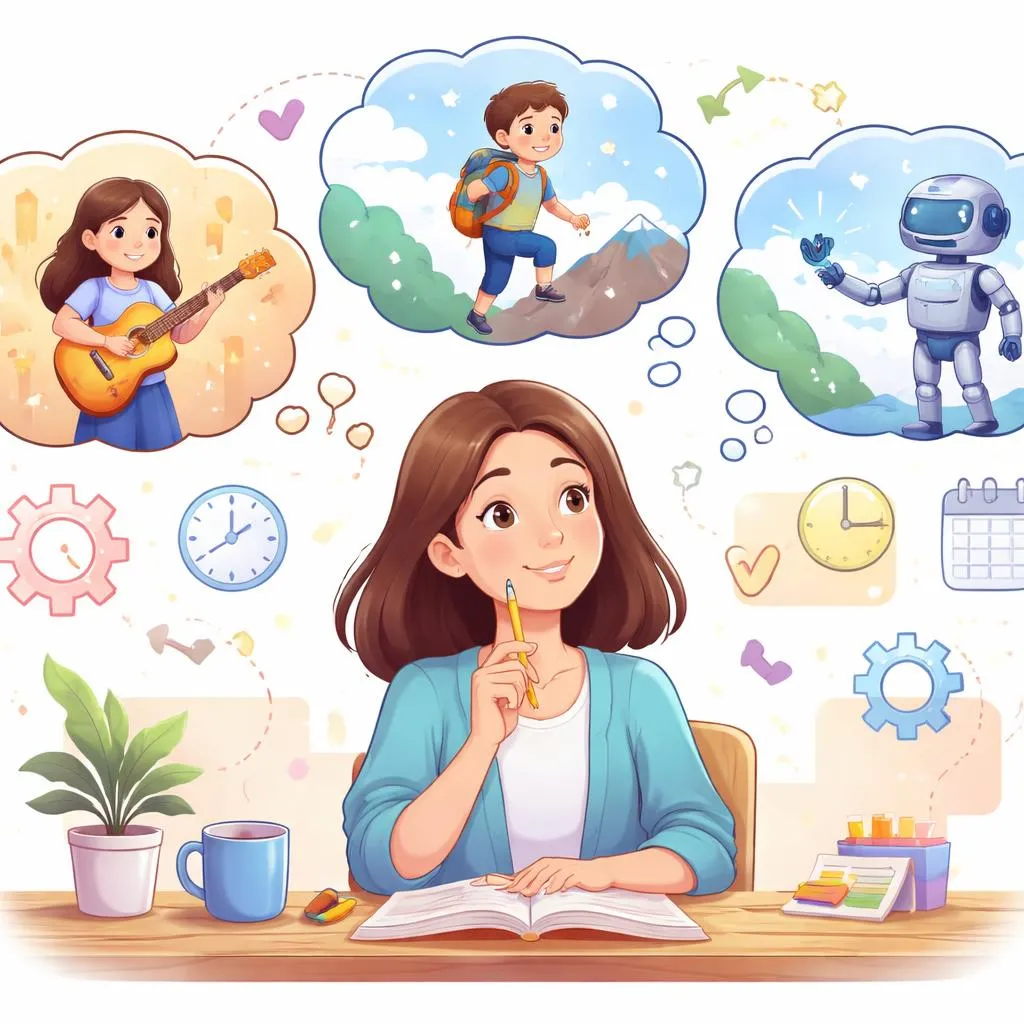

The word "can" is one of the most common words in English. Children use it every day to talk about what they are able to do. But understanding its tense forms helps children use it correctly in different time contexts. Today, we are going to explore the can tense and discover how this modal verb works in present, past, and future situations.
Meaning Let us start with the basic question. What does "can" mean? "Can" is a modal auxiliary verb. It helps other verbs express meaning. It shows ability, possibility, and permission.
Ability: "I can swim" means I know how to swim. Possibility: "It can rain tomorrow" means rain is possible. Permission: "You can go outside" means you are allowed.
Unlike regular verbs, "can" does not change form based on the subject. We do not say "he cans" or "she canes." It stays the same for all subjects in the present tense.
Conjugation Modal verbs like "can" do not conjugate like regular verbs. They have only two forms: present and past.
Present form for all subjects: I can You can We can They can He can She can It can
Notice there is no "s" on the third person. "He can" is correct. "He cans" is wrong.
Past form for all subjects: I could You could We could They could He could She could It could
"Could" is the past tense of "can." It shows past ability or possibility. It is also used for polite requests in the present.
There is no future form like "will can." For future ability, we use different structures.
Present Tense In the present tense, "can" shows ability, possibility, or permission right now.
Ability in present: "I can swim." This means I know how to swim now. "She can speak Spanish." This means she has the ability now. "They can run fast." This means they have the speed now.
Possibility in present: "It can get cold at night." This means it is possible. "He can be noisy sometimes." This means it happens occasionally.
Permission in present: "You can go now." This means you are allowed. "Can I have a cookie?" This asks for permission.
In all these uses, "can" is followed by the base form of the main verb. "I can swim," not "I can swimming."
Past Tense The past tense of "can" is "could." We use it to talk about past ability, possibility, or permission.
Ability in past: "I could swim when I was five." This means I had the ability in the past. "She could speak French, but she forgot." This means she had the ability but lost it.
Possibility in past: "It could rain yesterday, but it didn't." This means rain was possible. "He could be late, but he arrived on time." This means lateness was possible.
Permission in past: "We could go outside after lunch." This means we were allowed.
Past negative: "I could not (couldn't) hear you." This means I was unable to hear.
"Could" is also used for polite requests in the present. "Could you help me?" is more polite than "Can you help me?"
Future Tense For future ability, we do not use "will can." This is a common mistake. Instead, we use "will be able to."
Future ability: "I will be able to drive when I am sixteen." This means future ability. "She will be able to read soon." This means she is learning.
Future possibility: "It might rain tomorrow." We use "might" or "may" for future possibility more often than "can."
Future permission: "You will be able to go outside after your nap." This means future permission.
For very near future, we can use "can" with future time words. "We can go to the park later today."
Questions Forming questions with "can" and "could" is simple. We move the modal verb before the subject.
Present tense questions: "Can I go now?" "Can you swim?" "Can he come with us?" "Can they play outside?"
Past tense questions: "Could you hear me?" "Could she read when she was four?" "Could they find the way home?"
Negative questions: "Can't you come?" "Couldn't you see me?"
Question word questions: "What can I do?" "Where can we go?" "When can you come?" "How can I help?" "Who can answer this?"
These questions are very common in daily conversation. Children need lots of practice with them.
Other Uses of Can and Could Beyond ability, possibility, and permission, "can" and "could" have other important uses.
Polite Requests: "Can you pass the salt?" is a common polite request. "Could you pass the salt?" is even more polite.
Offers: "Can I help you?" offers assistance. "Can I get you a drink?" offers something.
Suggestions: "We can go to the park." suggests an idea. "You could try doing it this way." suggests a method.
Impossibility (negative): "I can't believe it!" expresses surprise. "You can't be serious!" expresses disbelief.
Prohibition (negative): "You cannot run in the hall." means it is not allowed. "You can't touch that." means it is forbidden.
General truths: "It can get very cold in winter." This describes a general possibility.
Learning Tips for Can Tense Teaching the tenses of "can" requires specific strategies. Here are tips that work well with young learners.
Start with present tense ability. Children love to talk about what they can do now. "I can jump." "I can sing." This builds confidence.
Use physical actions. "Can you touch your nose? Can you wiggle your ears?" Children show their abilities while learning.
Introduce past tense with "could" by talking about when they were younger. "When you were a baby, could you walk? Could you talk?" Children connect to their own experience.
Practice the difference between present and past. "Now I can read. Before I could not read. Now I can. Before I couldn't."
Teach "will be able to" for future. "When you are bigger, you will be able to reach the top shelf."
Common Mistakes with Can Tense Children make predictable mistakes with the tenses of "can." Knowing these helps us address them gently.
One common mistake is using "can" for past. "Yesterday I can swim" should be "Yesterday I could swim." Practice the past form.
Another mistake is using "will can" for future. "I will can drive" should be "I will be able to drive." Explain that we do not use "will" with "can."
Some children use "can" with "ing." "I can swimming" should be "I can swim." Practice the pattern many times.
Word order in questions can be tricky. "I can go?" should be "Can I go?" for a question. Practice the question pattern.
Educational Games for Can Tense Games make grammar practice fun and memorable. Here are some games to practice the tenses of "can."
Can You? Game - Present: One child asks "Can you...?" questions. "Can you hop on one foot?" The other child answers and demonstrates. This practices present tense.
Could You? Game - Past: Ask about past abilities. "When you were little, could you tie your shoes?" Children answer using "could" or "couldn't."
Ability Timeline: Create a timeline for each child. Mark what they could do as babies, what they can do now, and what they will be able to do in the future.
Animal Can Game: Show pictures of animals. Children say what each animal can do now. "A bird can fly." Then talk about what baby animals could do. "A baby bird could not fly."
Future Ability Predictions: Talk about what children will be able to do when they grow up. "When I am sixteen, I will be able to drive." "When I am grown, I will be able to live in my own house."
Can/Can't Sort: Give children pictures of activities. They sort them into things they can do now and things they can't do now. Then talk about what they could do in the past and will be able to do in the future.
Using Can Tense in Stories Stories are wonderful for practicing different tenses of "can." Many children's books use these words.
"The Little Engine That Could" by Watty Piper is perfect for practicing "could." The little engine repeats "I think I can, I think I can" and finally "I thought I could, I thought I could."
"From Head to Toe" by Eric Carle asks "Can you do it?" throughout. Children respond "I can do it!" This practices present tense.
While reading, pause and ask questions. "What can the animals do? What could the little engine do at the end?"
Can in Songs Music helps children remember language patterns. Here are some simple songs using different tenses of "can."
Can You Swim? (present tense):
Can you swim? Can you swim? Yes, I can, I can. Swimming in the water, Happy as a clam.
When I Was Little (past tense):
When I was little, I could not walk. I could not talk, I could not talk. But now I'm bigger, I can run. Growing up is so much fun!
I Will Be Able To (future tense):
When I am older, I will be able to drive. When I am older, I will be able to drive. But for now, I'll ride my bike, That's what I like to do.
Daily Practice Opportunities The best practice for the tenses of "can" happens in daily conversation. Throughout the day, we have many opportunities to use these forms.
During morning meeting, ask about abilities. "Who can tie their shoes? Who could tie their shoes last year? Who will be able to tie their shoes tomorrow?"
During transitions, talk about what children can do now versus before. "You couldn't write your name in September, but now you can!"
During future planning, use "will be able to." "After we finish our work, we will be able to go outside."
These natural conversations provide meaningful practice without feeling like lessons.
As we explore the can tense with young learners, we help them express ability, possibility, and permission across time. They learn to talk about what they can do now, what they could do in the past, and what they will be able to do in the future. Through games, stories, and daily conversations, these forms become a natural part of their English. This understanding opens up rich possibilities for expressing themselves about their growing abilities and changing world.