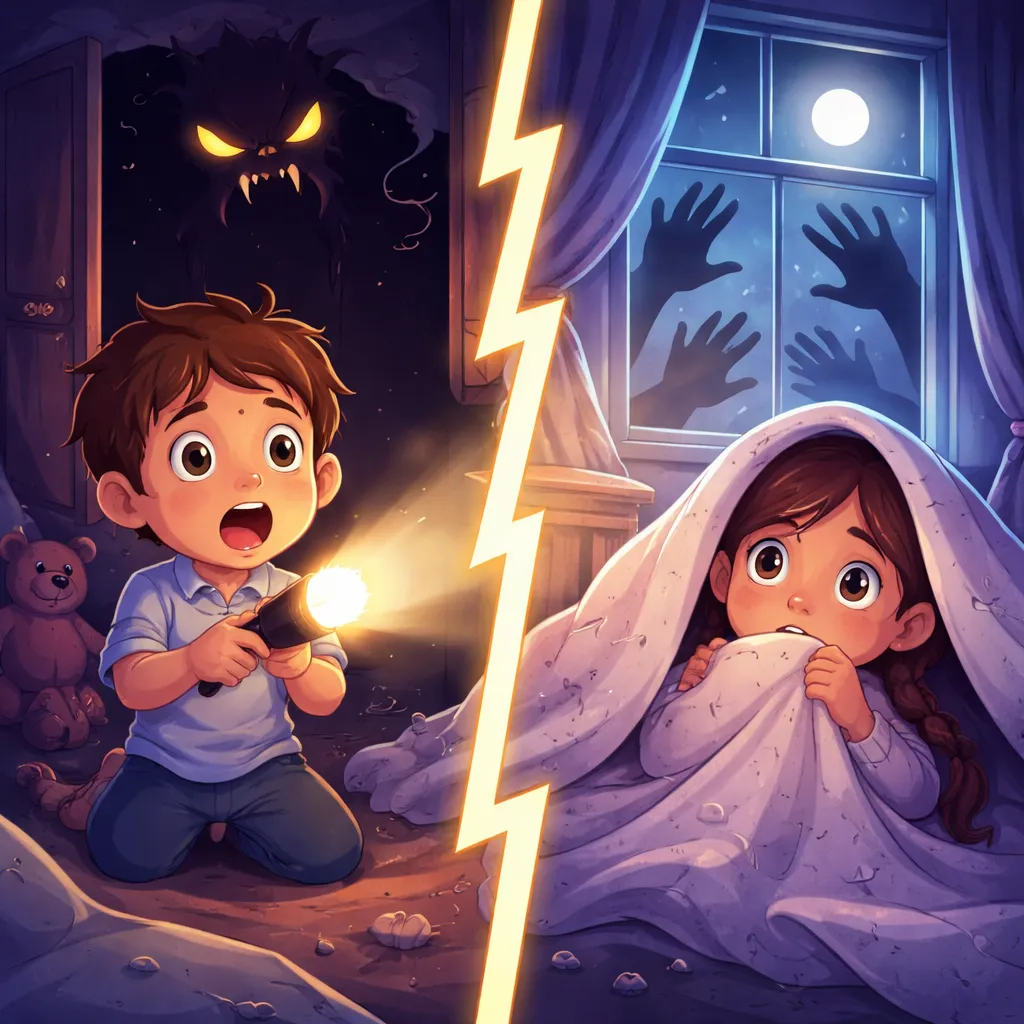

Hello, brave word explorer! Have you ever felt that jumpy feeling? Maybe during a thunderstorm. Maybe watching a spooky movie. How do you describe it? Do you say you are scared? Or do you say you are afraid? We use both words all the time. They feel like two sides of the same coin. But are they exactly the same coin? Not quite! Knowing the tiny difference is a cool superpower. It helps you paint a perfect picture of your feelings. Let's go on a word adventure into the world of fear!
First, let's be Feeling Scientists. Let's listen at home. Here are two sentences. "The loud noise made me feel scared." "I am afraid of the dark in my closet." They both talk about a nervous feeling. A loud noise. A dark closet. Do they sound identical? Or is there a small difference? One feels more sudden. One feels more general. What do you think? Great observation! Now, let's look much closer.
Adventure! Exploring Two Kinds of Nervous Feelings
Welcome to the world of nervous feelings! Fear is a normal emotion. But it has different flavors. Think of "scared" and "afraid" as two types of shivers. One is a quick, cold splash. One is a longer, cooler breeze. Let's learn about each one.
The Sudden Jump vs. The Steady Worry Think about the word "scared". "Scared" feels like a sudden jump. It is a quick reaction. Something surprises you. Your heart beats fast for a moment. You get scared by a loud bang. You get scared by a friend saying "Boo!". The feeling is instant and sharp. Now, think about "afraid". "Afraid" feels more like a steady worry. It is a feeling that sits with you. You think about something that might happen. You are afraid you will fail a test. You are afraid of getting a shot. "Scared" is the jump from the surprise. "Afraid" is the worry before it happens. One is a reaction. The other is an anticipation.
The Loud Gasp vs. The Quiet Whisper Let's listen to their volume. "Scared" is often a louder, more active feeling. It shows on your face and body. You scream when you are scared. You hide under a blanket. The feeling is visible. "Afraid" is often a quieter, more inside feeling. It is a thought in your mind. You whisper, "I'm afraid." You feel nervous but calm outside. A dog might be afraid of vacuum cleaners. It trembles quietly. A person is scared of spiders. They might yell and run. "Scared" is the visible fright. "Afraid" is the inner nervousness. Both are real. They just show themselves differently.
Their Favorite Word Friends in Sentences Words have best friends. "Scared" loves to work with the word "of". But it also likes to stand alone. It often follows verbs like "get", "feel", or "be". I get scared during storms. I feel scared right now. You can also say "That was scary!" to describe the thing. "Afraid" has a special rule. It almost always needs a friend. It is almost never used before a noun. You say "I am afraid". You do not say "an afraid child". You say "a scared child". "Afraid" loves the words "of" and "that". I am afraid of heights. She is afraid that she will be late. "Afraid" is for your feelings. "Scared" can be for you or the situation.
Let's visit a school scene. Your class is watching a science film. A giant dinosaur suddenly roars on the screen! You jump in your seat. You were scared by the loud roar. It was a sudden surprise. Now, imagine you have to give a speech tomorrow. You think about it all night. You are afraid you will forget your words. This is a worry about the future. Using "afraid" for the dinosaur is okay. But "scared" fits the jump better. Using "scared" for the speech is okay. But "afraid" fits the long worry better.
Now, let's go to the playground. You are on a very high slide. You look down and feel nervous. You tell your friend, "I'm afraid to go down." This is your worry about what might happen. Suddenly, a big dog runs onto the playground barking. You feel a jolt. You are scared for a second. The word "afraid" paints the worry about the slide. The word "scared" paints the reaction to the dog.
Our Little Discovery So, what did we discover? "Scared" and "afraid" are very close friends. But they have different jobs. "Scared" is often about a sudden, quick feeling. It is a reaction to something right now. "Afraid" is often about a more general, longer worry. It is a feeling about something that might happen. "Scared" can describe you or the situation. "Afraid" almost always describes how you feel. Knowing this helps you explain your nerves perfectly.
Challenge! Become a Feeling Word Champion
Ready for a challenge? Let's test your new knowledge!
"The Best Choice" Challenge Let's imagine a nature scene. A little rabbit is hopping in a field. A shadow passes over it. It is a hawk! The rabbit freezes for a second. Its heart pounds. The rabbit is... what? Is it scared or afraid? The rabbit is scared. This is a sudden, instant reaction to danger. Now, imagine a deer in the woods. It smells smoke from far away. The deer feels nervous. It stays alert all night. The deer is afraid of a forest fire. This is a longer, worried feeling about a possible danger. "Scared" wins for the rabbit's instant freeze. "Afraid" is the champion for the deer's lasting worry.
"My Sentence Show" Your turn to create! Here is your scene: A dark and stormy night. Can you make two sentences? Use "scared" in one. Use "afraid" in the other. Try it! Here is an example: "The loud thunder made me feel scared." This is the reaction to the noise. "I was afraid the power would go out." This is the worry about what might happen next. Your sentences will show two different shades of a nervous feeling!
"Eagle Eyes" Search Look at this sentence. Can you find the word that could be better? Let's check a home context. "My little brother is a very afraid boy during scary movies, so he covers his eyes." Hmm. The word "afraid" is not usually used right before a noun like "boy". The word "scared" fits this pattern much better. "My little brother is a very scared boy during scary movies..." This sounds more natural. Did you spot it? Fantastic word work!
Harvest and Action! Turn Knowledge Into Your Superpower
Great job, explorer! We started thinking "scared" and "afraid" were twins. Now we know they are close cousins. We can feel the sudden jump of "scared". We can feel the steady worry of "afraid". You can now describe your nervous feelings with precision. This is a brave and useful skill.
What you can learn from this article: You can now feel that "scared" is often a sudden, jumpy reaction to something right now. You can feel that "afraid" is often a longer, quieter worry about something that might happen. You know that saying "I got scared" describes a moment. Saying "I am afraid of something" describes a more general fear. You learned the grammar tip: we usually say "a scared child" but not "an afraid child".
Life practice application: Try your new skill this week. The next time you feel nervous, ask yourself: Is this a scared feeling (a sudden jump)? Or is this an afraid feeling (a steady worry)? Tell a grown-up which one it is. Watch an adventure cartoon. Listen for the words "scared" and "afraid". When does the hero feel each one? This makes you a super listener. Keep exploring your feelings with the perfect words. You are a brave and amazing communicator!