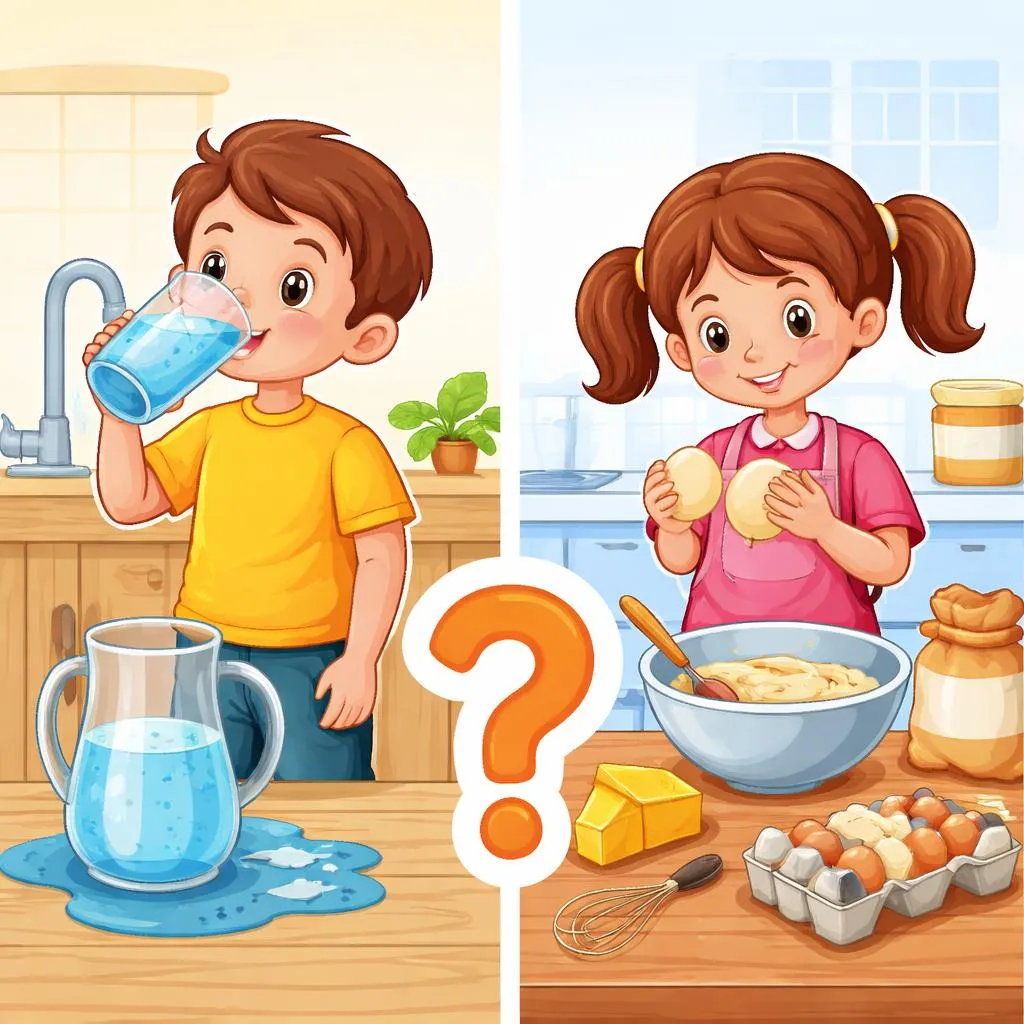

Children know what they need. They need food, water, and sleep. Parents hear kids say, "I need a drink" or "The rules require you to wear a helmet". These two words seem very close. But they describe different kinds of necessity. Knowing the difference between a "need to" and a "require to" helps children understand what is truly essential. Let us explore these two important words together.
What Do These Expressions Mean?
A "need to" means something is necessary for survival or well-being. Needs are about staying healthy, safe, or functioning properly. For example, you need to eat. You need to sleep. A "require to" means something is necessary because of a rule, a condition, or a goal. Requirements come from outside. For example, a recipe requires eggs. A school requires a uniform. For a child, a need feels like something your body asks for.
A require feels like something someone else says you must do. Both are about things you cannot skip. That is why the two expressions seem similar. Both mean "you must have this." But a need comes from inside you. A require comes from rules or conditions. Understanding this difference helps children know when they are talking about their own well-being versus following instructions.
What's the Difference?
The main difference lies in where the necessity comes from. A "need to" comes from your body, your health, or your survival. It is natural and universal. Every person needs water. A "require to" comes from rules, recipes, laws, or specific situations. It is created by people. Think of a need as a hungry stomach growling. The growl comes from inside. You did not choose it. Think of a require as a teacher saying "You must bring a pencil to class." The teacher made that rule. It does not come from your body.
Another difference is what happens if you ignore it. If you ignore a need, you get sick or hurt. If you ignore a requirement, you might break a rule or fail at a task. But you will not get sick. This difference helps children see that needs are more serious. Needs keep you alive. Requirements keep things orderly.
When Do We Use Each One?
Use a "need to" for basic survival and health. At home, a child says "I need to drink water." Use need for rest. "You need to sleep to have energy." Use need for safety. "We need to wear seatbelts." Use need for things that keep you healthy and safe. Needs are not optional. You cannot bargain with a need. Your body will not change its mind.
Use a "require to" for rules and conditions. At school, a child reads "This game requires two players." Use require for recipes. "The cake requires three eggs." Use require for laws. "The pool requires children to wear floaties." Use require for instructions. "The project requires a cover page." Requirements come from people. They can change. Different schools have different requirements. Different recipes require different ingredients.
Real-life situations use both naturally. A parent says "Your body needs food. That is a need. You will get sick without food. The recipe requires flour. That is a requirement. You can use a different flour or make a different recipe. But you cannot replace food with something else. Food is a need. Flour is a requirement." Another example: a child needs to wear glasses to see clearly. That is a need. The school requires a note from the doctor for the glasses. That is a requirement. The need is the glasses. The requirement is the note.
Example Sentences for Kids
Here are simple examples of a "need to":
"Plants need sunlight to grow."
"You need to wash your hands before eating."
"We need to breathe fresh air."
Here are simple examples of a "require to":
"This puzzle requires patience and focus."
"The recipe requires two cups of flour."
"The library requires everyone to be quiet."
Notice how the need examples are about basic life and health. The require examples are about rules, recipes, and conditions. A need is universal. Every plant needs sunlight. A requirement is specific. Only some puzzles require patience. Needs are for living. Requirements are for completing tasks or following rules.
Common Mistakes to Avoid
Many children say "need" when they mean "want". They say "I need a new toy" when they want it. The correct way is to save need for true necessities. You need food, water, shelter, and love. You want a toy. Saying "need" for wants makes the word less powerful. When you truly need something, people might not believe you. This is an important life lesson for children.
Another mistake is thinking requirements are always written down. A child says "No one wrote a rule, so nothing requires me to do it." The correct way is to know that requirements can be spoken or understood. Your parent requires you to do chores. That is a requirement. Your teacher requires you to raise your hand. That is a requirement. Requirements do not need to be on paper. They just need to be expected.
A third mistake is forgetting that needs can be emotional. A child says "I do not need love. I need food." The correct way is to know that humans need love and connection too. Emotional needs are real. You need to feel safe. You need to feel valued. These are needs, not wants. Understanding emotional needs helps children take care of their whole selves, not just their bodies.
Easy Memory Tips
Here is a simple trick. Imagine a "need to" as your phone battery at one percent. If you do not charge it, the phone dies. That is a need. Imagine a "require to" as a game instruction that says "You must collect three keys to open the door." If you do not, you cannot finish the level. But the game still works. So need = battery at one percent (life or death). Require = game rule (necessary for a specific task). This comparison works beautifully.
Another tip uses the first letters. Need starts with N. Think of "N for Necessary for life." Needs keep you alive. Require starts with R. Think of "R for Rules created by people." Requirements are rules. Practice with your child. Ask "Will something bad happen to my body if I do not do this?" If yes, call it a need. If no, it might be a requirement. This question helps children prioritize.
Quick Practice Time
Try these simple exercises with your child.
Fill in the blank: Choose "need" or "require".
"You __________ to drink water every day to stay alive." (Answer: need)
"The board game __________ at least three players to start." (Answer: requires)
Multiple choice: Pick the correct description.
Which one comes from your body's survival and health?
A) A requirement
B) A need
(Answer: B)
Which one comes from rules, recipes, or specific conditions created by people?
A) A need
B) A requirement
(Answer: B)
These quick questions take only two minutes. They help children see the difference between inside necessity and outside rules. Think about your morning. Ask your child "What did you need this morning? What did a rule require you to do?" That real practice builds vocabulary and self-awareness.
Wrap-up
The key difference is simple. A need is something necessary for survival, health, or well-being that comes from inside you. A requirement is something necessary because of a rule, recipe, or condition that comes from outside. Learning this difference helps children take care of their true needs while following important rules. Keep talking about needs and requirements. Your child will learn to listen to their body and respect the rules that keep everyone safe and things running smoothly.