
Start! Find a Pair of 'Narrative Twin' Words
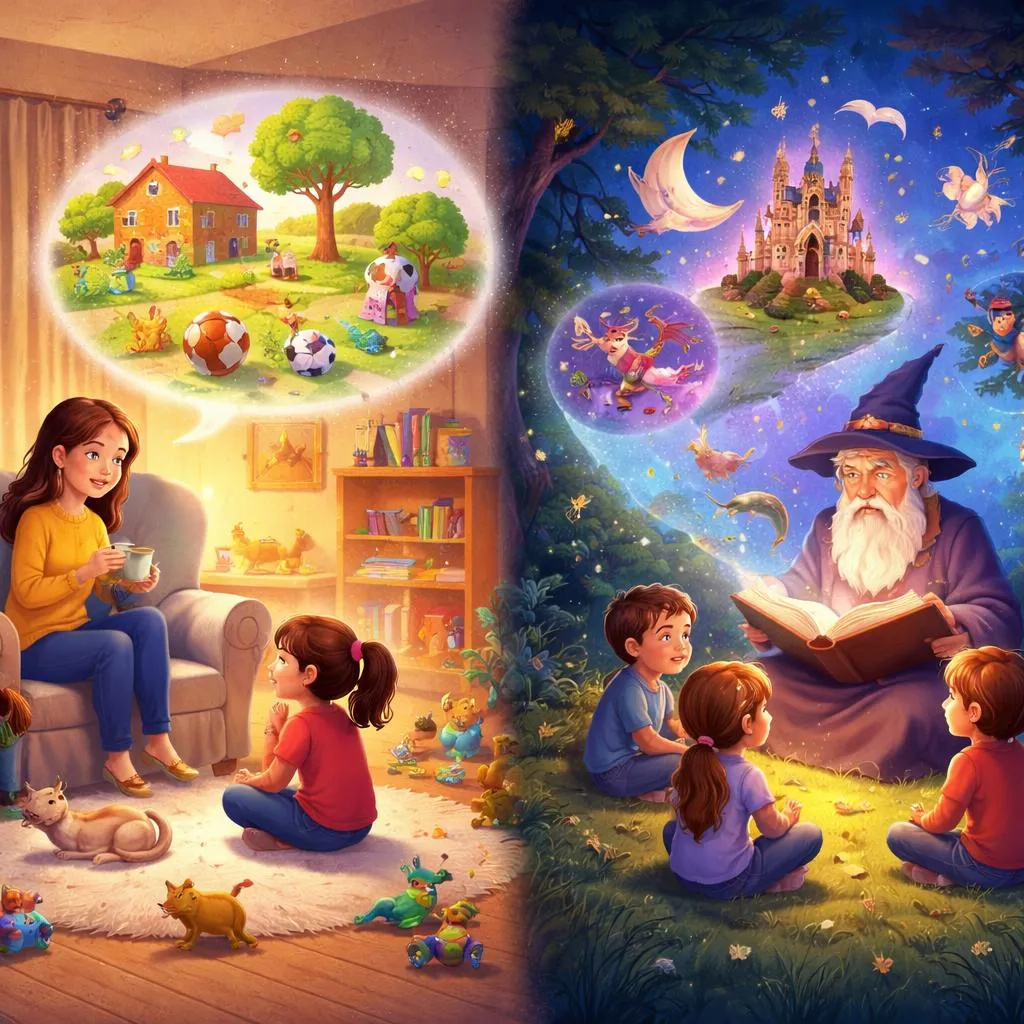
Hello, word adventurer! Do you love hearing about exciting events? Your friend tells you about her day. That is a story! Now, think of a magical, old legend about a dragon. That is a tale. They are both about telling events. Are they the same? This is a wonderful word puzzle. Today we explore a word pair. We explore story and tale. They are like a modern movie and an old legend. One is everyday. One is extraordinary. Knowing the difference is a superpower. Your talk about books and events will be clear and smart. Let us start our narrative journey!
Be a Language Observer now. Our first clue is at home. You come home from school. Your parent asks, "Tell me the story of your day." Later, you read a book of fairy tales at bedtime. They are both about narratives. But are they the same? Let us test with two sentences.
"She told a funny story about her dog chasing a squirrel." This feels real, everyday, and personal. "They read an ancient tale about a brave knight and a dragon." This feels old, magical, and legendary.
They both describe a series of events. But one feels common and possibly true. One feels special and often fictional. Your observation mission starts. Let us journey into their word world.
Adventure! Journey Into the Word World
Feel the Word's Everyday and Legendary Vibe!
Feel the word story. It is an everyday, general word. It feels like news, personal sharing, or any narrative. It can be true or made up. The word tale is a special, fanciful word. It feels like folklore, adventure, and often fantasy. It is usually a made-up story from long ago. Story is the daily chat. Tale is the campfire legend. One is for regular talk. The other is for epic adventures. Let us see this at school.
In a writing class, you write a personal story about your weekend. This is about your own life. In a literature class, you study a folktale from another culture. This is about a traditional, often moral-filled narrative. Saying "a personal tale" is less common. The feeling of the words is different. One is broad and modern. The other is narrow and often old.
Compare Their Scope: General vs. Specific!
Think about all the drinks in the world and a specific type like "hot chocolate." The word story is all drinks. It is the big category for any narrative. The word tale is the hot chocolate. It is a specific type of story. It is often an imaginative, traditional, or adventurous story. Their scope is the key. Every tale is a story. But not every story is a tale. A tale is a special kind of story. Let us test this on the playground.
You tell friends what happened in a soccer game. You say, "Listen to this story!" Your friend acts out a legend about a hero. He says, "This is an epic tale!" The word story covers the soccer report. The word tale sets the scene for a legendary performance. The playground shows the difference.
Meet Their Best Word Friends!
Words have favorite narrative partners. The word story likes general and personal words. It teams up with 'bedtime', 'short', 'life', 'same old', 'cover', and 'tell me a'. Tell me a bedtime story. It is the same old story. The word tale likes fanciful and traditional words. It teams up with 'fairy', 'folk', 'tall', 'twice-told', 'cautionary', and 'spinning a'. It is a fairy tale. He told a tall tale. Their partners are different. Let us go back to nature.
A nature documentary tells the story of a river. This is a factual narrative. An old sailor might spin a tale about a giant sea monster. This is a fanciful, exaggerated account. You would not usually hear a "fairy story." The word friends set the genre.
Our Little Discovery!
We explored the narrative world. We made a clear discovery. The words story and tale are different. A story is a general word for an account of events, real or imagined. It is the broad, everyday term. A tale is a specific type of story. It is often a narrative that is imaginative, traditional, and sometimes exaggerated or legendary. Story is the big umbrella. Tale is a special kind of story under that umbrella. One is common. The other is colorful and often old.
Challenge! Become a Narrative Word Expert
"Best Choice" Challenge!
Let us look at a nature scene. A journalist writes about a family of beavers building a dam. She is writing a news story about their hard work. Is it Story or Tale? The champion is Story! This is a factual, journalistic account. Now, imagine an ancient legend about how the beaver got its flat tail. That is a folktale. Is it story or tale? The champion is tale! This is a traditional, explanatory story from folklore. Excellent!
"My Sentence Show"!
Now, create your own sentences. Here is a fun scene: Imagine sharing what you did on a school trip. Use the word story in one sentence. Now imagine describing a magical adventure from a book. Use the word tale in another. Try it! Here is an example. Sentence one: "My story about the museum visit was full of funny details." Sentence two: "The book was a thrilling tale of pirates and hidden treasure." See the difference? The first is about a personal, real account. The second is about a structured, adventurous narrative.
"Eagle Eyes" Search!
Can you find the word that needs help? Read this sentence: "My grandfather's tale about walking to school in the snow is a family favorite he tells every year." Hmm. This is a tricky one. A personal, real-life anecdote is usually called a story. Using "tale" here might suggest it is exaggerated or fanciful. If it's a true memory, a better word is story. A better sentence is: "My grandfather's story about walking to school in the snow is a family favorite he tells every year." You fixed it!
What an epic journey through the narrative world! You started as a curious listener. Now you are a word storyteller. You know the secret of story and tale. You can feel their different everyday and legendary vibes. You see that a story is general and a tale is a specific type. You know their best word friends. This is a real language superpower.
You can learn amazing things from this article. You now know that a 'story' is a general word for any account of events, which can be true or made up, long or short. You understand that a 'tale' is a specific type of story, often an imaginative, traditional, or adventurous one, like a fairy tale or a tall tale. You can explain that all tales are stories, but we use the word 'tale' for narratives that feel special, old, or fanciful. You learned phrases like 'bedtime story' and 'fairy tale'.
How can you use this today? It is easy and fun. When you share about your day, you are telling a story. When you read a book about dragons or magic, you are reading a tale. Listen to family memories—those are stories. Read legends and folklore—those are tales. Draw two pictures. Draw a comic strip of a real-life story. Draw a scene from a magical tale. You are using your new skill every day.
Keep your explorer ears and imagination open. The world is full of amazing stories and wonderful tales. You are learning the words to describe them all. Great work, word expert. Your English journey is getting more expressive and colorful with every new word pair you discover!