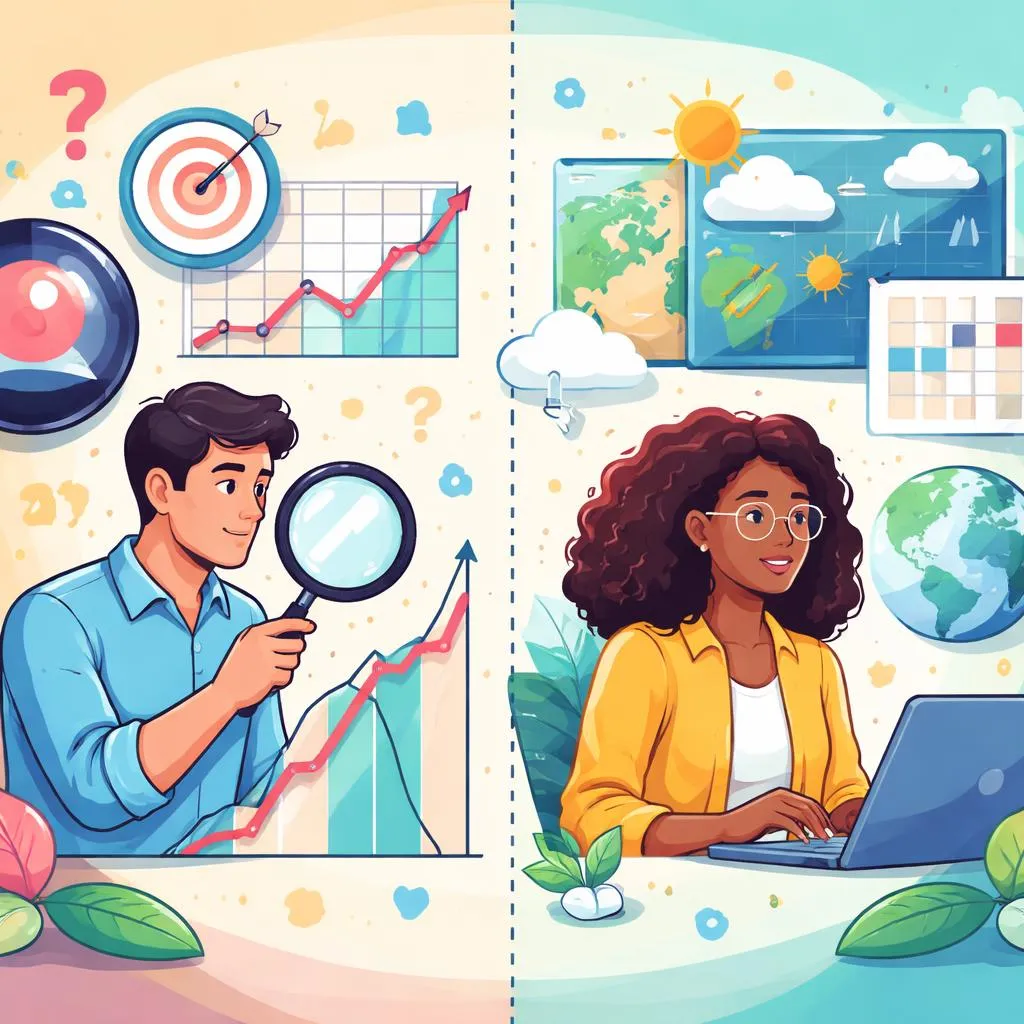

Hello, future thinker! The weather app says it will forecast the sun. You say you can predict the winner of the game. They both talk about tomorrow. But are they the same? They are like two different ways to see the future. One is like a magic crystal ball. One is like a scientific chart. Let's discover their secrets! Today, we explore the word friends "predict" and "forecast". Knowing their secret makes you a prediction pro. Let's begin our future-seeing adventure!
First, let's be Language Listeners. Listen at home. Here are two sentences. "I predict it will be pizza for dinner." "The news will forecast the weekend weather." They both talk about what will happen. Dinner. Weather. Do they sound the same? One feels like a smart guess. One feels like an official report. Can you sense it? Great listening! Now, let's look closer.
Adventure! Into the World of Seeing Tomorrow
Welcome to the world of future-telling! "Predict" and "forecast" are about saying what will happen. But they say it in different ways. Think of "predict" as a smart guess. You use clues and your brain. It is like solving a puzzle. Think of "forecast" as an official report. It often uses science and data. It is like a weather map. Both are "future talk". But one is a "smart guess". One is an "official report". Let's learn about each one.
A Smart Guess vs. An Official Report Think about the word "predict". "Predict" feels personal. You use what you know. You make a guess. You predict the story's end. You predict your friend's choice. The guess comes from you. Now, think about "forecast". "Forecast" feels official. It often uses machines and data. Experts make it. They forecast the storm. They forecast the economy. The report is for everyone. "Predict" is like your personal crystal ball. "Forecast" is like the official weather chart. One is personal. One is public.
For Many Things vs. Mainly for Weather and Trends Let's compare their uses. You can "predict" many things. You can predict a game score. You can predict a test question. You usually "forecast" weather or big trends. They forecast rain. They forecast sales. The feeling is different. "Predict" is flexible. "Forecast" is more specific. You predict who will call. Experts forecast the holiday traffic. One is for daily life. One is for official reports.
Their Special Word Partners and Common Uses Words have best friends. "Predict" loves words about people, outcomes, and guesses. Predict the future. Predict the result. Hard to predict. "Forecast" loves words about weather, reports, and data. Weather forecast. Forecast model. The forecast says. Note: You "predict" something. Predict the winner. A "prediction" is the noun. That was my prediction. You "forecast" something. Forecast the weather. A "forecast" is the noun. Check the forecast.
Let's visit a school scene. In science class, you predict what will happen in an experiment. This is your smart guess. Your teacher shows a weather forecast for a field trip. The word "predict" fits your personal guess in the science lab. The word "forecast" fits the official weather map for planning. One is your idea. One is expert data.
Now, let's go to the playground. You look at teams. You predict your team will win. This is your hopeful guess. The park speaker gives a rain forecast. The word "predict" fits your personal belief about the game. The word "forecast" fits the official park announcement about rain. One is your opinion. One is public information.
Our Little Discovery So, what did we find? "Predict" and "forecast" both talk about the future. But "predict" means to make a smart guess about what will happen. It is often personal. "Forecast" means to officially say what will happen, especially about weather or big trends. It uses data. You predict your birthday presents. The news will forecast the temperature. "Predict" is a personal guess. "Forecast" is an official report.
Challenge! Become a Future-Seeing Champion
Ready for a nature test? Let's try your new skills!
"The Best Choice" Challenge Let's imagine a nature scene. A wise old owl might predict which mouse will run first. It uses its animal wisdom. Weather scientists forecast a long, cold winter. They use satellite data. "Predict" wins for the owl's smart, instinctive guess. "Forecast" is the word for the scientists' official report about the season. One is animal instinct. One is scientific data.
"My Sentence Show" Your turn to create! Here is your scene: Planning a picnic this weekend. Can you make two sentences? Use "predict" in one. Use "forecast" in one. Try it! Here is an example: "I predict that we will eat all the cookies first." This is your fun, personal guess. "The weather forecast calls for sunny skies." This is the official weather report. Your sentences will show a personal guess versus an official report!
"Eagle Eyes" Search Look at this sentence. Can you find the word that could be better? Let's check a home context. "My magic eight ball can forecast the answer to my question." Hmm. A magic eight ball gives a random, fun answer. The word "forecast" suggests an official, data-based report. The word "predict" is the perfect choice for the ball's guess, even a magical one. A better sentence is: "My magic eight ball can predict the answer to my question." Using "predict" fits the idea of a guess, even a fun one. "Forecast" sounds too scientific. Did you spot it? Super thinking!
Harvest and Action! Turn Knowledge Into Your Superpower
Great exploring! We started thinking "predict" and "forecast" were similar. Now we know they are two different future-telling tools. "Predict" is the word for making a smart guess about what will happen, based on what you know or feel. "Forecast" is the word for an official statement about the future, especially the weather, based on data and science. You can now talk about the future with perfect clarity.
What you can learn from this article: You can now see that to "predict" something means to make a smart guess about what will happen, like predicting the winner of a race, predicting the end of a movie, or predicting a friend's reaction. The guess comes from you. You can now understand that to "forecast" something, usually the weather, means to give an official report about what will happen, using science and data, like forecasting rain, forecasting temperatures, or forecasting a sunny day. The report comes from experts. You know that you predict who will win a game. The news will forecast the storm. You learned to match the word to the source: "predict" for personal guesses; "forecast" for official reports.
Life practice application: Try your new skill today! Be a future-telling expert. Watching a sports game? Predict the final result. Getting dressed? Check the weather forecast. Reading a mystery book? Try to predict the ending. Listening to the radio? Hear the traffic forecast. You are now a master of these words! Use "predict" for your smart guesses. Use "forecast" for official weather and data reports. Your way of talking about tomorrow will be perfectly clear!