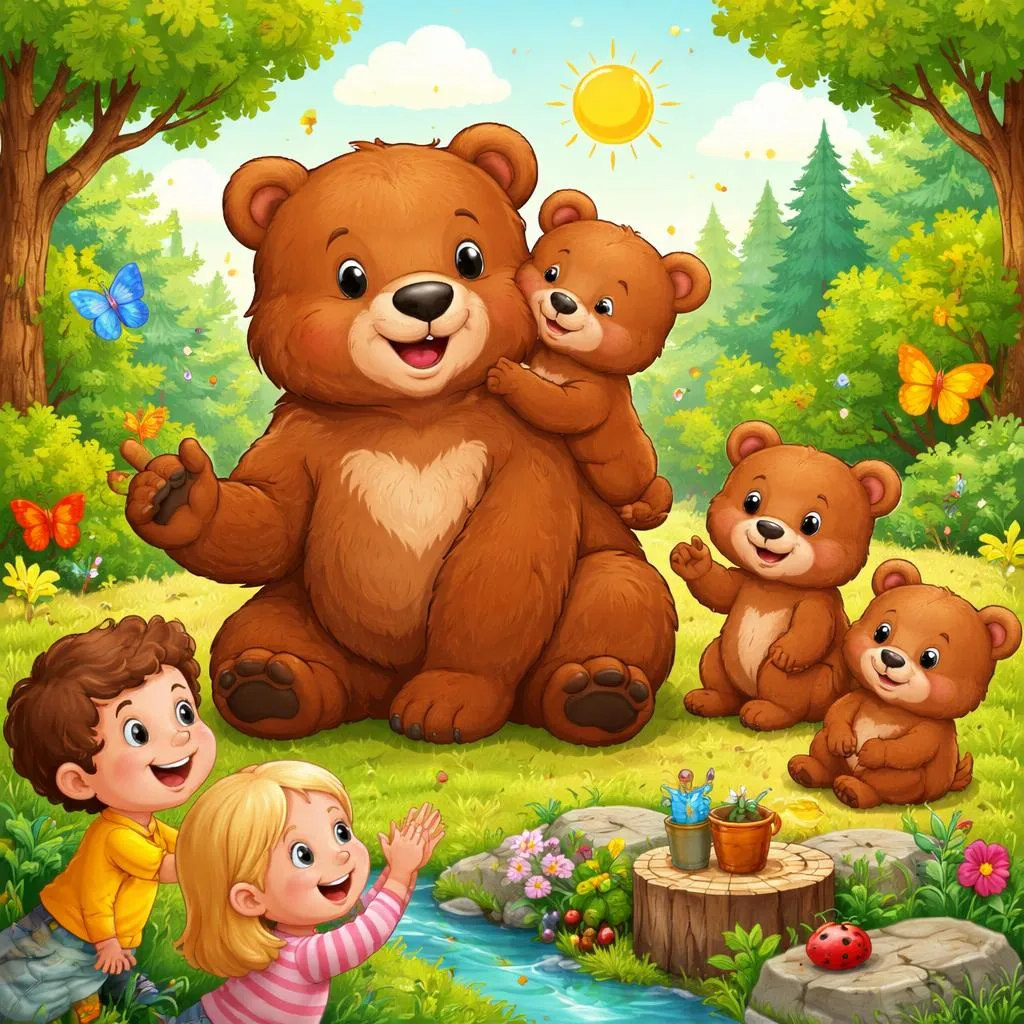

Hello, word adventurer! Imagine a huge, furry animal in the forest. It is very strong. Now, imagine a tiny, playful version. It follows its mother. What do you call them? You might call the big one a "bear." The little one is also a bear. But it has a special name! This is a fun word family. Today we explore a word pair. We explore bear and cub. They are parent and child. They belong together. But they are different words! Knowing the difference is a superpower. Your nature stories will be warm and clear. Let us start our cozy word hike!
Be a Language Watcher now. Our first clue is at home. You watch a cartoon. It shows a big, brown bear. It is looking for honey. Then, a small, cute cub pops up. They are family. But are they the same word? Let us test with two sentences.
"The mother bear taught her child to fish." This talks about the adult. "The little cub tried to copy its mother." This focuses on the baby.
They sound like they are in the same scene. And they are! One is the parent. One is the child. Your watching mission starts. Let us explore their forest of words.
Adventure! Wander Into the Word Forest
Feel the Word's Hug!
Feel the word bear. It is a big, strong word. It feels powerful and sometimes gentle. It is like a protective hug. The word cub is a soft, small word. It feels cute, playful, and young. It is like a little nuzzle. Bear is for strength and size. Cub is for youth and learning. One is a mighty tree. The other is a new sapling. Let us see this at school.
You read a fairy tale. It says, "The great bear guarded the secret cave." This sounds strong and important. Now, your friend draws a picture. He says, "I drew a curious cub climbing a log." This sounds adorable and small. Saying "curious bear" could also work. But it loses the specific baby feeling. The hug of the words is different.
Compare Their Size and Life Stage!
Think about a giant blanket and a small security toy. The word bear is the big blanket. It covers the whole animal species. It can be any age. A grizzly is a bear. A panda is a bear. An old bear is a bear. The word cub is the small toy. It is only the baby stage. It is a young bear. A cub is always a bear. But a bear is not always a cub. The life stage is the key. Let us test this on the playground.
You play an animal family game. You say, "I am the mother bear!" You walk with strength. Your friend says, "I am the cub!" She tumbles and plays. The word cub gives a clear age clue. The word bear is the general name. One tells you the species. The other tells you it is a baby.
Meet Their Best Word Friends!
Words have favorite pals. The word bear likes general and powerful words. It teams up with 'hug', 'hibernate', 'polar', and 'cave'. You see a polar bear. The bear sleeps in a cave. The word cub likes baby and cute words. It teams up with 'scout', 'playful', 'lion', and 'den'. You join cub scouts. You see a lion cub in a den. Their friends are different. Let us go back to school.
In science class, you learn: "A bear is an omnivorous mammal." This is a general fact. In a story, you write: "The lost cub whimpered for its mother." This creates a tender image. You would not usually write "The lost bear whimpered" for a baby. The word friends help set the right scene.
Our Little Discovery!
We followed the word trail in the forest. We made a sweet discovery. The words bear and cub are a perfect family. But they are not the same. The word bear is the main word. It is for the big animal. It is for adults of the species. The word cub is a special word. It is only for a baby bear. Bear is the whole story. Cub is the cute, beginning chapter. One is the general term. The other is a specific, young life stage.
Challenge! Become a Forest Word Expert
"Best Choice" Challenge!
Let us play in nature. Read each scene. Pick the champion word. Scene one: You are in a national park. A ranger warns, "Do not feed the ______." Is it Bears or Cubs? The champion is Bears! The warning is for all bears, big and small. Scene two: You watch a live camera in a den. A tiny, furry animal opens its eyes. The host whispers, "The bear ______ is waking up!" Is it bear or cub? The champion is cub! It is the newborn baby. Perfect choice!
"My Sentence Show"!
Now, create your own sentences. Here is a fun scene: Imagine a quiet mountain stream. Use the word bear in one sentence. Use the word cub in another. Try it! Here is an example. Sentence one: "A large bear caught a salmon in the stream." Sentence two: "A clumsy cub splashed in the shallow water." See the difference? The first shows a skilled, adult hunter. The second shows a playful baby learning.
"Eagle Eyes" Search!
Can you find the word that needs help? Read this sentence: "The wildlife photographer waited for days to see the panda cub, and finally the adult cub appeared." Hmm. The second use is tricky. An adult panda is not a cub. The word bear is better. "The wildlife photographer waited for days to see the panda cub, and finally the adult bear appeared." This is correct. The cub is the baby. The adult is the bear. You fixed it!
What a wonderful forest trek! You started as a curious hiker. Now you are a word naturalist. You know the secret of bear and cub. You can feel their different hugs. You see their life stages. You know their best word friends. This is a real language superpower.
You can learn amazing things from this article. You now know that 'bear' is the main word for the large animal, like a grizzly or panda. You understand that 'cub' is the special word for a baby bear. You can explain that all cubs are bears, but not all bears are cubs. You learned that 'cub' can also be used for other baby animals, like lion cubs. Your word choices are now more precise and full of feeling.
How can you use this today? It is easy and fun. Next time you read a book or watch a documentary about animals, listen. Do they show a powerful adult bear? Or a playful cub? Draw a picture of a bear family. Label the big one "bear" and the little one "cub." Tell a story about a forest adventure. Use the right word for the right character. You are using your new skill every day.
Keep your explorer eyes open. The world of words is a beautiful forest to explore. You are learning its paths. Great work, word adventurer. Your English journey is growing more detailed and heartwarming with every new word pair you discover!