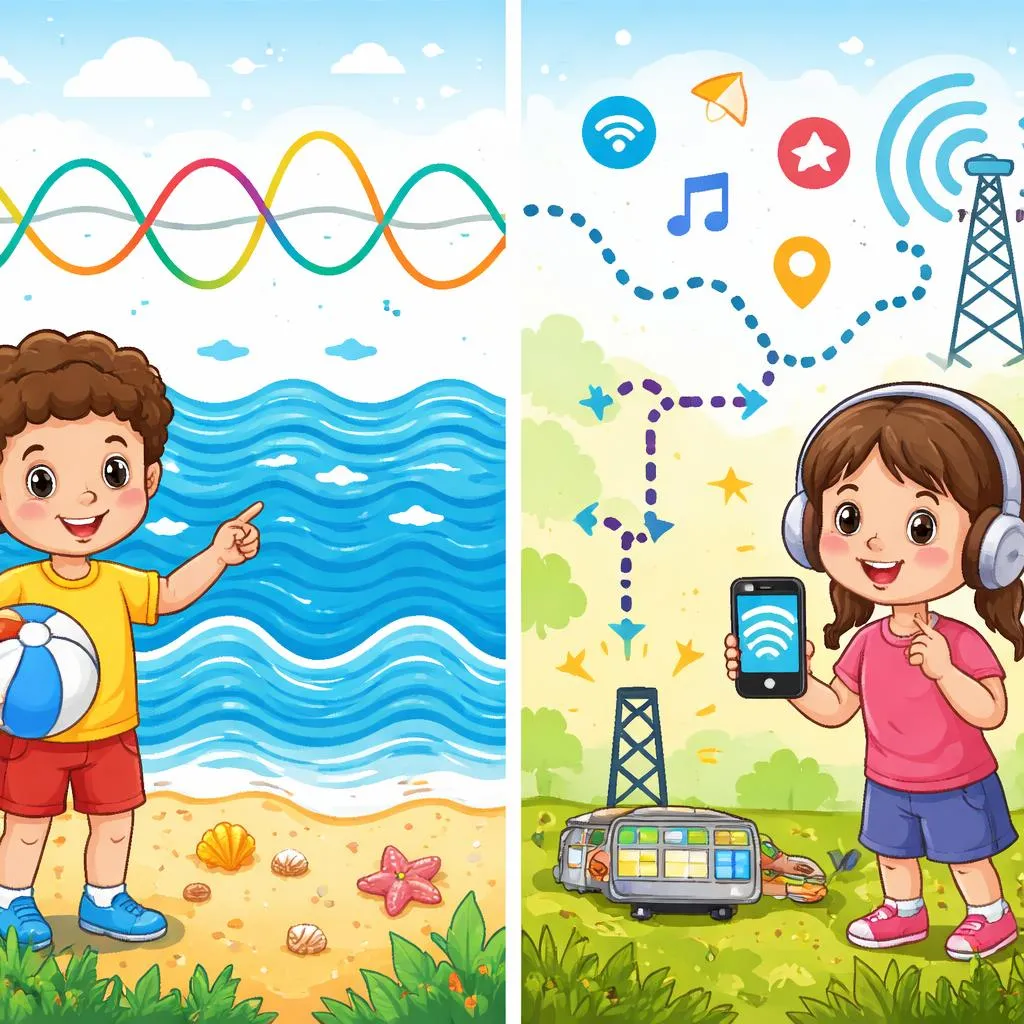

Hello, communication explorer! Do you know how to say hello from far away? What do you do with your hand? Do you wave to a friend? How does a traffic light talk to cars? Does it signal when to stop? They both seem to be about sending a message. But are they the same? They are like two different ways to send a note. One is like a friendly, happy shout with your hand. One is like a clear, smart instruction. Let's find out! Today, we explore the word friends "wave" and "signal". Knowing their secret is a superpower. It makes you a friendly and safe communicator. Let's begin our messaging adventure!
First, let's be Message Detectives. Listen at home. Here are two sentences. "I stood at the window to wave goodbye to my dad as he left for work." "The referee raised a flag to signal the start of the race on TV." They both involve sending a message without words. Saying goodbye. Starting a race. Do they sound the same? One feels like a warm, friendly gesture. One feels like an official, clear sign. Can you sense it? Great observation! Now, let's look closer.
Adventure! Into the World of Sending Messages
Welcome to the world of gestures and signs! "Wave" and "signal" are two different ways to communicate. Think of "wave" as a friendly, often happy movement of your hand or arm. It is a gesture full of feeling. Think of "signal" as a clear, purposeful sign that gives information or an instruction. It is a sign full of meaning. Both send a message. But one is the "friendly gesture". One is the "clear instruction". Let's learn about each one.
The Friendly Gesture vs. The Clear Instruction Think about the word "wave". "Wave" feels warm, personal, and full of emotion. It is something you do to connect with someone. You wave hello. You wave goodbye. You can even wave a flag for fun. It is a happy, simple action. Now, think about "signal". "Signal" feels more official, smart, and purposeful. It means to send a clear sign, often for safety or information. A traffic light signals red for stop. A coach can signal a play to the team. "Wave" is like a smile with your hand. "Signal" is like a smart arrow giving direction. One is about friendship. One is about information.
A Personal Greeting vs. An Official Message Let's compare their purpose. "Wave" is mainly for friendly, social communication. It is a personal gesture between people. You wave to get someone's attention nicely. You wave your hand in the air to say "over here!" It is often casual and happy. "Signal" is for giving important information or commands. It is more formal and clear. A turn signal on a car signals a change in direction. A whistle can signal the end of a game. You wave to a friend across the street. A lifeguard will signal people to get out of the pool. "Wave" is the friendly hello. "Signal" is the important alert. One is casual. One is careful.
Their Special Word Partners and Common Uses Words have best friends. "Wave" loves words about hands, greetings, and feelings. Wave hello. Wave goodbye. Give a wave. Wave your hand. A big wave. "Signal" loves words about information, safety, and tools. Traffic signal. Turn signal. Signal for help. Signal to stop. Send a signal. Note: You can "wave someone over". You can "wave aside" a worry. You can get a "clear signal". You can "signal your intention".
Let's visit a school scene. After the school bell rings, you see your best friend at the other end of the hallway. You are too far to talk. You raise your hand and move it side to side. You wave to get their attention and say a quick hello. This is a friendly, personal gesture. Later, in gym class, you are running a race. The teacher holds up a hand. This is not a wave. The teacher holds up a hand to show "get ready". Then the teacher sharply lowers their arm. This action is to signal the start of the race for all runners. The word "wave" fits the friendly hello to your friend. The word "signal" fits the teacher's clear command to begin.
Now, let's go to the playground. Your mom is on a bench. You are on the swing. You look over and smile at her. You move your hand up and down. You give her a wave. This is a sweet, loving gesture. Later, you are playing a game of tag. The person who is "it" wants to take a break. They hold up both hands in a clear "T" shape with their arms. This is a common sign for "time out". They are using their arms to signal that the game should pause. The word "wave" fits the loving greeting to Mom. The word "signal" fits the clear game instruction for a pause.
Our Little Discovery So, what did we find? "Wave" and "signal" are both about sending messages without words. But they are used for very different reasons. "Wave" is a friendly gesture you make with your hand or arm. It is used to greet someone, say goodbye, or get attention in a nice way. It is often about feelings. "Signal" is a clear sign or action that gives information or a command. It is used for safety, rules, or organized activities. It is often about facts. You wave to a friend. A traffic light will signal cars to go. Knowing this helps you understand friendly hellos and important messages.
Challenge! Become a Message Word Champion
Ready for a nature test? Let's try your new skills!
"The Best Choice" Challenge Let's imagine a nature scene. A dolphin jumps out of the ocean. It sees a boat with friendly people. The dolphin is happy and playful. It moves its fin up and down above the water. It seems to wave at the people on the boat. This is a friendly, happy-looking gesture. Now, watch a bee in a hive. It returns from finding flowers. It does a special dance for the other bees. This dance is not a friendly greeting. The dance gives very clear information. It tells the other bees where the flowers are. The bee uses its dance to signal the direction and distance. "Wave" wins for the dolphin's playful, greeting-like motion. "Signal" is the word for the bee's purposeful, informational dance. "Wave" is the friendly gesture. "Signal" is the instructive message.
"My Sentence Show" Your turn to create! Here is your scene: Being at a busy crosswalk with a parent. Can you make two sentences? Use "wave" in one. Use "signal" in one. Try it! Here is an example: "I saw my teacher across the street, so I gave a quick wave." This is a friendly, personal greeting. "We waited for the pedestrian light to signal that it was our turn to walk." This is an official instruction for safety. Your sentences will show two different ways to send a message!
"Eagle Eyes" Search Look at this sentence. Can you find the word that could be better? Let's check a home context. "My little brother waved that he needed more milk by pointing at his empty cup." Hmm. The word "waved" means a hand movement like moving side to side. Pointing at a cup is a different action. It is a direct, clear gesture to show what he wants. This is more like giving a sign or instruction. A better word is "signaled". "My little brother signaled that he needed more milk by pointing at his empty cup." Using "waved" here is not quite right because pointing is a clear sign, not a friendly greeting wave. "Signaled" is the champion for this kind of instructive pointing. Did you spot it? Excellent word work!
Harvest and Action! Turn Knowledge Into Your Superpower
Great exploring! We started thinking "wave" and "signal" were similar. Now we know they are two different message heroes. "Wave" is the friendly, emotional gesture for hello and goodbye. "Signal" is the clear, purposeful sign for information and safety. You can now talk about greetings and instructions with perfect accuracy. This is a great skill for a good friend and a safe citizen.
What you can learn from this article: You can now see that to "wave" is a friendly gesture you make with your hand or arm to greet someone, say goodbye, or get their attention in a nice, often happy way. You can now understand that to "signal" is to give a clear sign or message, often for safety, information, or to give an instruction, like a traffic light or a referee's flag. You know that you wave to your friend from the bus window, but the crossing guard uses a sign to signal when you can cross the street. You learned to match the word to the purpose: "wave" for friendly, emotional greetings; "signal" for clear, instructive messages.
Life practice application: Try your new skill today! Be a message expert. Watch how people communicate. Do they wave to say hello? Does a sign signal what to do? Next time you are out, notice the difference. Say, "I waved to my neighbor from my bike!" or "Watch for the walk signal before you cross." Tell a friend about a time you gave a friendly wave. Describe a time you saw a clear signal for safety. You are now a master of message words! Keep sharing smiles and staying safe.