
Start! Find a Pair of 'Magic Twin' Words
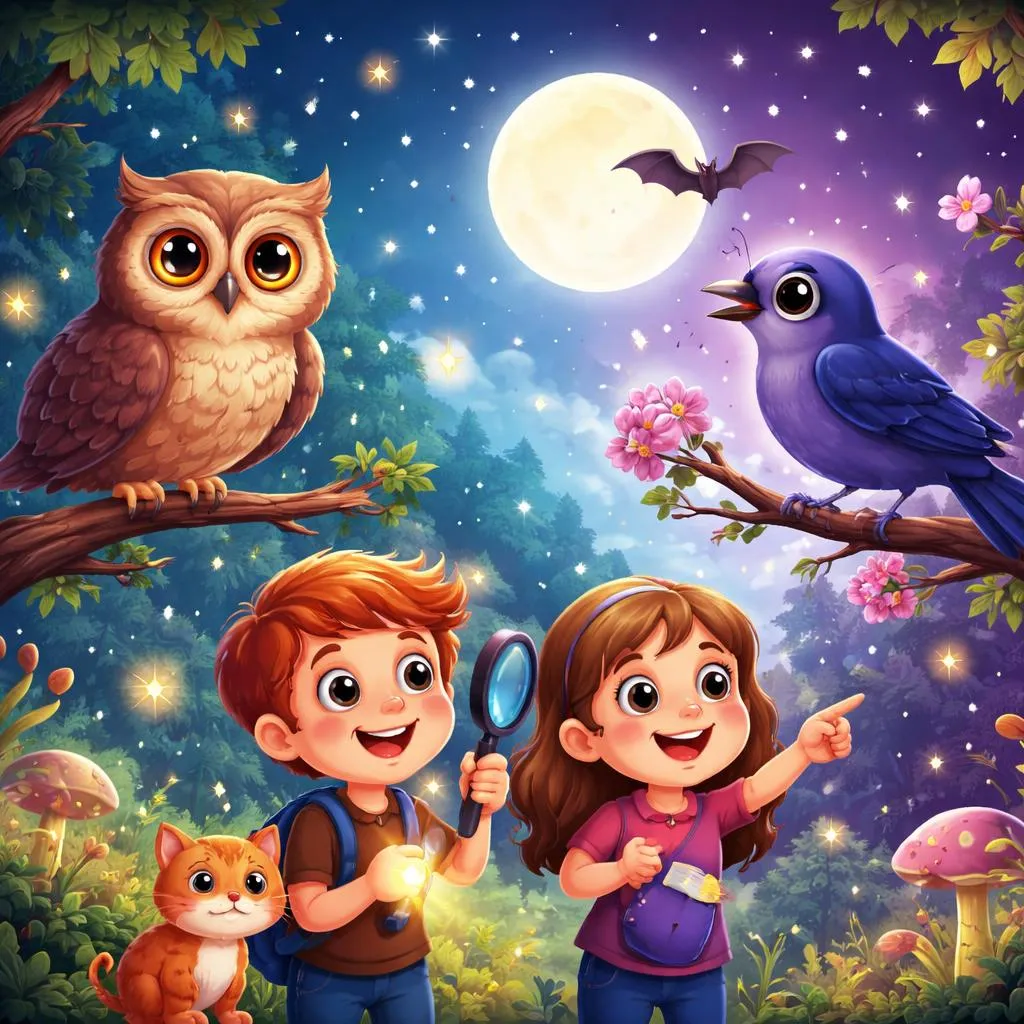
Hello, word explorer! Have you ever heard a soft "hoot" in the dark? You look up and see two big, round eyes. What do you call that creature? You might say "owl." But sometimes, in a story, it is called a "nightbird." They both fly in the dark. Are they the same? This is a mysterious word puzzle. Today we explore a word pair. We explore owl and nightbird. They are like the night and the moon. One is specific. One is poetic. Knowing the difference is a superpower. Your nighttime stories will be magical and clear. Let us start our word adventure!
Be a Language Watcher now. Our first clue is at home. You read a picture book. It has a wise owl in a tree. Then, you hear a spooky tale. It says, "A nightbird called in the forest." They are both birds of the night. But are they the same word? Let us test with two sentences.
"The owl turned its head almost all the way around." This is a cool fact about a real bird. "A lonely nightbird sang a haunting tune." This sets a mood in a story.
They both describe creatures of the dark. But one feels like science. The other feels like a story. Your watching mission starts. Let us fly into their word night.
Adventure! Fly Into the Word Night
Feel the Word's Mystery!
Feel the word owl. It is a specific, wise word. It feels real and knowable. We can study owls. The word nightbird is a poetic, mysterious word. It feels like a shadow in an old tale. It is a general term for any bird active at night. Owl is a real animal. Nightbird is a dreamy idea. One is a fact. The other is a feeling. Let us see this at school.
In a science class, you learn: "The barn owl has excellent hearing." This is a specific fact. In a poetry lesson, you read: "The nightbird's cry echoed in the silence." This creates an image. Saying "The owl's cry echoed" is also good. But "nightbird" sounds more literary. The mystery of the words is different.
Compare Their Specificity and Use!
Think about a detailed drawing and a soft painting. The word owl is the detailed drawing. It is the name of a real bird family. There are many types: barn owls, snowy owls. The word nightbird is the soft painting. It is not one species. It is a descriptive term for any bird active at night, like an owl or a nightjar. An owl is a nightbird. But a nightbird is not always an owl. One is precise. The other is vague and beautiful. Let us test this on the playground.
You play a guessing game. You say, "I am a nightbird with big eyes." Your friend might guess "owl!" Correct. Now you say, "I am a nightbird that sings at night." Your friend might guess "nightingale!" The word nightbird is a broader clue. The word owl is the specific answer. The playground shows the difference.
Meet Their Best Word Friends!
Words have favorite nighttime partners. The word owl likes factual and wise words. It teams up with 'wise', 'hoot', 'nocturnal', 'pellet', and 'book'. You dissect an owl pellet. You are a night owl. The word nightbird likes poetic and story words. It teams up with 'lonely', 'cry', 'shadow', 'haunting', and 'song'. The nightbird's song was sad. A nightbird flew across the moon. Their partners are from different worlds. Let us go back to school.
In a biology report, you write about the owl's adaptations. This is scientific. In a creative writing story, you describe a nightbird watching the hero. This is atmospheric. You would not write "owl watching the hero" if you want a mysterious feel. The word friends set the tone.
Our Little Discovery!
We explored the word night. We made a clear discovery. The words owl and nightbird are not twins. The word owl is a specific, real bird. It is wise and nocturnal. The word nightbird is a poetic, general term. It describes birds that are active at night. Owl is for facts and nature shows. Nightbird is for poems and ghost stories. One is the scientist. The other is the poet.
Challenge! Become a Nighttime Word Expert
"Best Choice" Challenge!
Let us explore the night. Read each scene. Pick the champion word. Scene one: You are on a camping trip. Your guide points and whispers, "See that? A great horned ______ lives in that tree." Is it Owl or Nightbird? The champion is Owl! The guide is identifying a specific species. Scene two: You are writing a scary story. You write: "The only sound was the call of a lone ______." Is it owl or nightbird? The champion is nightbird! It creates a more mysterious, emotional feeling. Great choice!
"My Sentence Show"!
Now, create your own sentences. Here is a fun scene: Imagine a deep, dark wood at midnight. Use the word owl in one sentence. Use the word nightbird in another. Try it! Here is an example. Sentence one: "The owl silently swooped down to catch a mouse." Sentence two: "A nightbird's shadow passed over the full moon." See the difference? The first is an action of a real animal. The second is an image from a story.
"Eagle Eyes" Search!
Can you find the word that needs help? Read this sentence: "In our science book, it says the nightbird is a bird of prey that hunts at night." Hmm. This is not wrong, but in a science book, we usually use the specific word. The word owl is more precise for a bird of prey. "In our science book, it says the owl is a bird of prey that hunts at night." This is more accurate for a textbook. You fixed it!
What a magical nighttime journey! You started as a curious listener. Now you are a word naturalist. You know the secret of owl and nightbird. You can feel their different mysteries. You see their specificity and use. You know their best word friends. This is a real language superpower.
You can learn amazing things from this article. You now know that an 'owl' is a specific type of wise, nocturnal bird with big eyes. You understand that 'nightbird' is a poetic word for any bird that is active at night, often used in stories. You can explain that an owl is a nightbird, but the word 'nightbird' can also mean other birds. You learned to use 'owl' for science facts and 'nightbird' to create a mood in a tale.
How can you use this today? It is easy and fun. Next time you read a non-fiction book about animals, look for the word owl. When you read a poem or a spooky story, listen for the word nightbird. Draw two pictures. Draw a detailed owl. Then draw a mysterious nightbird in a moonlit scene. You are using your new skill every day.
Keep your explorer eyes and ears open. Words can be as precise as science or as beautiful as poetry. You are learning to choose the right tool. Great work, word expert. Your English journey is becoming more magical and precise with every new word pair you discover!