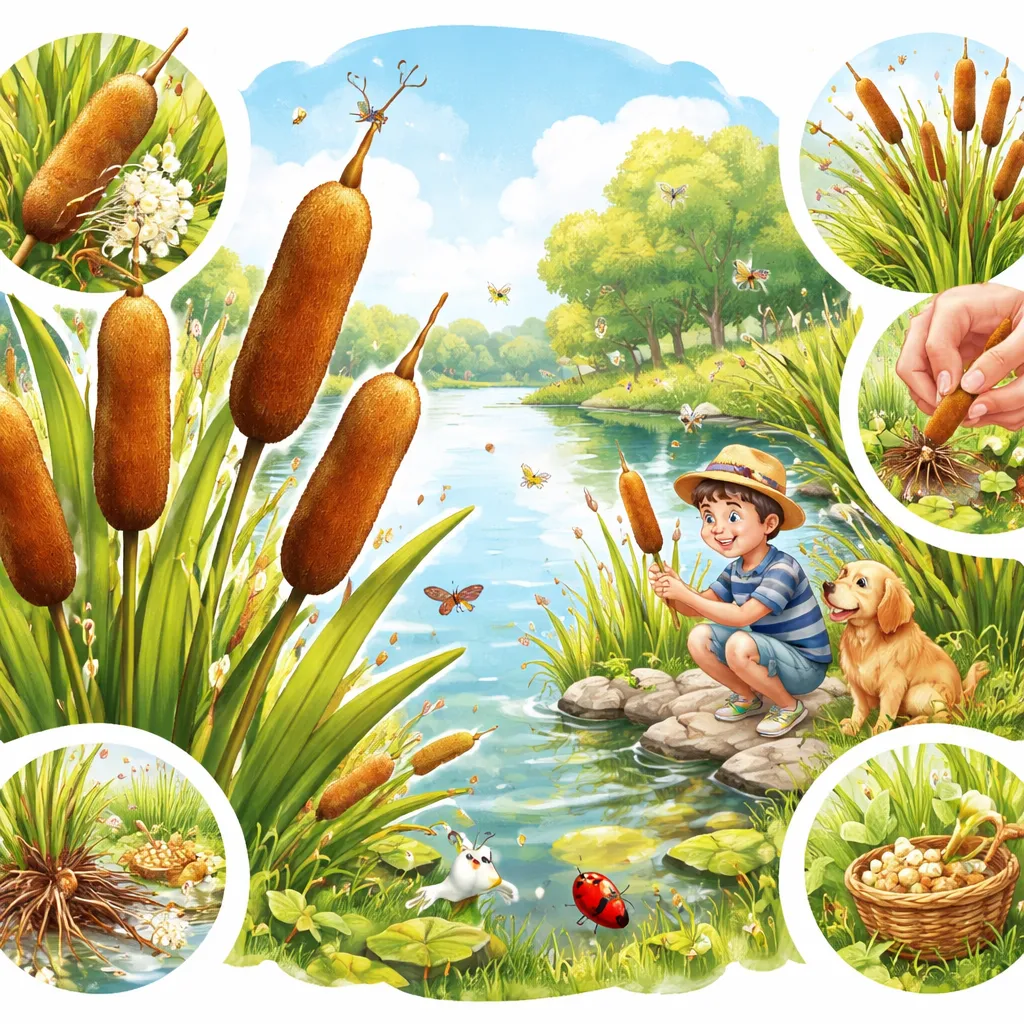

Have you ever walked by a pond or a slow, muddy stream and seen a tall, straight plant with a thick, brown, fuzzy top that looks like a hot dog on a stick? In the fall, that fuzzy top bursts open, letting out thousands of fluffy seeds that float in the air like tiny parachutes. This amazing plant grows right in the water or the soggy mud at the edge. It is a supermarket, a hotel, and a water filter, all in one. Let’s pull on our imaginary boots and wade into the wetland to learn about the incredible Cattail plant.
Let’s Learn the Word! – Open the Treasure Box of Language
Formal Name and Pronunciation This fuzzy friend is called a Cattail. Its scientific name is Typha. You can say it like this: /ˈkæt.teɪl/ (CAT-tayl). The first part, “Cat,” is like the furry animal, and “tail” is what a cat wags. Cat-tail. Say it: Cattail. It’s a fun, descriptive name.
The Etymology Tale The name is a perfect picture! Long ago, people thought the plant’s long, brown, fuzzy flower spike looked like the tail of a cat. So, they called it a “cat’s tail,” which became one word: Cattail. Its name is a simple, clever observation from nature, showing how people name things by what they resemble.
Nicknames and Friendly Aliases Cattails have many fun names. Some people call them Bulrushes or Reedmace. Because they look like corndogs, kids sometimes call them Punk Plants or Candlewicks. In some places, they are called Black Puddings for their dark brown color. Their scientific family name, Typha, comes from an old Greek word for marsh, which is their home.
Building Your Word Web: Core Parts Let’s learn the words for a Cattail’s unique body. The Spike is the famous brown, fuzzy “hot dog” part. It is actually made of thousands of tiny flowers. The Stem is tall, straight, and round, like a green pole. The Leaf is long, flat, and strapshaped, growing from the base. The Rhizome is the thick, creeping underground stem that stores food and makes new plants. The Fluff is the mass of tiny, fuzzy seeds that fly away. A Stand is a big group of cattails growing together. The Sheath is the part of the leaf that wraps around the stem at the bottom.
Action and State Words Cattails are busy and important. They sway gracefully in the wind. They form dense, green walls in wetlands. In late summer, the brown spike bursts open, releasing fluffy seeds. The rhizomes spread quickly in the mud. They filter dirty water, making it clean. A cattail plant is tall, sturdy, fuzzy, and aquatic.
Ecosystem Friends Vocabulary The cattail marsh is a bustling animal city. Red-winged blackbirds build their nests tied to the sturdy stems. Muskrats and beavers eat the starchy rhizomes and use the leaves to build their lodges. Dragonflies land on the stems to rest. Ducks hide their babies in the thick green leaves. Frogs and turtles swim between the stalks. It is a whole world of life.
Cultural Imprint in Language Cattails are symbols of survival and resourcefulness. A Native American proverb says, “The cattail does not grow in the forest; it knows its place in the marsh.” This teaches us that everything has its own perfect place to thrive. In many stories, the fluffy seed head is a symbol of wishes flying on the wind. The plant is a quiet hero of the wetland stories.
Ready for Discovery We know its fuzzy, friendly name. Are you ready to be a wetland detective and discover the life-saving secrets of this amazing plant? Let’s explore the world of the Cattail plant.
Discover the Plant’s Secrets! – A Nature Detective’s Notebook
The Plant Passport Cattails belong to the Typhaceae family. Their group name is Typha. This plant is a tall, upright wetland champion. It can grow over 6 feet tall! The leaves are long, flat, and gray-green. The flower has two parts: a yellow, pollen-covered spike on top (the male part) and the thicker, brown, fuzzy spike below (the female part that becomes the “hot dog”). It grows in dense colonies from spreading rhizomes. In winter, the brown spikes stay on the stalks, looking beautiful against the snow.
Survival Smarts The cattail is a wetland superhero. Its hollow leaves and stems act like snorkels, carrying air down to its roots in the oxygen-poor mud. Its secret weapon is the rhizome. This thick, underground stem stores food and spreads horizontally, quickly creating a dense stand that crowds out other plants. Another trick is its seed fluff. Each tiny seed has a parachute of fluff, letting the wind carry it for miles to find a new wet home.
Its Role and Gifts The cattail is an ecosystem engineer. Its dense roots trap sediment and absorb pollutants, acting as a natural water filter. The thick stands break waves, preventing shoreline erosion. It provides critical food, shelter, and nesting sites for more wildlife than almost any other wetland plant. For people, almost every part is useful: roots for food, leaves for weaving, and fluff for insulation.
Human History and Cultural Symbol For thousands of years, cattails have been a “supermarket” for indigenous peoples. The starchy rhizomes can be dried and ground into flour. The young shoots can be eaten like asparagus. The leaves are woven into mats, baskets, and even chairs. The fluffy seed heads have been used to stuff pillows, mattresses, and even life jackets! It is a plant of practical abundance and resilience.
Fun “Wow!” Facts Get ready for a fluffy fact! The fluff from one cattail spike can contain over 200,000 tiny seeds! And here’s a food fact: the yellow pollen from the top spike in spring is very nutritious and can be collected to make bright yellow pancakes or muffins. It’s like flour that grows on a stick!
From Marsh to Mini-Pond The Cattail plant’s story is one of wetland wonder. Would you like to grow a little piece of this wild, useful world? You can grow cattails in a container pond! Let’s see how.
Let’s Grow It Together! – A Little Guardian’s Action Guide
Good for Home Growing? Yes, but with care! Cattails are vigorous and can spread quickly in a natural pond. The best way is to grow them in a large, water-tight container without holes, like a half-barrel or a plastic tub. This way, you can enjoy their beauty and the wildlife they attract without letting them take over. They need a sunny spot and lots of water.
Little Gardener’s Toolkit You will need a small cattail plant from a water garden center. Get a large, sturdy container that holds water (like a whiskey barrel liner or a big plastic storage tub). Use heavy aquatic planting soil or clay. Have some gravel or small stones ready. You’ll also need a sunny spot.
Step-by-Step Growing Guide
Planting Your Wetland Friend Fill your container about two-thirds full with the heavy, wet soil. Make a hole and place your cattail plant in the center. Cover the roots with more soil and press it down firmly. Spread a layer of gravel on top to keep the soil from floating away. Slowly fill the container with water until the water level is 2 to 4 inches above the soil. Place it in a sunny spot.
Care Calendar Keep the container filled with water; they love to have their “feet” wet. Rainwater is perfect. They need full sun for at least 6 hours a day. You do not need to fertilize. In the fall, you can cut the dead leaves and old brown spikes back to the water level. In winter, the container might freeze, but the plant is dormant and safe under the ice.
Watch and Be Friends Watch for new green shoots in spring. See how the leaves grow tall and straight. Watch for the green spike to appear and turn brown and fuzzy. Observe the insects and birds that come to visit. You might see a dragonfly land on a stem! Draw the plant in your journal each month. Listen to the sound of the leaves rustling in the wind.
Problem Diagnosis If the leaves turn yellow, the plant might not be getting enough sun. Move the container to a brighter spot. If the plant looks crowded and stops growing, it might need dividing after a few years. The main issue in a small container is algae, which you can control by adding a few water snails or floating plants to provide shade.
Your Rewards and Gifts Your gift is your own tiny, thriving wetland. You are growing a natural water cleaner and a wildlife waystation. Caring for cattails teaches you about aquatic ecosystems, patience, and the quiet power of wetland plants. You become a guardian of a small, wild world.
Creative Fun Start a Wetland Watch Journal. Draw the insects, birds, and the growth of your plant. Make a fluffy cattail seed head art by gluing cotton balls on paper. Try weaving a simple coaster or a small basket from long, dried grasses, pretending they are cattail leaves. Write a short poem about the fluffy seeds flying on the wind. Build a tiny model muskrat lodge from mud and sticks next to your container pond.
Growing a Wild Corner By planting cattails in a container, you are not just growing a plant. You are creating a habitat, learning about nature’s filters, and bringing a piece of the wild marsh to your doorstep. You are a creator of mini-ecosystems.
Conclusion and Forever Curiosity What a wonderful, squishy-toed adventure! You started by learning the word “Cattail,” you discovered its secrets as the fuzzy, fruitful guardian of the wetlands, and you learned how to responsibly grow a little patch of this wonderful world. You now know the Cattail plant is not just a pond decoration; it is a water filter, a wildlife sanctuary, a historical supermarket, and a symbol of resilient life. Remember, its power is in its community and its many gifts. Your curiosity helps you appreciate the quiet, busy places where water meets land. Keep exploring the edges of ponds, listening for red-winged blackbirds, and wondering about the amazing plants that make our world clean and full of life. Your adventure to learn about the Cattail plant shows us that even in the muddiest places, we can find extraordinary life and usefulness.