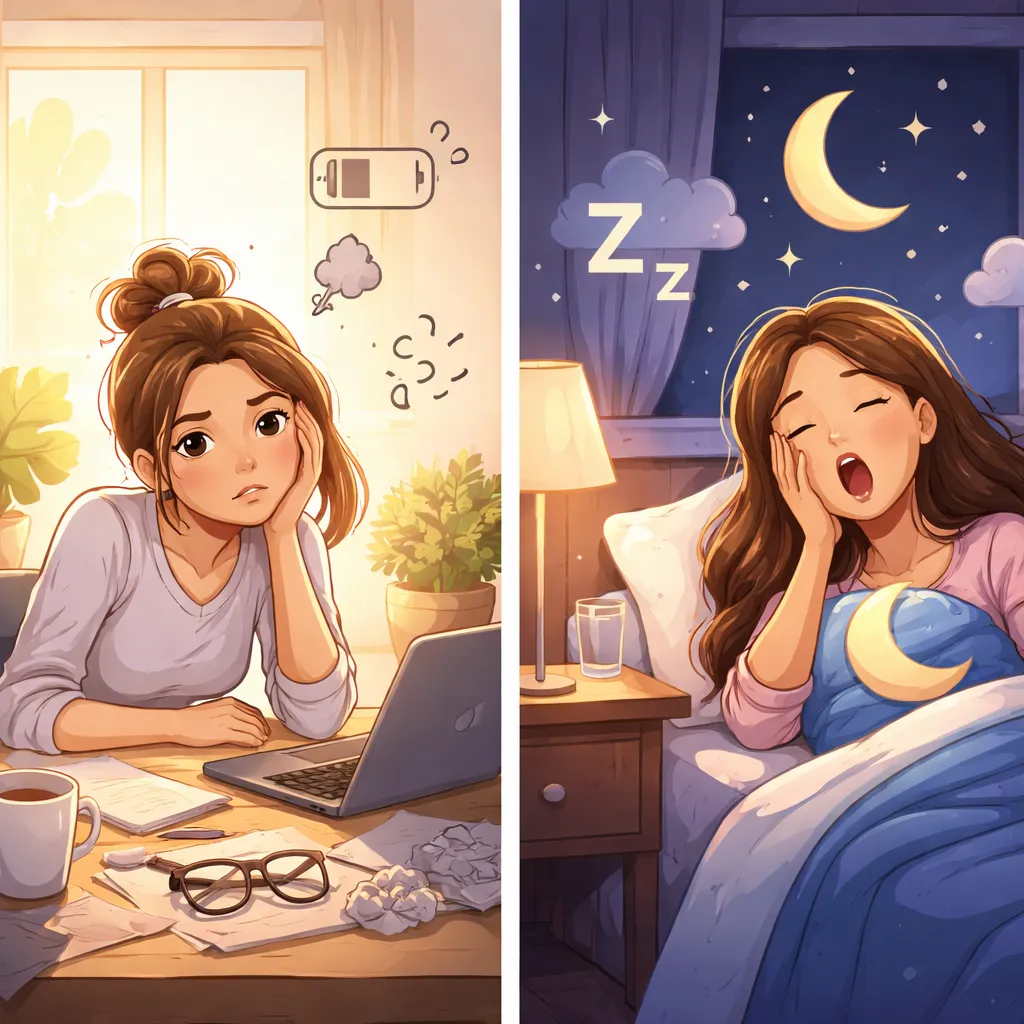

Hello, feeling detective! Have you ever come home from a long day? Maybe you played a big soccer game. Your body feels heavy. Your eyes start to close. How do you describe that? Do you say you are tired? Or do you say you are sleepy? People use both words. They seem like best friends. But are they the same friend? Not exactly! Knowing their secret gives you a word superpower. You can tell people exactly how you feel. Let's go on a word adventure today. We will explore "tired" and "sleepy".
First, let's be word scientists. Put on your observation glasses! Let's listen at home. Here are two sentences. "My legs are tired from running." "My little sister is sleepy at bedtime." They both talk about needing rest. One is about legs. One is about a sister at night. Do they sound the same? Or do they feel a little different? One feels like heavy muscles. One feels like closing eyes. What do you think? Great noticing! Now, let's look much closer.
Adventure! Exploring the Land of Low Energy
Welcome to the land of low energy! Our bodies sometimes need to recharge. Think of your body like a battery. "Tired" and "sleepy" are two different low-battery signals. One is for your muscles. One is for your brain. Let's learn about each signal.
The Heavy Sandbag vs. The Soft Feather Think about the word "tired". "Tired" feels like carrying a heavy sandbag. Your body feels slow and heavy. Your muscles feel weak. You are tired after sports day. You are tired from a long walk. It is a physical feeling. Your whole body needs to rest. Now, think about "sleepy". "Sleepy" feels like a soft, warm feather brushing your eyes. Your eyelids feel heavy. You struggle to stay awake. You feel sleepy after a big meal. You feel sleepy reading a book. "Tired" is in your arms and legs. "Sleepy" is behind your eyes. One is a body weight. The other is an eye weight.
The Drained Battery vs. The Power-Saving Mode Let's listen to what they mean. "Tired" is like a drained battery. You used a lot of energy. You have little left for playing or thinking. A worker is tired after a long shift. You are tired from studying. The feeling is about used-up energy. "Sleepy" is like your brain's power-saving mode. It is a direct signal. Your brain says, "It is time to sleep now." A baby is sleepy before a nap. You are sleepy on a long car ride. "Tired" means you need to stop and rest. "Sleepy" means you need to close your eyes and sleep. One is general exhaustion. The other is a specific need for sleep.
Their Favorite Ways to Work in Sentences Words have favorite patterns. "Tired" often likes to explain why you are tired. It works with the word "from". I am tired from all that swimming. She is tired from her trip. You can also say "I am tired of something." This means you are bored or annoyed by it. "Sleepy" is different. It often describes how you feel right now. It is a state. You feel sleepy. He looks sleepy. The town was sleepy and quiet. A common phrase is "sleepyhead" for someone who loves sleep. "Tired" points to a cause. "Sleepy" describes the current condition.
Let's visit a school scene. Imagine you have P.E. class. You run laps and play dodgeball. After class, your body feels weak. You say, "I am so tired." This is perfect. Your muscles are exhausted from exercise. Now, imagine it's a warm afternoon in math class. The room is quiet. The teacher's voice is calm. You start to yawn. You feel sleepy. Your body wants to nap, not run. Using "sleepy" for after P.E. is not quite right. You are not ready for bed. You are just physically drained. Each word fits a different scene.
Now, let's go to the playground. You play tag for an hour. You run and run. Finally, you sit on a bench. You are tired from all that running. Later, you are at home. It is 8 p.m. You are on the couch watching TV. Your eyes keep closing. You tell your dad, "I'm sleepy." The word "tired" paints the picture of used muscles. The word "sleepy" paints the picture of drooping eyelids.
Our Little Discovery So, what did we discover? "Tired" and "sleepy" are both about needing rest. But they are different needs. "Tired" is a physical feeling. Your body is out of energy. It feels heavy and slow. "Sleepy" is a mental feeling. Your brain is telling you to sleep. Your eyes feel heavy. "Tired" often comes from an activity. "Sleepy" often comes from time of day or routine. Knowing this helps you explain your needs perfectly.
Challenge! Become a Feeling Word Champion
Ready for a fun test? Let's use your new knowledge!
"The Best Choice" Challenge Let's imagine a nature scene. A hard-working beaver has been building a dam all day. It has moved many branches and logs. At the end of the day, the beaver moves slowly. Its whole body feels weak. The beaver is... what? Is it tired or sleepy? The beaver is tired. Its muscles are exhausted from hard work. Now, imagine a little owl. Owls are awake at night. But in the bright morning sun, the owl sits on a branch. Its eyes are half-closed. It is not active. The owl is sleepy. Its body clock says it is time to rest. "Tired" wins for the hard-working beaver. "Sleepy" is the champion for the daytime owl.
"My Sentence Show" Your turn to create! Here is your scene: Saturday afternoon. Can you make two sentences? Use "tired" in one. Use "sleepy" in the other. Try it! Here is an example: "I was tired after cleaning my room." This shows physical work. "I felt sleepy on the cozy sofa." This shows a desire to nap. Your sentences will show two different kinds of rest needs!
"Eagle Eyes" Search Look at this sentence. Can you find the word that could be better? Let's check a home context. "Reading that long book made my eyes very tired, so I went to bed." Hmm. Eyes feeling heavy from reading often leads directly to a need for sleep. The word "sleepy" might be a more precise fit here. "Reading... made my eyes very sleepy, so I went to bed." "Tired eyes" is okay, but "sleepy" better connects the feeling to going to bed. Did you spot it? Excellent word work!
Harvest and Action! Turn Knowledge Into Your Superpower
Great work, detective! We started thinking "tired" and "sleepy" were the same. Now we are experts. We can feel the heavy sandbag of "tired". We can feel the soft feather of "sleepy". You can now tell people exactly what you need. Do you need to sit down? Or do you need to go to bed? This is a very useful life skill!
What you can learn from this article: You can now feel that "tired" is a physical feeling of exhaustion, like your muscles are heavy. You can feel that "sleepy" is a mental feeling, a direct need for sleep that makes your eyes droop. You know that saying "I am tired from soccer" explains why your body is slow. Saying "I feel sleepy" explains why you are yawning. You learned to match the word to the type of rest your body is asking for.
Life practice application: Try your new skill tonight. Tell your parent why you are tired. Say, "I am tired from playing outside." Then, tell them when you feel sleepy. Say, "I feel sleepy now. It's bedtime." Listen to your body's signals. Are your muscles heavy (tired)? Or are your eyes closing (sleepy)? Watch a cartoon about animals. Is the hard-working ant "tired"? Is the bear in winter "sleepy"? You are now a master of rest-time words