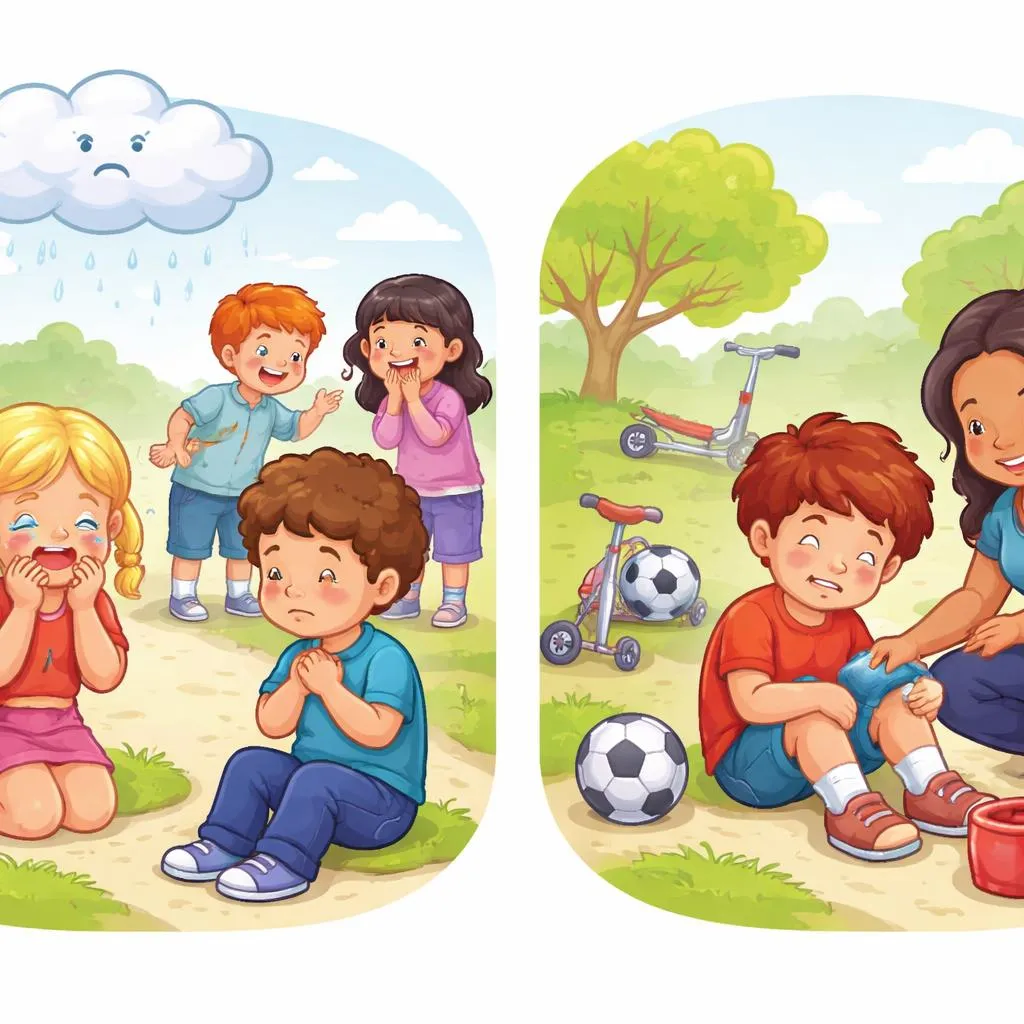

Hello, word explorer! Have you ever felt pain? Did you say "I hurt my finger!"? Did you hear "He got injured in the game"? They both seem to be about pain and damage. But are they the same? They are like two different levels of an "ouch". One is like a small, everyday alarm bell. One is like a big, serious warning siren. Let's find out! Today, we explore the word friends "hurt" and "injure". Knowing their secret is a superpower. It keeps you safe and makes you a clear communicator. Let's begin our safety word adventure!
First, let's be Pain Detectives. Listen at home. Here are two sentences. "Ouch! I just hurt my toe on the table leg!" "The soccer player had to leave the field because he injured his knee." They both involve body pain. A stubbed toe. A bad knee. Do they sound the same? One feels like a small, sudden pain. One feels like a bigger, more serious problem. Can you sense it? Great observation! Now, let's look closer.
Adventure! Into the World of Pain and Damage
Welcome to the world of owies and ouchies! "Hurt" and "injure" are about harm. But they are not the same. Think of "hurt" as the general, common word. It is for all kinds of pain. Think of "injure" as a more serious, specific word. It is for real physical damage. Both are about harm. But one is the "everyday ouch". One is the "serious damage". Let's learn about each one.
The General Pain vs. The Serious Harm Think about the word "hurt". "Hurt" feels common, personal, and immediate. It is the word you use most. Your feelings can hurt. Your body can hurt. It can be small or big. You can hurt someone's feelings. You can hurt your arm. Now, think about "injure". "Injure" feels more formal and severe. It often means real physical harm. A bad cut can injure you. A broken bone is an injury. "Hurt" is like a small bell ringing for any pain. "Injure" is like a loud alarm for serious harm. One is general. One is specific and serious.
A Minor Ouch vs. A Major Problem Let's compare their seriousness. "Hurt" is often less serious. It is the first word you use. My stomach hurts. This scratch hurts. "Injure" is for more serious harm. It often means you need help. The crash could injure the passengers. He injured his back badly. You can hurt your wrist playing. You can injure your wrist in a bad fall. "Hurt" is the feeling. "Injure" is the damage. One is often minor. One is often major.
Their Special Word Partners and Common Uses Words have best friends. "Hurt" loves common words and feelings. It really hurts. My head hurts. Hurt feelings. Hurt yourself. "Injure" loves serious, formal words. Badly injured. Seriously injured. Injure a muscle. Get injured. Note: You can say "I'm hurt" (feeling pain). You say "He is injured" (has a physical wound). You can "hurt yourself". A sport can "cause an injury".
Let's visit a school scene. In the playground, you trip and scrape your knee. It stings. You run to the teacher. You say, "I fell! My knee hurts!" This is a common report of pain. Later, in gym class, a student falls awkwardly from the climbing rope. They cannot stand on their ankle. The coach is very concerned. The coach says, "Don't move. You may have injured your ankle." The word "hurts" fits the report of pain from a scrape. The word "injured" fits the concern about serious possible damage.
Now, let's go to a different playground. You are playing tag. Your friend tags you too hard on the arm. It doesn't leave a mark, but it stings for a second. You might say, "Hey, that hurt!" This is about a momentary feeling. Later, imagine a high slide. A sign on it says, "Danger! Do not climb on the outside. You could fall and seriously injure yourself." The word "hurt" fits the temporary sting from play. The word "injure" fits the official warning about possible severe harm.
Our Little Discovery So, what did we find? "Hurt" and "injure" both involve harm or pain. But they are used differently. "Hurt" is the general, everyday word. It can describe physical pain, emotional pain, and it can be minor or major. "Injure" is a more serious, formal word. It usually means to cause physical damage to the body. Your finger can hurt from a paper cut. A bad accident can injure someone. Knowing this helps you describe small pains and big problems clearly.
Challenge! Become a Safety Word Champion
Ready for a nature test? Let's try your new skills!
"The Best Choice" Challenge Let's imagine a nature scene. A young fox is playing. It chases a butterfly and runs into a thorny bush. A few thorns prick its skin. The fox yelps and jumps back. The thorns made the fox hurt. The pain is sharp but small. Now, imagine a different scene. A deer is running very fast in the forest. It does not see a low branch. The deer crashes into the branch with its leg. It makes a bad sound. The deer cannot walk well on that leg. The deer may have injured its leg badly. "Hurt" wins for the fox's small, prickly pain. "Injure" is the word for the deer's possible serious leg damage. "Hurt" is the minor pain. "Injure" is the major harm.
"My Sentence Show" Your turn to create! Here is your scene: Watching or playing a sports game with friends. Can you make two sentences? Use "hurt" in one. Use "injure" in one. Try it! Here is an example: "The ball hit me in the arm during dodgeball. It really hurt for a minute!" This is about a temporary feeling of pain. "The player fell awkwardly and had to leave the game. He might have injured his shoulder." This is about serious physical harm. Your sentences will show the difference between a sting and a serious problem!
"Eagle Eyes" Search Look at this sentence. Can you find the word that could be better? Let's check a home context. "Be careful with that kitchen knife. You could easily injure your finger if you're not paying attention." Hmm. A small cut from a knife is painful. But it is usually a minor, common kitchen accident. The word "injure" is too strong and serious for a small cut. The word "hurt" is the better, more common choice. "Be careful with that kitchen knife. You could easily hurt your finger if you're not paying attention." Using "injure" here makes a small cut sound like a major wound. "Hurt" is the champion for this common warning. Did you spot it? Excellent word work!
Harvest and Action! Turn Knowledge Into Your Superpower
Great exploring! We started thinking "hurt" and "injure" were similar. Now we know they are two different safety words. "Hurt" is the everyday word for any kind of pain, big or small. "Injure" is the serious word for real physical damage. You can now talk about pain and problems with perfect accuracy. This is a great skill for staying safe and explaining things clearly.
What you can learn from this article: You can now see that to "hurt" is the general word for feeling or causing any kind of pain, which can be physical like a bruise or emotional like a sad feeling, and it can be a big or a small pain. You can now understand that to "injure" is a more serious word that usually means to cause real, physical damage to a part of the body, like a sprain, a cut needing stitches, or a broken bone. You know that you can say your stomach hurts after eating too much candy, but a doctor might say an athlete is injured and cannot play. You learned to match the word to the problem: "hurt" for general pain; "injure" for serious physical harm.
Life practice application: Try your new skill today! Be a safety word expert. Listen to how people talk about pain. Do they say "Ouch, that hurts!"? Do news reports say an athlete is injured? Next time you get a small scrape, describe it. Say, "I fell and hurt my elbow." If you read a story where a character breaks a leg, say, "The character injured their leg." Tell a friend the difference. You are now a master of safety words! Keep communicating clearly and staying safe.