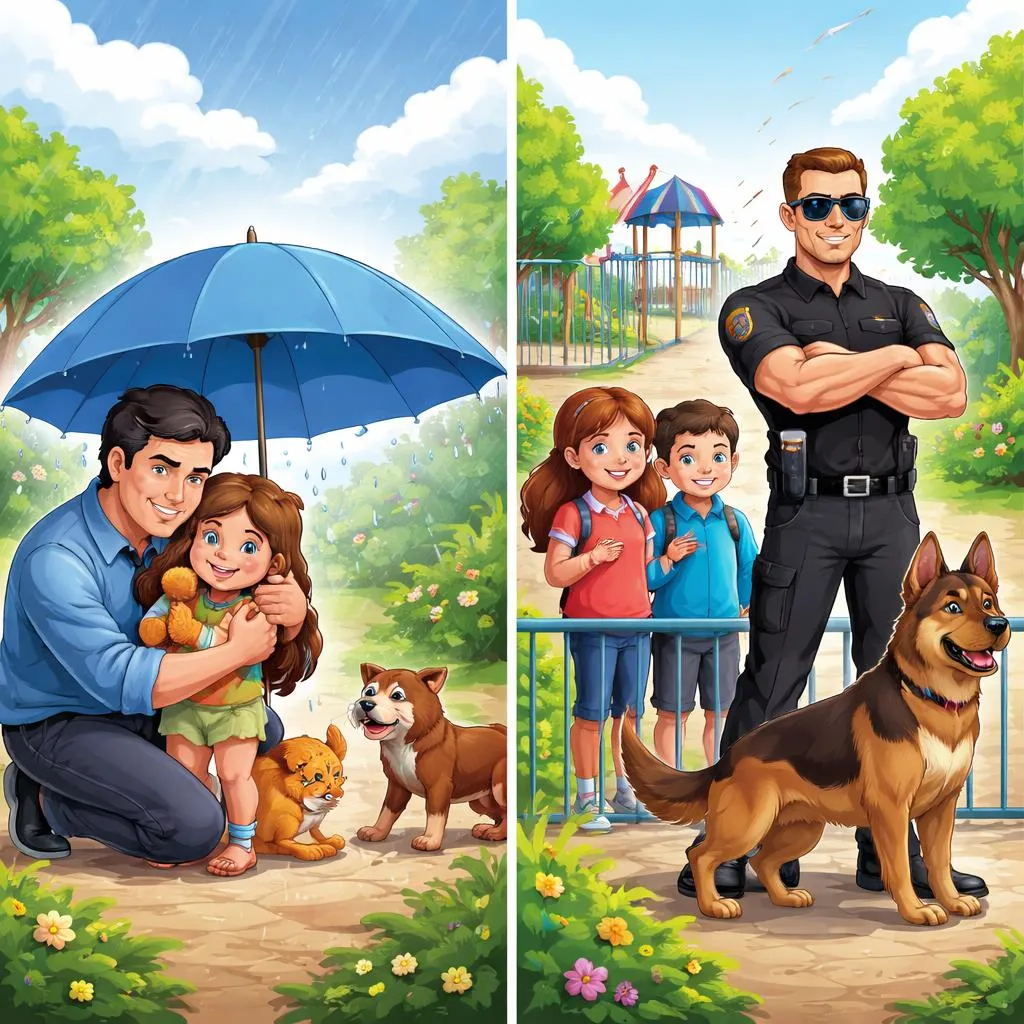

Hello, word explorer! Have you ever kept something safe? Do you protect your little brother on the playground? Do you guard your secret treasure box? They both seem to be about keeping safe. But are they the same? They are like two different kinds of shields. One is like a big, warm, all-around bubble. One is like a focused, watchful shield. Let's find out! Today, we explore the word friends "protect" and "guard". Knowing their secret is a superpower. It makes you a true safety hero. Let's begin our defense adventure!
First, let's be Safety Detectives. Listen at home. Here are two sentences. "My job is to protect my little sister at the park." "The knight's duty is to guard the castle gate all night." They both involve keeping safe. A sister. A castle gate. Do they sound the same? One feels like general, caring safety. One feels like focused, watchful duty. Can you sense it? Great observation! Now, let's look closer.
Adventure! Into the World of Keeping Safe
Welcome to the world of defense! "Protect" and "guard" are about safety. But they are not the same. Think of "protect" as the big, general, caring word. It is for keeping someone or something safe from harm. Think of "guard" as the focused, watchful, official word. It is for keeping careful watch over a specific thing or place. Both are about safety. But one is the "caring bubble". One is the "watchful shield". Let's learn about each one.
The Caring Safety vs. The Watchful Duty Think about the word "protect". "Protect" feels warm, general, and caring. It is about preventing harm. Parents protect their children. Sunscreen protects your skin. It is a wide, caring action. Now, think about "guard". "Guard" feels focused, alert, and official. It is about watching and defending. A soldier might guard a door. A dog can guard a house. "Protect" is like a warm blanket that covers you. "Guard" is like a flashlight beam watching one spot. One is general care. One is focused watch.
A General Duty vs. A Specific Watch Let's compare their focus. "Protect" is broader. It can be from many kinds of harm. Laws protect people. A helmet protects your head. "Guard" is more specific. It is about watching one thing closely. The goalie guards the goal. You can guard a secret. You protect the environment. A security camera guards the store. "Protect" is the big idea of safety. "Guard" is the act of watching over. One is the overall goal. One is the specific action.
Their Special Word Partners and Common Uses Words have best friends. "Protect" loves words about care, prevention, and value. Protect someone. Protect the environment. Protect from harm. Protect your eyes. "Guard" loves words about posts, duty, and specific things. Guard the door. Stand guard. Guard a secret. Security guard. Note: You can "protect against" something. You can be "on guard". You can have a "protective" parent. You can have a "bodyguard".
Let's visit a school scene. In science class, you learn about sea turtles. The teacher says, "We must work to protect sea turtles and their homes." This is about keeping them safe from many dangers. It is a broad, caring mission. Later, imagine a school play. You are in charge of the costume box. Your friend says, "Can you guard the treasure chest prop during lunch? It's very important for the show!" The word "protect" fits the big mission of saving animals. The word "guard" fits the specific job of watching one important item.
Now, let's go to the playground. You are building a huge sandcastle. A big wave might come! You build a wall around it. You say, "This wall will protect my castle from the water!" The wall is a general defense. Later, you and your friend find a cool shiny rock. You decide it is your team's treasure. You take turns watching it. Your job is to guard the treasure while your friend gets a bag. The word "protect" fits the wall's general defense. The word "guard" fits your focused, watchful turn.
Our Little Discovery So, what did we find? "Protect" and "guard" are about safety. But they are used differently. "Protect" is the general word for keeping someone or something safe from harm, danger, or damage. It is about care and prevention. "Guard" is more specific. It means to watch over someone or something to keep it safe, often from a specific threat. It is about being alert and on duty. A parent wants to protect their child. A security officer is hired to guard a building. Knowing this helps you talk about general care and specific watchfulness.
Challenge! Become a Safety Word Champion
Ready for a nature test? Let's try your new skills!
"The Best Choice" Challenge Let's imagine a nature scene. A mother bear has new cubs. She stays very close to them. She watches for any danger. She feeds them and keeps them warm. Her main job is to protect her cubs from all harm. This is her big, caring duty. Now, look at a beehive. Many worker bees have jobs. One important bee stands at the hive entrance. This bee's job is to guard the hive entrance from intruders. It watches one specific spot. "Protect" wins for the mother bear's overall, caring duty. "Guard" is the word for the bee's specific, watchful job at the entrance. "Protect" is the big mission. "Guard" is the specific post.
"My Sentence Show" Your turn to create! Here is your scene: Keeping something important safe during a game. Can you make two sentences? Use "protect" in one. Use "guard" in one. Try it! Here is an example: "In our game, my job is to protect the team's flag from the other players." This is my overall mission to keep it safe. "I will stand here and guard the flag while you go find our teammates." This is my specific, watchful action in one spot. Your sentences will show a mission and a specific duty!
"Eagle Eyes" Search Look at this sentence. Can you find the word that could be better? Let's check a home context. "My sunglasses are supposed to guard my eyes from the bright sun." Hmm. Sunglasses are a general shield. They are not actively watching. They just block the light. The word "protect" is the better, more common choice. "My sunglasses are supposed to protect my eyes from the bright sun." Using "guard" here makes the sunglasses sound like a watchful soldier. "Protect" is the champion for this general, preventive job. Did you spot it? Excellent word work!
Harvest and Action! Turn Knowledge Into Your Superpower
Great exploring! We started thinking "protect" and "guard" were similar. Now we know they are two different safety heroes. "Protect" is the big, caring word for keeping safe from harm. "Guard" is the focused, watchful word for defending a specific thing or place. You can now talk about safety and duty with perfect accuracy. This is a great skill for a good teammate and a careful friend.
What you can learn from this article: You can now see that to "protect" means to keep someone or something safe from harm or danger, which is a general, caring action, like a parent protecting a child or a helmet protecting your head. You can now understand that to "guard" means to watch over a specific person, place, or thing to keep it safe, which is a focused, alert duty, like a soldier guarding a gate or you guarding a secret. You know that a lifeguard works to protect all swimmers at the pool, but they might guard the deep end most closely. You learned to match the word to the action: "protect" for general safety and care; "guard" for specific, watchful defense.
Life practice application: Try your new skill today! Be a safety word expert. Look around you. What do you do to protect your belongings? Do you ever guard a spot in a game? Next time you read a story, notice the words. Say, "The knight vowed to protect the kingdom." or "The dragon guarded its treasure in the cave." Tell a friend about how you protect your pet or a toy. Describe a time you had to guard something. You are now a master of safety words! Keep being caring and watchful.