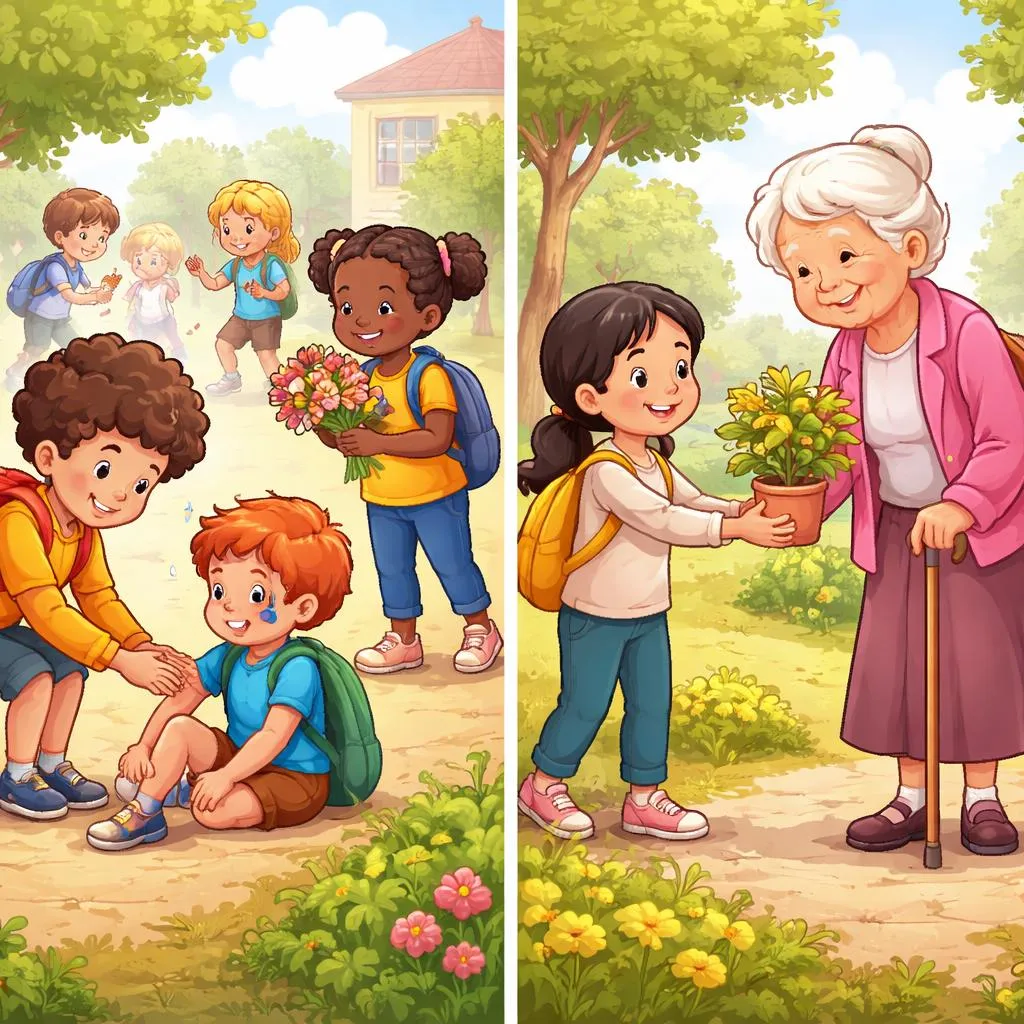

What Do These Expressions Mean? “Be kind” and “show kindness” both mean to act in a caring, gentle, and helpful way toward others. They tell a child to think about other people’s feelings and act in a way that makes them feel good. Children hear these words when sharing toys, helping a friend, or comforting someone sad. Both build good hearts.
“Be kind” is a direct instruction to act with kindness. It is short and clear. A parent says it when a child is about to speak harshly. It is a command.
“Show kindness” means to demonstrate kindness through your actions, not just feel it inside. It is a bit more specific. A parent says it when a child has the chance to help. It focuses on the action, not the feeling.
These expressions seem similar. Both mean “do something nice.” Both teach caring. But one is a general instruction while one focuses on the action.
What's the Difference? One is a general instruction to have a kind heart. One focuses on performing kind actions. “Be kind” is about your attitude and your character. It means “have a kind heart and let it guide you.” It is a way of being.
“Show kindness” is about doing specific kind acts. It means “let your actions prove that you are kind.” It is about demonstrating kindness to others.
Think of a child who sees a sad friend. “Be kind to her” means have a caring heart toward her. “Show kindness by giving her a hug” means do a specific kind act. One is about the feeling. One is about the deed.
One is for the heart. The other is for the hands. “Be kind” for your inner attitude. “Show kindness” for your outer actions. Use the first for character. Use the second for specific actions.
Also, “show kindness” is often used when there is a clear opportunity to help. “Be kind” is for all the time.
When Do We Use Each One? Use “be kind” for general character guidance. Use it at the start of the day, before a playdate, or in daily reminders. Use it to teach the overall value. It fits general talk.
Examples at home: “Always be kind to others.” “Be kind, even when you are angry.” “Be kind to the new student.”
Use “show kindness” for specific opportunities. Use it when there is a clear action to take. Use it to encourage a particular helpful act. It fits action talk.
Examples for actions: “Show kindness by sharing your snack.” “Now is a chance to show kindness. Go help him carry his bags.” “How can you show kindness to your sister today?”
Children can use both. “Be kind” for the heart. “Show kindness” for action. Both build a caring child.
Example Sentences for Kids Be kind: “Be kind to everyone, even strangers.” “Be kind, because kindness makes the world better.” “I try to be kind every day.”
Show kindness: “Show kindness by holding the door.” “You can show kindness by listening to a friend.” “Show kindness when you see someone sad.”
Notice “be kind” is about your character. “Show kindness” is about your actions. Children learn both. One for inside. One for outside.
Parents can use both. Morning reminder: “be kind.” Opportunity to help: “show kindness.” Children learn different kindness words.
Common Mistakes to Avoid Some children think “being kind” is the same as “being nice” for a reward. True kindness has no expectation of reward. Teach kindness from the heart.
Wrong: “I’ll be kind so I get a prize.” Better: “I’ll be kind because it is good.”
Another mistake: thinking “showing kindness” means grand gestures. Small acts of kindness matter too. A smile, a held door, a helping hand. Show kindness in little ways.
Wrong: “I have no money, so I can’t show kindness.” Right: “You can show kindness with a kind word.”
Some learners forget to show kindness to themselves. Being kind to yourself means resting, forgiving yourself, and speaking gently to yourself. Teach self-kindness too.
Also avoid saying “be kind” in a mean voice. Kindness must be taught kindly. Model the kindness you want to see.
Easy Memory Tips Think of “be kind” as a heart. The heart holds your feelings. For your inner attitude.
Think of “show kindness” as two hands giving. Hands do the action. For your outward acts.
Another trick: remember the focus. “Be kind” = who you are. “Show kindness” = what you do. Who you are gets “be kind.” What you do gets “show kindness.”
Parents can say: “Be for the heart. Show for the start.”
Practice at home. Morning: “be kind.” Help time: “show kindness.”
Quick Practice Time Let us try a small exercise. Choose the better phrase for each situation.
A parent gives a child a general rule for life. a) “Always show kindness.” b) “Always be kind.”
A child sees a friend drop their books. The parent wants the child to act. a) “Be kind to him.” b) “Show kindness. Help him pick up his books.”
Answers: 1 – a or b. Both work. “Be kind” is more about character. 2 – b. A specific act of help fits the action “show kindness.”
Fill in the blank: “When I remind my child to have a good heart all day, I say ______.” (“Be kind” is the character-focused, inner-attitude, daily choice.)
One more: “When I see a chance for my child to help someone, I tell them to ______.” (“Show kindness” fits the action-focused, specific-opportunity description.)
Kindness changes the world. “Be kind” builds the heart. “Show kindness” moves the hands. Teach your child both. A child who learns both will be kind inside and kind outside.