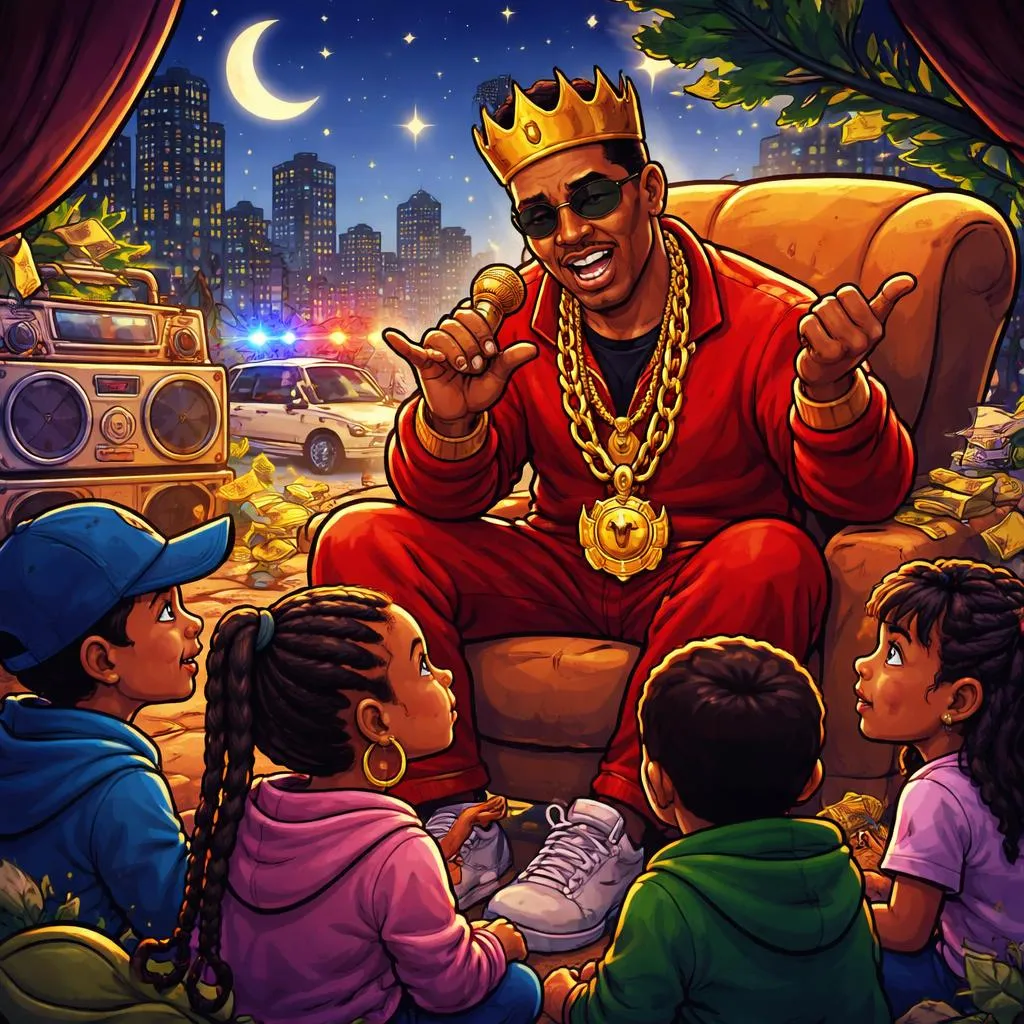

What Is Slick Rick's "Children's Story"? Let us explore this famous hip hop track together. "Children's Story" is a song by British-American rapper Slick Rick. It was released in 1988 on his album "The Great Adventures of Slick Rick." The song tells a story about a young boy who makes bad choices. He gets involved with criminal activity and faces terrible consequences. The song is notable for its narrative style and storytelling. Slick Rick raps in a distinctive British-accented voice. The song serves as a cautionary tale for young listeners. It warns about the dangers of choosing the wrong path. The track became one of hip hop's most famous storytelling songs. It has been sampled and referenced by many other artists. The "Children's Story" remains influential decades after its release.
Meaning and Purpose of "Children's Story" The song serves as a powerful cautionary tale for young people. It tells of a boy who rejects school and good advice. He chooses to run with a crowd that leads him wrong. The story shows the consequences of those choices clearly. The boy ends up in a situation that costs him his life. The message is clear: choices have consequences. Slick Rick presents this message through engaging storytelling. Listeners feel the story rather than just hearing a lecture. The song also showcases hip hop's power as storytelling medium. It proves rap can tell complex narratives effectively. The track remains relevant for teaching about choices and consequences.
The Year 1988 in Hip Hop History 1988 was a landmark year for hip hop music. It is often called hip hop's golden era. Many classic albums were released during this year. Public Enemy's "It Takes a Nation of Millions" came out. Eric B. & Rakim released "Follow the Leader." Big Daddy Kane, EPMD, and others dropped classic albums. "Children's Story" was part of this incredible musical moment. The song stood out for its narrative focus. Most hip hop at the time focused on party rhymes or political messages. Slick Rick's storytelling approach was unique and influential. The song helped expand what hip hop could do artistically. It showed rap could be a vehicle for complex storytelling.
Vocabulary Learning From "Children's Story" The song introduces vocabulary worth discussing with older children. Cautionary means giving advice or a warning. Consequence means a result or effect of an action. Narrative means a spoken or written account of events. Moral means a lesson learned from a story. Influence means the capacity to have an effect on character or behavior. Classic means judged over time to be of high quality. Golden age means a period of great achievement. Storytelling means the activity of telling or writing stories. Sample means to take a portion of one sound recording and reuse it. Legacy means something handed down from the past. We can teach these words with examples from music history. Use them in sentences about the song's meaning and impact.
Phonics Points in "Children's Story" The song provides interesting phonics practice with rhyming patterns. Slick Rick uses complex internal rhymes throughout. Listeners can identify words that share ending sounds. The storytelling format emphasizes clear pronunciation. Rappers must articulate clearly to tell the story. Consonant sounds are crisp and easy to distinguish. Vowel sounds are elongated for rhythmic effect. The British accent adds another layer of phonetic interest. Students can compare pronunciation differences. Word families appear throughout the lyrics. Rhyming words create patterns that aid memory. We can focus on identifying rhyming pairs in the lyrics. Notice how Slick Rick maintains rhyme schemes throughout verses.
Grammar Patterns in "Children's Story" The song models storytelling grammar in rap format. Past tense carries the main narrative throughout. "A young boy was tempted to do wrong." Present tense appears in dialogue and commentary. "The moral of this story is..." Future tense shows what will happen. "He'll regret the choices that he makes." Questions appear in the narrative. "What would you do if you were in his place?" Commands warn listeners about choices. "Don't follow the crowd that leads you wrong." Descriptive language paints vivid pictures. "The dark, lonely streets where trouble waits." Prepositional phrases describe locations and situations. "In the alley, on the corner, at the crossroads." We can point out these patterns during lyric analysis.
Daily Life Connections Through the Song The song's themes connect to real life for older children. Making choices between right and wrong happens daily. Peer pressure influences decisions at every age. School may seem boring but provides important foundation. Friends can lead us toward good or bad choices. Consequences follow every action we take. The song's message transcends its specific story. It speaks to universal human experiences. Older children can discuss how the themes apply today. Are the choices young people face similar? What pressures do modern kids experience? How can they avoid the story's tragic ending? These discussions make the song relevant across generations.
Learning Activities for "Children's Story" Many activities deepen engagement with the song's themes. Listen to the song and discuss the story's message. Identify the main character's choices and their results. Write a modern version of the cautionary tale. Update the setting but keep the message. Create a rap of your own telling a story with a moral. Practice storytelling through rhythmic speech. Discuss peer pressure and how to resist it. Role-play scenarios where friends make bad suggestions. Compare the song to fables like "The Boy Who Cried Wolf." Notice how stories teach lessons across cultures. Design a poster illustrating the song's warning. Share the message visually with others.
Printable Materials for Song Study Printable resources support deep engagement with the song. Create lyric analysis sheets with key lines and questions. What does this line mean? What is the message? Design a story map tracking the narrative elements. Characters, setting, problem, choices, consequences. Make vocabulary cards with words from the song. Cautionary, consequence, narrative, moral, influence included. Create a comparison chart for different versions of the song. Note how remixes or covers change the message. Design a creative writing template for modern cautionary tales. Plan characters, setting, bad choice, and consequences. Make a discussion guide for group conversations about the song. Questions to spark meaningful dialogue included. These printables structure song analysis activities effectively.
Educational Games About the Song Games make song learning playful and interactive. Play "Story Sequence" arranging events from the song in order. Put the boy's choices and consequences in correct sequence. Create "Rhyme Match" identifying rhyming pairs from lyrics. Match words that share ending sounds. Play "Moral of the Story" discussing what each part teaches. Identify lessons from different sections of the song. Design "Choice Consequence" cards with scenarios from the song. Match each bad choice with its result. Play "What Would You Do?" with modern parallel situations. Discuss better choices for similar scenarios. Create "Rap It Yourself" where groups write cautionary verses. Share original raps with the class. These games build understanding through active participation.
Teaching About Choices and Consequences The song provides perfect material for discussing choices. Every decision we make leads to consequences. Small choices can lead to big outcomes. The boy in the story made a series of bad choices. Each choice made the next one easier. Soon he was trapped in a situation he couldn't escape. Children can learn to think before they act. They can consider potential outcomes of their choices. They can seek advice from trusted adults. They can choose friends who make good decisions. These lessons apply throughout life. The song makes them memorable and real.
Slick Rick's Place in Music History Slick Rick holds an important place in hip hop history. He was born in London and moved to New York as a child. His British accent made his style completely unique. His storytelling ability influenced countless later rappers. He showed that hip hop could tell complex stories. His debut album is considered a classic of the genre. "Children's Story" remains his most famous track. It has been sampled by artists across multiple genres. Its message continues to resonate with new listeners. Slick Rick's legacy as a storyteller endures. He proved that rap could be narrative art.
The Song's Legacy for Children's Music "Children's Story" occupies a unique place in children's music. It wasn't made specifically for children originally. Yet its cautionary message speaks to young people. The storytelling format engages young listeners effectively. The hip hop style appeals to older children and teens. Parents can use the song to start important conversations. The song bridges generations of music listeners. Grandparents who heard it in 1988 can share it with grandchildren. Its message remains as relevant today as then. The song proves that good storytelling transcends time. It continues to find new audiences decades later.