
Start! Find a Pair of 'Tiny Twin' Words
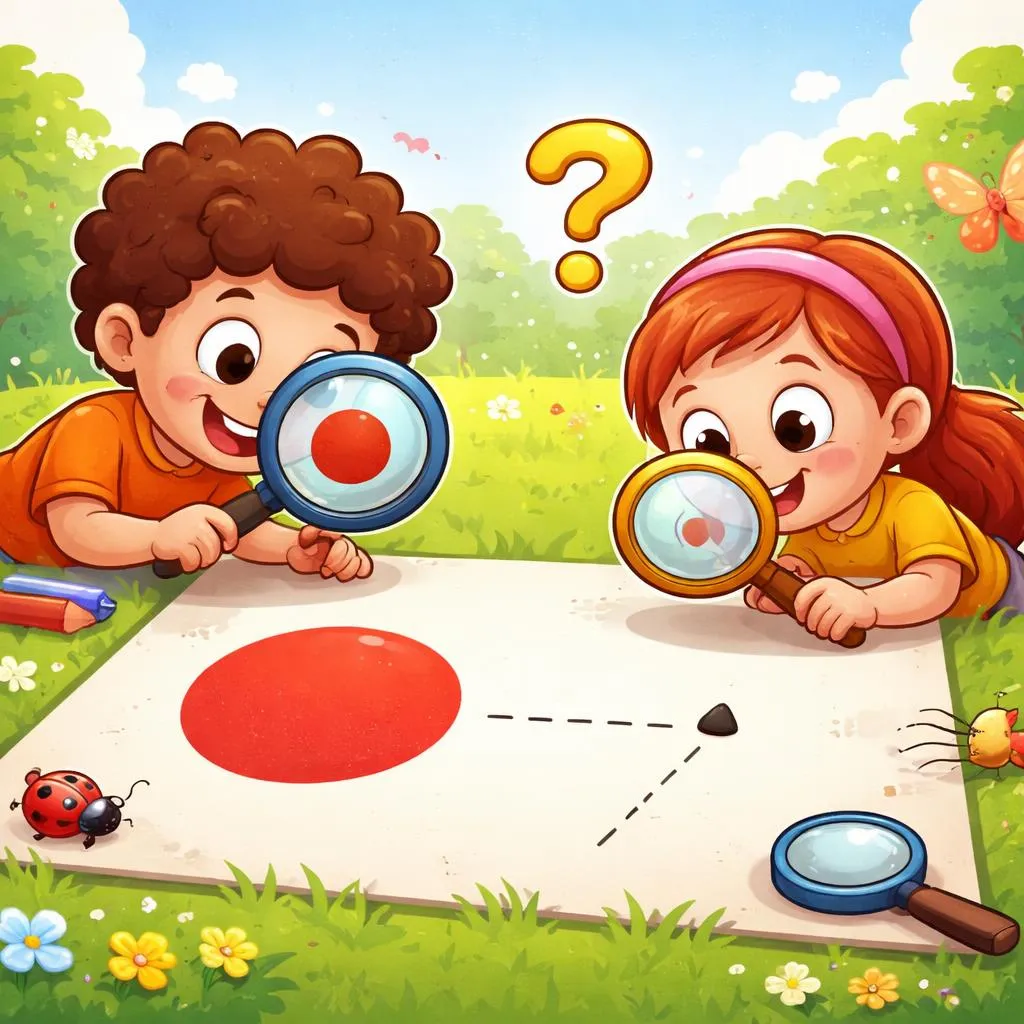
Hello, word artist! Look at a piece of paper. Make a small mark with your pencil. You just made a dot! Now, think about the tip of a pencil or a location on a map. That is a point. They are both tiny and specific. Are they the same? This is a fun word puzzle. Today we explore a word pair. We explore dot and point. They are like a spot and a place. One is a mark. One is a position. Knowing the difference is a superpower. Your talk about writing and math will be clear and smart. Let us start our word drawing!
Be a Language Observer now. Our first clue is at home. You write the letter 'i'. You add a dot above it. Your dad points to a map. He says, "We are at this point on the trail." They are both small. But are they the same? Let us test with two sentences.
"She put a red dot on her calendar for her birthday." This is about a small, round mark. "Turn left at the point where the two roads meet." This is about a specific location or moment.
They both indicate a small, precise spot. But one is a visible mark. One is an idea of a place or time. Your observation mission starts. Let us mark our way into their word world.
Adventure! Mark Your Way Into the Word World
Feel the Word's Mark and Idea Vibe!
Feel the word dot. It is a visual, physical word. It feels like a spot, a speck, a mark you can see. It is a small, round shape. The word point is a conceptual, locational word. It feels like a moment, a place, or a sharp tip. It is an idea of a specific spot. Dot is the ink spot. Point is the "where" or "when." One is a thing. The other is a concept. Let us see this at school.
In a writing class, you learn to dot your 'i's. This is about making a visible mark. In a math class, you plot a point on a graph. This is about marking a location with coordinates. Saying "dot on a graph" is less precise. The feeling of the words is different. One is about the mark itself. The other is about the position it represents.
Compare Their Physical and Conceptual Nature!
Think about a freckle on your nose and the idea of "north." The word dot is the freckle. It is a small, physical spot. The word point is the idea of "north." It is a direction or a specific idea. Their nature is the key. A dot is what you see. A point is what you mean. A pencil has a sharp point. The pencil can make a dot. Let us test this on the playground.
You dip your finger in paint and press it on paper. You say, "I made a purple dot!" Your friend stands on a specific spot on the field. He says, "This is the starting point for the race." The word dot describes the physical paint mark. The word point describes the conceptual location for the race. The playground shows the difference.
Meet Their Best Word Friends!
Words have favorite tiny partners. The word dot likes visual and mark words. It teams up with 'polka', 'on the', 'connect the', 'tiny', 'pixel', and 'com'. Her dress has polka dots. Connect the dots to see the picture. The word point likes conceptual and location words. It teams up with 'boiling', 'view', 'make a', 'starting', 'sharp', and 'of no return'. Make a good point. The water reached the boiling point. Their partners are different. Let us go back to school.
In a computer class, you might see a dot in a website address. This is a punctuation mark. In a science class, you learn the melting point of ice. This is a specific temperature. You would not say the "melting dot." The word friends lock in the meaning.
Our Little Discovery!
We marked spots in the word world. We made a clear discovery. The words dot and point are different. The word dot is a small, round mark. It is something you can see. The word point is a specific place, moment, or idea. It can also mean a sharp tip. A dot is a visual spot. A point is a conceptual spot. One is the mark. The other is the meaning of the mark. This is the main difference.
Challenge! Become a Tiny Word Expert
"Best Choice" Challenge!
Let us look at a nature scene. A ladybug has black spots on its red wings. Each spot is a small, round dot. Is it Dot or Point? The champion is Dot! The ladybug's spots are visible marks. Now, imagine a story about a compass. The needle always swings toward a specific direction. It points to a point on the compass. Is it dot or point? The champion is point! This is a specific location or direction, not just a mark. Excellent!
"My Sentence Show"!
Now, create your own sentences. Here is a fun scene: Imagine a painting with small, round marks. Use the word dot in one sentence. Now imagine a specific moment in a story. Use the word point in another. Try it! Here is an example. Sentence one: "The artist used yellow dots to paint stars in the sky." Sentence two: "At that point in the tale, the hero made a brave choice." See the difference? The first is about visible marks in art. The second is about a specific moment in time.
"Eagle Eyes" Search!
Can you find the word that needs help? Read this sentence: "On the map, a small dot marked the exact dot where the treasure was buried." Hmm. This is repetitive and mixes the concepts. The first "dot" is the mark. The second should be point, meaning the exact location. A better sentence is: "On the map, a small dot marked the exact point where the treasure was buried." You fixed it!
What a precise marking session in the word world! You started as a curious marker. Now you are a word cartographer. You know the secret of dot and point. You can feel their different mark and idea vibes. You see their physical and conceptual nature. You know their best word friends. This is a real language superpower.
You can learn amazing things from this article. You now know that a 'dot' is a small, round, visible mark, like a spot or a speck. You understand that a 'point' is a specific place, moment, or idea, like a location on a map or a sharp tip. You can explain that a dot is what you see, and a point is what you mean. You learned phrases like 'connect the dots' and 'boiling point'.
How can you use this today? It is easy and fun. Look at a printed page. See the dots in the pictures. Look at a map. Find a point of interest. In art, you can paint with dots. In a story, you can talk about the turning point. Draw two pictures. Draw a picture using only dots. Draw a map with a point marked. You are using your new skill every day.
Keep your explorer eyes and mind open. The world is full of tiny marks and important points. You are learning the words to describe them all. Great work, word expert. Your English journey is getting more precise and pointed with every new word pair you discover!