
Meaning
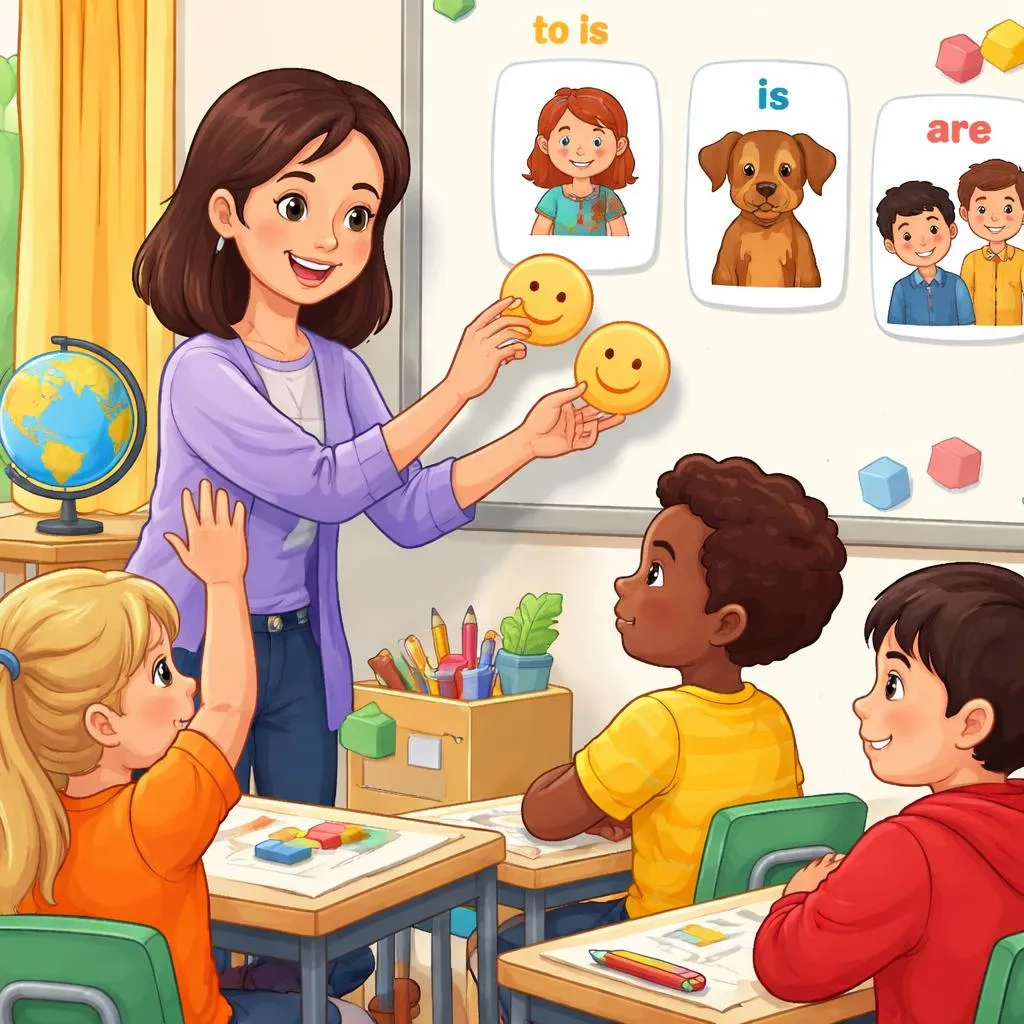
The phrase “what is the verb to be” often appears in early English lessons. The verb to be is one of the most important verbs in English. It describes identity, condition, and existence.
In teaching practice, the verb to be connects a subject to information. For example, “I am a teacher.” The verb “am” links “I” and “a teacher.”
This verb does not describe action. It describes state or identity. That makes it different from verbs like run, eat, or play.
In early grammar instruction, the verb to be forms the foundation of sentences. It appears in daily speech, classroom language, and written texts.
Conjugation
The verb to be changes form. This change depends on subject and tense.
In English, the base form is be. The present forms are am, is, are. The past forms are was, were.
Teachers often call this conjugation. Conjugation means changing a verb to match the subject and time.
In classroom instruction, conjugation practice builds accuracy. It helps learners speak and write correct sentences.
Understanding conjugation also supports reading comprehension. Learners recognize different forms of the same verb.
Present tense
In the present tense, the verb to be has three main forms. These forms are am, is, and are.
“I am happy.” “You are a student.” “He is a teacher.”
These sentences show identity and condition. They also show subject-verb agreement.
Teachers often highlight subject pronouns with the verb to be. This supports pronoun learning and sentence building.
In guided practice, learners can describe people and objects. For example, “The dog is big.” “The books are on the table.”
The present tense of the verb to be also appears in daily classroom routines. “It is Monday.” “We are in English class.”
These expressions create authentic language input.
Past tense
The past tense of the verb to be uses was and were. These forms describe states or identities in the past.
“I was tired.” “They were excited.”
Teachers can connect past tense to storytelling. For example, “Yesterday, the class was quiet.”
The contrast between was and were supports subject-verb agreement. “I was” and “he was” use singular form. “You were” and “they were” use plural form.
In classroom narratives, teachers can model past tense sentences. This builds narrative skills and temporal awareness.
The verb to be in the past tense also supports questions and negatives. “Was it fun?” “They were not late.”
Future tense
The verb to be forms the future tense with will be or going to be. These forms express future states and identities.
“I will be a teacher.” “She is going to be happy.”
Teachers can use future tense to discuss goals and plans. This integrates grammar with personal expression.
Future tense practice encourages predictive thinking. It also supports functional communication in planning tasks.
In classroom activities, learners can describe future events. “The test will be easy.” “The trip is going to be fun.”
The verb to be remains central in these sentences. It links subjects with future descriptions.
Questions
The verb to be forms questions by inversion. This means the verb comes before the subject.
“Am I late?” “Is he your friend?” “Are they ready?”
Teachers can model yes-no questions and short answers. “Yes, I am.” “No, she is not.”
Question practice supports conversational skills. It encourages interaction and classroom dialogue.
In past tense, questions use was and were. “Was it cold?” “Were you at school?”
In future tense, questions use will be. “Will you be there?”
This pattern shows how the verb to be structures English questions.
Other uses
The verb to be appears in many grammatical structures. It forms continuous tenses with other verbs.
“She is reading.” “They were playing.”
It also forms passive structures. “The book is read by many people.”
In adjective phrases, the verb to be links subjects and descriptions. “The sky is blue.” “The lesson is interesting.”
It also appears in existential sentences. “There is a book.” “There are two pens.”
Teachers can introduce these structures gradually. Each structure builds on the core meaning of the verb to be.
This verb also appears in idiomatic expressions. “It is time.” “It is raining.”
These expressions show natural English usage.
Learning tips
Teachers often introduce the verb to be with simple charts. Visual tables help learners see am, is, and are clearly.
Repetition in meaningful contexts supports retention. Daily classroom sentences reinforce patterns.
Sentence frames help guided practice. For example, “I am ___.” “This is ___.”
Choral speaking can build confidence. Learners repeat sentences together with rhythm.
Songs and chants also support memorization. Rhythm helps internalize forms of the verb to be.
Error correction should focus on clarity and encouragement. Teachers model correct forms instead of highlighting mistakes.
Context-based practice enhances understanding. Learners describe real objects, people, and feelings.
Educational games
Games make grammar practice engaging. One game uses sentence cards. Learners match subjects with correct forms of the verb to be.
Another game uses classroom scavenger hunts. Learners say sentences like “This is a book” or “The door is open.”
Role-play activities support speaking practice. One learner asks questions. Another learner answers using the verb to be.
Board games can include grammar challenges. Each square requires a sentence with am, is, or are.
Digital quizzes and interactive apps also support practice. Immediate feedback strengthens accuracy.
Story-building games encourage creativity. Learners create simple stories using was and were.
These activities integrate grammar with communication. They transform abstract rules into meaningful language use.
The verb to be stands at the core of English grammar instruction. It supports identity, description, time reference, and structure. With guided teaching, clear examples, and engaging activities, this verb becomes a strong foundation for English communication and literacy development.