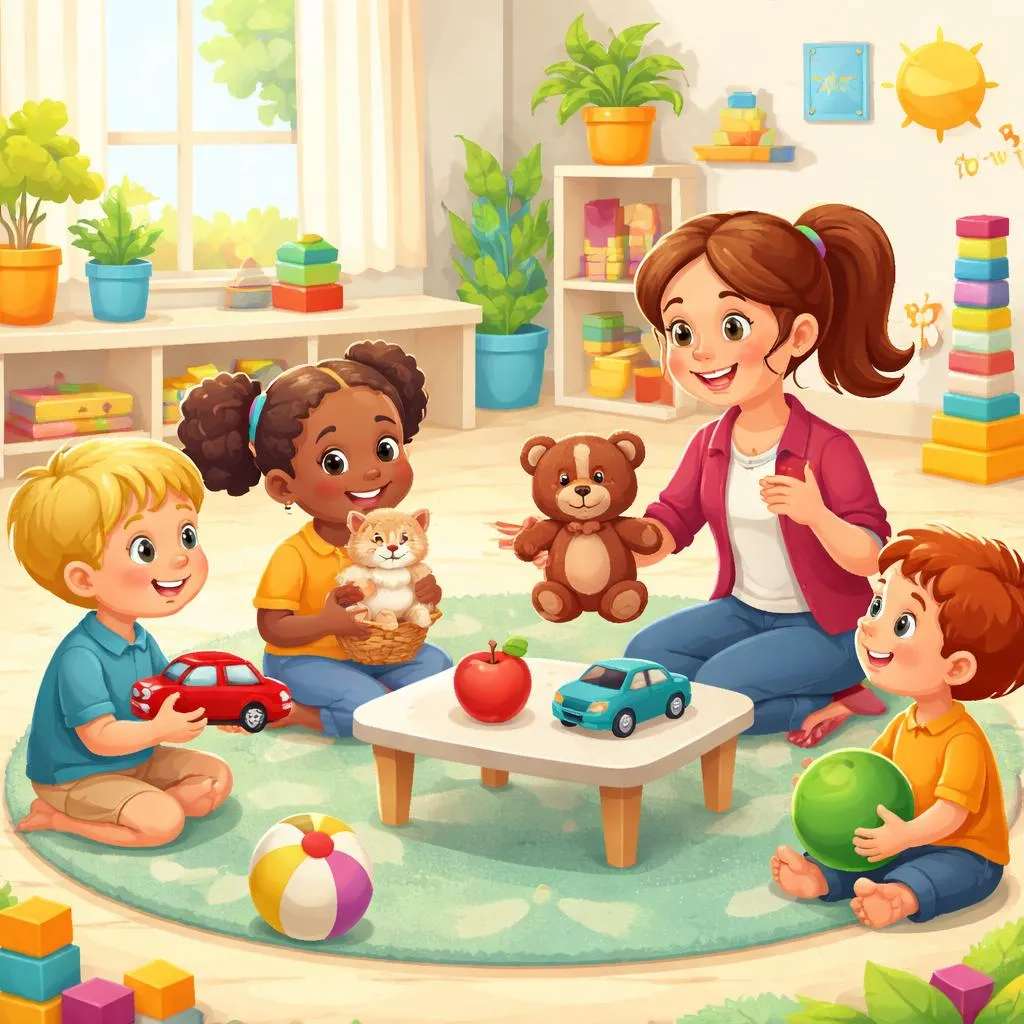

The verb "to have" is one of the most important words in the English language. Children use it constantly to talk about what belongs to them, what they experience, and what they do. Today, we are going to explore what is to have and discover how to help young learners understand and use this essential verb correctly.
Meaning Let us start with the basic question. What does the verb "to have" mean? The verb "to have" shows possession or ownership. When we say someone has something, we mean that thing belongs to them or is with them.
"I have a dog." This means the dog belongs to me. "She has a new bicycle." This means the bicycle belongs to her. "They have a big house." This means the house belongs to them.
But "to have" means more than just ownership. It also shows relationships. "I have a sister." This means I am part of a family with a sister.
It shows characteristics. "He has blue eyes." This describes a feature of his appearance.
It shows experiences. "We have fun at the park." This describes an experience.
It shows actions. "She has breakfast at seven." This describes a daily routine.
The verb "to have" is everywhere in English. Children need to understand its many uses.
Conjugation Now we need to understand how the verb "to have" changes based on the subject. This is called conjugation. The verb changes form in the present tense.
Present tense forms: I have You have We have They have He has She has It has
Notice the pattern. For I, you, we, and they, we use "have." For he, she, and it, we use "has." This is the basic rule that children must learn.
Past tense forms: I had You had We had They had He had She had It had
In the past tense, everyone uses "had." There is no difference between subjects. This makes the past tense simpler than the present tense.
Future tense forms: I will have You will have We will have They will have He will have She will have It will have
In the future tense, we use "will have" for all subjects. This is consistent and easy for children to learn.
Present Tense The present tense is where children use the verb "to have" most often. We use it to talk about things that are true now.
Possession in present: "I have a red ball." "You have a blue crayon." "We have two cats." "They have a big yard." "He has a new toy." "She has a pretty dress." "It has a long tail."
Relationships in present: "I have a brother." "She has two sisters." "They have a baby."
Characteristics in present: "He has brown hair." "She has a smile." "It has soft fur."
Routines in present: "We have breakfast at eight." "She has music class on Tuesday." "They have dinner together."
When we teach present tense, we focus on the subject-verb agreement. Children need to hear and practice the pattern: I have, you have, we have, they have, but he has, she has, it has.
Past Tense The past tense "had" is used for all subjects. We use it to talk about things that were true in the past but may not be true now.
Possession in past: "I had a puppy when I was little." "She had a blue bicycle." "They had a pet rabbit."
Relationships in past: "He had a best friend in preschool." "We had a nice teacher last year."
Characteristics in past: "She had long hair before the haircut." "It had a broken wing."
Experiences in past: "We had fun at the party." "They had a good time on vacation." "I had a strange dream."
The past tense tells us the situation is finished. The puppy is gone. The bicycle is no longer hers. The party is over.
Future Tense For the future tense, we use "will have" for all subjects. We talk about things that will happen later.
Possession in future: "I will have a birthday party next week." "She will have a new baby sister." "They will have a new car."
Experiences in future: "We will have fun at the zoo." "He will have a turn soon."
Routines in future: "We will have dinner at six." "They will have a test on Friday."
We can also use "going to" for the future. "I am going to have a party." "She is going to have a baby." This is another common way to express future meaning.
Questions Forming questions with the verb "to have" follows clear patterns. Children need lots of practice with these structures.
Present tense questions: "Do I have a turn?" "Do you have a pencil?" "Do we have time?" "Do they have children?" "Does he have a bike?" "Does she have a cold?" "Does it have a name?"
Notice that when we use "do" or "does," the main verb goes back to "have." Not "does he has," but "does he have."
Past tense questions: "Did I have a turn?" "Did you have fun?" "Did we have enough?" "Did they have food?" "Did he have a bike?" "Did she have a cold?" "Did it have a name?"
In past tense, we use "did" for all subjects, and the main verb is "have."
Future tense questions: "Will I have a turn?" "Will you have time?" "Will we have fun?" "Will they have food?" "Will he have a bike?" "Will she have a baby?" "Will it have a name?"
In future tense, we move "will" to the front.
Other Uses of Have Beyond possession, the verb "to have" has many other important uses. Children encounter these in daily language.
Have for meals: "We have breakfast at seven." "Let's have lunch together." "They have dinner at six."
Have for experiences: "Have a good time!" "We have fun at the park." "She has a wonderful vacation."
Have for feelings: "I have a headache." "He has a cold." "She has fun."
Have for actions: "Have a shower." "Have a nap." "Have a conversation."
Have in expressions: "Have a good day." "Have a seat." "Have a look." "Have a try."
Have got: In informal English, we often use "have got" to mean the same as "have." "I have got a dog" means the same as "I have a dog." This is very common in speaking.
Learning Tips for To Have Teaching the verb "to have" requires specific strategies. Here are tips that work well with young learners.
Start with the present tense and concrete objects. Hold up a pencil and say, "I have a pencil." Give a child a pencil and say, "You have a pencil." Use real objects children can see and touch.
Practice the "has" form separately. Children often forget the "s" on "has." Spend extra time on he/she/it examples. Use pictures of one person or animal. "He has. She has. It has."
Use songs and chants. Create simple chants with the patterns. "I have, you have, we have, they have. He has, she has, it has." Rhythm helps memory.
Practice questions and negatives together. "Do you have a dog? No, I don't have a dog. I have a cat." This builds natural conversation patterns.
Use stories. Books like "Brown Bear, Brown Bear" can be extended with "has" questions. "What does the brown bear have? It has brown fur."
Common Mistakes with To Have Children make predictable mistakes with the verb "to have." Knowing these helps us address them gently.
One common mistake is using "have" with he, she, or it. "He have a ball" should be "He has a ball." Gentle correction and repetition help.
Another mistake is forgetting to change "has" back to "have" in questions. "Does she has a cat?" should be "Does she have a cat?" Explain that "does" already shows the present tense, so the main verb goes back to base form.
Some children use "have" in the past tense incorrectly. "I have a cold yesterday" should be "I had a cold yesterday." Explain that "have" is for now, "had" is for before.
Word order in questions can be tricky. "You have a pencil?" should be "Do you have a pencil?" for a question. Practice the question pattern many times.
Educational Games for To Have Games make grammar practice fun and memorable. Here are some games to practice the verb "to have."
Who Has It? Game: Give each child a small object or card. Ask questions like "Who has the red crayon?" The child with that item stands up and says, "I have the red crayon." Then that child asks the next question. This practices both questions and answers.
Have/Has Sort: Prepare sentence cards. Some need "have" and some need "has." Children sort them into two piles. "I ___ a ball" goes in the "have" pile. "She ___ a ball" goes in the "has" pile. This builds subject-verb agreement.
Memory Chain Game: Start with a sentence. "I have a cat." The next child repeats and adds. "She has a cat, and I have a dog." The next continues. "She has a cat, he has a dog, and I have a fish." This builds memory and grammar together.
Picture Description Game: Show a busy picture with many people and objects. Ask children to describe what they see using "have" and "has." "The girl has a balloon. The boy has an ice cream. The dog has a bone." This builds observation and language skills together.
Have Bingo: Create bingo cards with pictures of people and objects. Call out sentences. "She has a red balloon." Children cover the picture that matches. This builds listening comprehension.
Question and Answer Game: Practice questions and answers in pairs. One child asks, "Does Maria have a pencil?" The other looks and answers, "Yes, she does" or "No, she doesn't." This builds natural conversation skills.
Using To Have in Stories Stories are wonderful for practicing the verb "to have." Many children's books use this word frequently.
"The Very Hungry Caterpillar" by Eric Carle uses "had" repeatedly. "On Monday, he had one apple. On Tuesday, he had two pears." This book is perfect for practicing past tense.
"Brown Bear, Brown Bear, What Do You See?" by Bill Martin Jr. can be extended with "has" questions. "What does the brown bear have? It has brown fur and sharp claws."
"Have You Seen My Duckling?" by Nancy Tafuri uses the question form repeatedly. Children practice "have" in questions throughout the book.
After reading, children can create their own "have" and "had" stories. "I have a pet cat. I had a pet fish before." This builds confidence and creativity.
Daily Practice Opportunities The best practice for the verb "to have" happens in daily conversation. Throughout the day, we have many opportunities to use this verb.
During morning meeting, talk about what children have. "Maria has a new backpack. Juan has a blue crayon. The class has a pet fish."
During show and tell, children describe their items using "have." "My toy robot has red eyes. It has movable arms. It has wheels on its feet."
During snack time, talk about what everyone has. "Emma has an apple. Liam has crackers. The table has a napkin for everyone."
During reflection time, use past tense. "What did we have for snack today? We had apples and crackers. What fun did we have? We had music class."
These natural conversations provide meaningful practice without feeling like lessons.
As we explore what is to have with young learners, we help them express ownership, relationships, characteristics, and experiences. They learn to talk about what people and things have, had, and will have. Through games, stories, and daily conversations, the verb "to have" becomes a natural part of their English. This essential verb opens up rich possibilities for describing the world around them and their place in it.