
What Is This Animal?
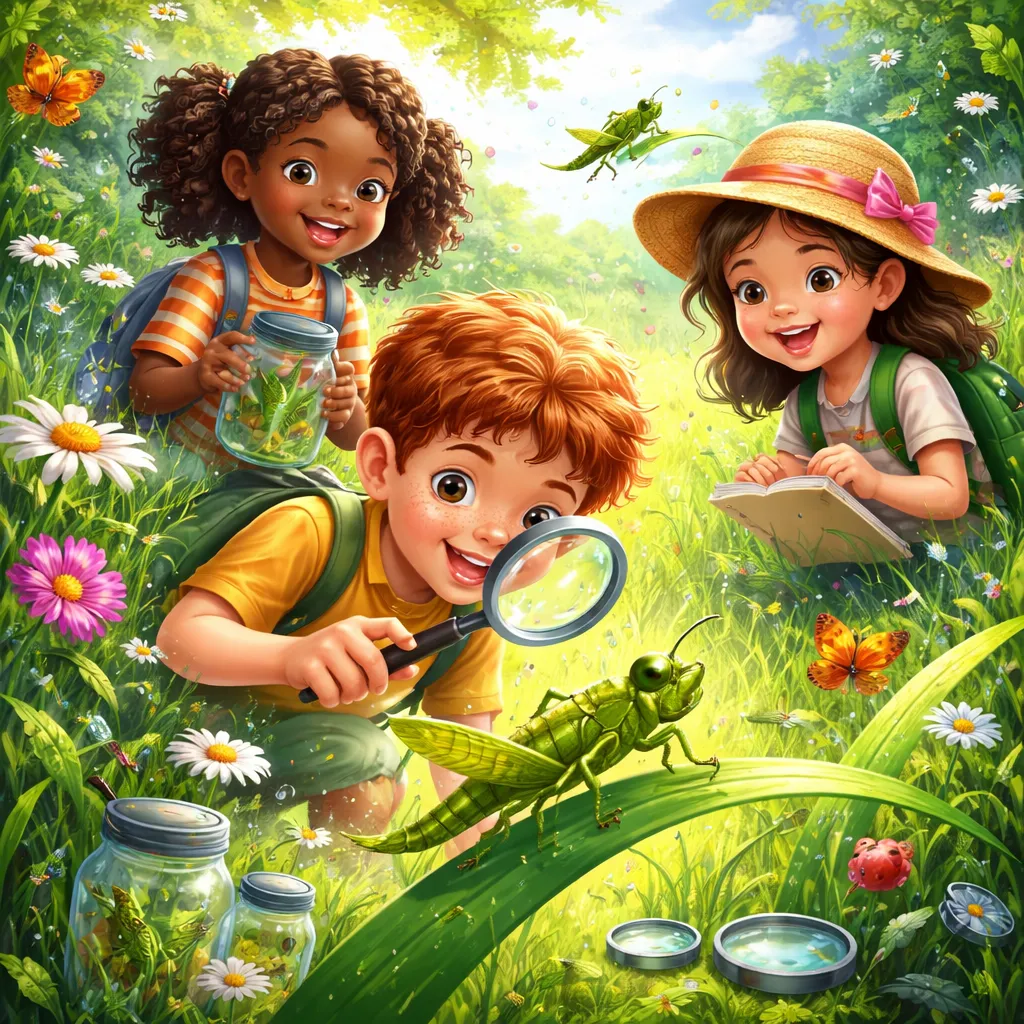
A grasshopper is an insect with long, powerful back legs. It uses these legs to jump great distances. Its body is long and narrow. Its wings fold flat along its back. Grasshoppers come in shades of green, brown, or yellow. These colors help them blend into grass and leaves.
Grasshoppers are known for their jumping ability. They can leap twenty times their body length. They use this skill to escape danger. They also use their wings to fly short distances. When they jump, they make a soft rustling sound.
These insects live in fields, meadows, and gardens. They like warm, sunny places with plenty of plants. You can find them resting on grass stems or leaves. They often hide when people walk near. But they are easy to spot when they jump.
For children, grasshoppers are fun to watch. Their big eyes and strong legs look interesting. Their sudden jumps make children laugh. Grasshoppers are gentle insects. They do not bite or sting. They are safe to observe in the garden.
English Learning About This Animal
Let us learn the English word grasshopper. We say it like this: /ˈɡræshɒpər/. The word has two parts. Grass sounds like “gras.” Hopper sounds like “hop-er.” Put them together: grasshopper. Say it three times. Grasshopper. Grasshopper. Grasshopper.
Now let us learn words about a grasshopper’s body. The head holds the eyes and antennae. The antennae are long and thin. The eyes are large and round. The thorax is the middle section where legs and wings attach. The wings fold flat over the back. The hind legs are the large back legs used for jumping.
There is a wise saying about grasshoppers. Aesop wrote a fable called “The Ant and the Grasshopper.” In the story, the grasshopper spends summer singing while the ant works. When winter comes, the grasshopper learns the value of preparation. The saying reminds us to balance work and play. Another simple proverb is, “The grasshopper sings where it lands.” This means we can find joy wherever we are.
These English words help children describe this jumping insect. When they say hind legs, they learn about the special part that makes jumping possible. When they say antennae, they understand how the grasshopper senses the world. Parents can practice these words while watching grasshoppers outside. Point to the parts in pictures. Say the words together.
Animal Facts and Science Knowledge
Grasshoppers belong to the insect order Orthoptera. This group also includes crickets and katydids. Grasshoppers are insects. They have three body parts. They have six legs. They have two pairs of wings. Their hind legs are larger and stronger than the other four legs.
Grasshoppers live in many places. They prefer grassy fields, meadows, and open areas. They need warm weather. In cold months, they lay eggs and die. The eggs wait underground until spring. Some grasshoppers live in forests or near crops. They eat leaves, grass, and other plants.
Grasshoppers make sounds. They rub their hind legs against their wings. This creates a chirping sound. This is called stridulation. Males make this sound to attract females. They also make sounds to warn other grasshoppers away. You hear these sounds on warm summer days.
Grasshoppers have special abilities. They can jump very high and far. Their back legs act like springs. They store energy before releasing it. They can change direction in midair. Their large eyes give them a wide view. This helps them spot predators like birds and lizards.
Grasshoppers go through simple metamorphosis. They hatch from eggs as tiny versions of adults. They do not become caterpillars. Young grasshoppers are called nymphs. They look like small grasshoppers without wings. They shed their skin several times as they grow. Eventually, they grow wings and become adults.
How to Interact With This Animal Safely
Grasshoppers are wild insects. They are safe to watch and catch gently. If you see a grasshopper, approach slowly. Sudden movements make them jump away. Let your child watch from a short distance. Notice how the grasshopper sits still before it jumps.
If your child wants to catch a grasshopper, use a gentle method. Cup your hands together. Move slowly toward the grasshopper. When it is on a leaf or stem, place your hands around it. Let it crawl onto your palm. Do not squeeze. Look at its legs and eyes. Then release it back onto a plant.
Teach children to hold grasshoppers gently. Their legs are strong. They can kick to escape. Their legs can break if squeezed too hard. Hold them with open hands. Let them jump when ready. Always wash hands after touching grasshoppers.
Never keep a grasshopper in a jar for more than a short time. Grasshoppers need fresh air and food. They need space to move. If your family wants to observe one longer, place it in a small container with grass and air holes. Add a few leaves. Watch it for one day. Then release it where you found it.
Teach children to respect grasshopper homes. Do not step on grass where they rest. Do not spray chemicals in the garden. Leave some grassy areas wild. These simple actions help grasshoppers thrive. Children learn that sharing space with insects is part of caring for nature.
What Can We Learn From This Animal
Grasshoppers teach us to leap toward opportunities. They jump when they need to move forward. Children learn to take brave steps. Trying a new activity, speaking in front of others, or making a new friend are all leaps. Each jump helps them grow.
Grasshoppers teach us to listen. They make sounds to communicate. Children learn that listening helps us understand others. Listening to parents, friends, and teachers builds strong relationships. Paying attention to sounds in nature also brings joy.
Grasshoppers teach us to be prepared. The fable of the ant and grasshopper shows the value of planning. Children learn to balance fun with responsibility. Playing is important. So is finishing tasks and getting ready for what comes next. Both are part of a happy life.
Grasshoppers teach us to blend in and stand out. They hide in grass to stay safe. They leap and sing to show who they are. Children learn that sometimes we listen and observe. Sometimes we share our voices. Knowing when to be quiet and when to speak is a useful skill.
Fun Learning Activities
Let us make learning about grasshopper fun. One activity is the grasshopper jump game. Ask your child to squat down like a grasshopper. Jump forward. Measure how far you jumped. Count the jumps across the yard. Say “grasshopper jumps far” and “grasshopper leaps high.”
Another activity is listening for grasshoppers. On a warm day, sit in the grass. Close your eyes. Listen for chirping sounds. Try to find the grasshopper making the sound. Watch how it rubs its legs together. Draw what you observe.
Draw a grasshopper and label its parts. Draw the head, antennae, eyes, thorax, wings, and hind legs. Write the words next to each part. Say them aloud. For younger children, draw the grasshopper first. Let them point to the parts as you say the words.
Create a story about a grasshopper’s day. Ask your child where the grasshopper goes. Does it jump from leaf to leaf? Does it sing to other grasshoppers? Does it hide from a bird? Write a few sentences together. Let your child draw pictures. Read the story aloud.
Make a grasshopper from craft materials. Use a green clothespin for the body. Add pipe cleaner legs. Glue on small paper eyes. Attach tissue paper wings. Play with the craft grasshopper. Practice saying “grasshopper jumps” and “grasshopper sings.”
These simple activities bring learning to life. Children build English vocabulary while playing. They learn science through observation. They connect with nature in playful ways. Learning about grasshopper becomes a shared adventure. Each moment spent together strengthens language, curiosity, and a lasting appreciation for the small leapers that fill summer fields with movement and song.